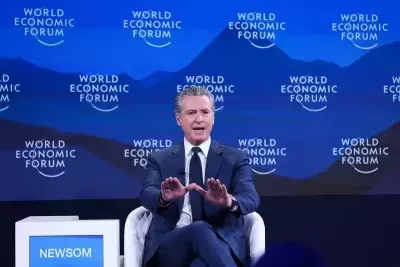
In a pivotal shift in global health dynamics, California is forging its own path, stepping into a role traditionally occupied by national governments. This development unfolds as the United States federal administration distances itself from the World Health Organization. The Golden State's initiative marks a significant moment, highlighting a new era of localized engagement in international health security.
California's Bold Move: Bridging the Global Health Divide
The Dawn of a New Era: California's Proactive Stance in Global Health
At an unconventional hour for West Coast residents, personnel from California's Public Health Department regularly convene for an international teleconference. These weekly discussions, centered on pressing global health crises, were once a standard participation point for the U.S. federal government. However, with the U.S. administration's declared disengagement from the WHO, citing various concerns, California has emerged as a key player.
Joining Forces: California Becomes a Pioneer in International Health Networks
California has distinguished itself by becoming the inaugural state to integrate into the World Health Organization's Global Outbreak Alert & Response Network, known as GOARN. Dr. Erica Pan, who heads the California Department of Public Health, has indicated that several other states are contemplating similar affiliations. A press release from Illinois confirms its ongoing preparations to join this international health collective.
A State's Resolve: Governor Newsom's Commitment to Global Health Security
Governor Gavin Newsom of California has voiced strong opposition to the federal government's withdrawal, characterizing it as a perilous decision with potential adverse effects on all Californians and Americans. He affirmed California's refusal to passively observe the potential instability that could arise from this policy shift, signaling the state's determination to maintain its own global health engagements.
The Rise of Subnational Diplomacy: States Filling the Void in Global Health Leadership
This surge in state-level initiatives to manage international health affairs is indicative of a wider pattern, according to Dr. Gavin Yamey, a distinguished professor of global health and public policy at Duke University. He views California's actions as a strategic and astute maneuver, especially given the federal government's perceived abdication of its public health protection duties. States are proactively working to remain integral to global responses against epidemics and emerging health threats.
Navigating the Nuances: Understanding California's Role in the WHO Framework
It is crucial to recognize that California's participation does not equate to full WHO membership, which is exclusively reserved for national governments. Nevertheless, certain WHO platforms, including GOARN, extend their access to a diverse range of entities, such as non-profit organizations, multinational corporations, academic institutions, and various governmental levels, including American states. This flexible structure allows for broader collaboration.
GOARN's Vital Role: A Global Shield Against Infectious Diseases
Established in 2000, GOARN comprises over 350 organizations committed to collaborative efforts in detecting and responding to outbreaks of infectious diseases and other public health emergencies. This network was formed in recognition of the critical need for coordinated action in global health. Since its inception, GOARN has been instrumental in organizing, analyzing, and responding to significant health crises such as SARS, Ebola, and mpox.
Enhanced Surveillance: California's Access to Advanced Epidemic Intelligence
Membership in GOARN grants participants, including California, access to weekly updates on outbreaks and the WHO Epidemic Intelligence from Open Sources platform. Dr. Pan explains that this platform continuously monitors global open sources for indicators of outbreaks and health-related events, providing California with critical early warning capabilities. The state is currently undergoing comprehensive training and onboarding to fully leverage these resources.
Proactive Preparedness: Utilizing Global Data for State-Level Health Strategies
Dr. Pan emphasizes that engaging with GOARN and its associated platform significantly enhances California's awareness of global health threats, enabling more timely and effective state-level responses. She points to a noticeable reduction in federal health guidance, including the absence of a national flu vaccination campaign, as a key factor motivating California's proactive approach. This international collaboration helps California to foresee potential health challenges more effectively.
Federal Divergence: The US Focus on Bilateral Health Engagements
In contrast to California's multilateral engagement, the U.S. federal government has expressed its intent to pursue a different trajectory, prioritizing direct health and aid agreements with individual nations. These bilateral arrangements often involve sharing vital information regarding disease outbreaks. The U.S. State Department explicitly stated earlier this month that the United States would not be participating in regular WHO-led or managed events, underscoring this shift.
Defining National Health Policy: Federal vs. State Perspectives
The U.S. Department of Health and Human Services articulated that the United States is defining its own course in global health engagement, rooted in accountability, transparency, and the expertise of American public health institutions. The statement also clarified that individual states do not formulate U.S. foreign policy, highlighting the federal government's perspective on jurisdictional boundaries in international relations.
A Spectrum of Views: Expert Opinions on US Global Health Strategy
Not all experts concur with the federal government's current stance. Some conservative commentators advocate for continued U.S. involvement in specific WHO forums, particularly those that furnish crucial data and assessments for emerging infectious disease outbreaks. Brett Schaefer, a senior fellow at the American Enterprise Institute, suggests that despite the U.S. withdrawal, continued participation in initiatives like the Epidemic Intelligence from Open Sources platform is essential to ensure comprehensive access to information.
The Uniqueness of Global Health Platforms: Challenges in Replication
Schaefer argues that replicating or constructing a similar international platform outside the framework of the World Health Organization would be exceedingly challenging and inefficient for the U.S. The inherent structure and established global reach of WHO platforms make them difficult to substitute. However, he expressed some reservation regarding California's decision to join GOARN, deeming it intriguing but still uncertain, especially since the WHO has not formally clarified California's status, raising questions about potential political motivations.
Potential Disparities: The Risk of an Uneven Landscape in State Health Preparedness
Dr. Yamey identifies a potential drawback to this emerging model: the creation of a disparity among states, where some engage with parts of the WHO and others do not. This could lead to a regrettable division, where leaders in certain states benefit from superior, more current information on outbreaks for public health decision-making compared to their counterparts in other states. Such a scenario could exacerbate health inequities across the nation.
California's Collaborative Vision: Leading by Example in Public Health
In response to these potential divides, Dr. Pan affirmed California's intention to collaborate with other states, including those that do not join GOARN. She emphasized California's commitment, as the largest state with the most extensive state health department, to step up and provide leadership in this evolving global health landscape, fostering a more unified approach to public health security.
