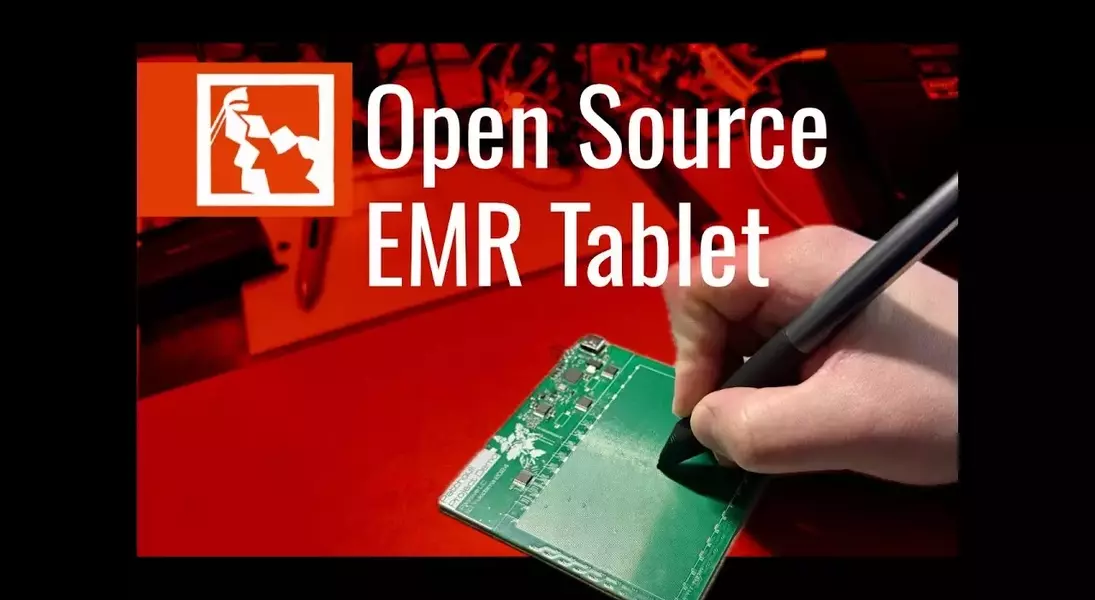
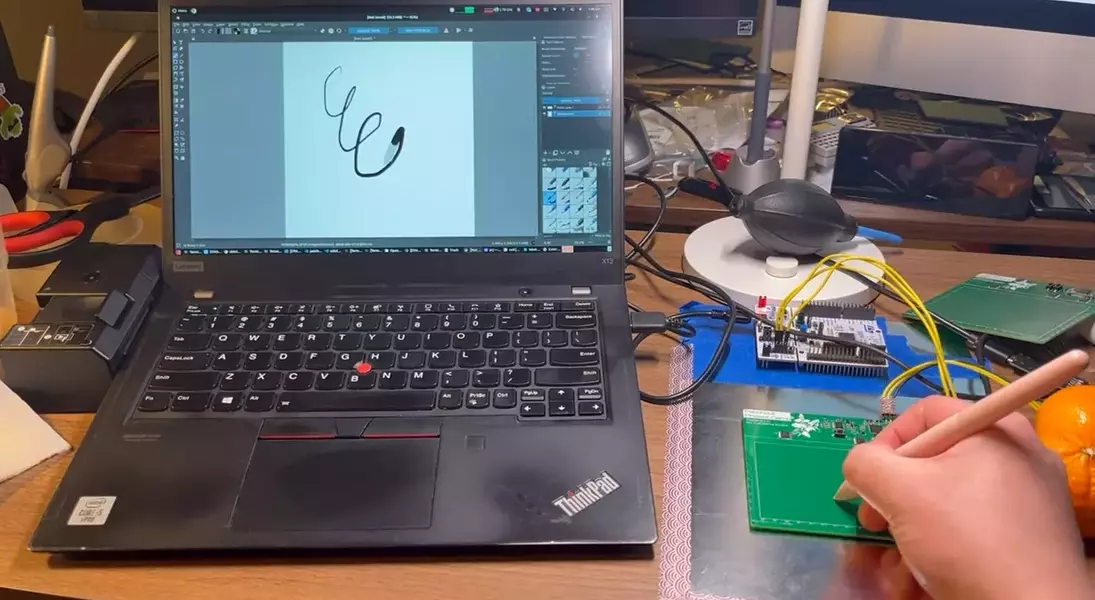
Project Patchouli emerges as a beacon for tech enthusiasts and artists alike, offering a comprehensive open-source framework to construct a personalized Electromagnetic Resonance (EMR) drawing tablet. This initiative not only provides the necessary schematics and firmware but also serves as an educational platform, unraveling the intricate workings of EMR technology. By detailing the process from scratch, it empowers individuals to understand the underlying principles of how digital pens interact with tablets, fostering innovation and customization. The project emphasizes achieving ultra-low-latency input and broad compatibility with commercial EMR pens, addressing common frustrations with proprietary systems. It represents a significant step towards democratizing access to specialized hardware development.
The creator, Yukidama, through detailed documentation and a YouTube series, meticulously illustrates the journey of assembling an EMR tablet. This includes elucidating the function of electromagnetic pencils, which rely on coils and capacitors to transmit signals to the tablet, subsequently interpreted by a computer. The process involves measuring pen frequencies with oscilloscopes and understanding how different pens generate distinct frequency signatures upon contact and pressure. This hands-on approach offers invaluable insights into the technical nuances of drawing tablets, transforming what might seem like a complex endeavor into an accessible learning curve. The project’s commitment to open-source principles invites collaboration and further development, ensuring its evolution beyond a singular proof of concept.
Demystifying EMR Technology: A DIY Approach
The essence of Project Patchouli lies in its mission to demystify the complexities of Electromagnetic Resonance technology, offering a practical, do-it-yourself guide for constructing a drawing tablet. Traditional drawing tablets, while essential for digital artists, often obscure their internal mechanisms. Yukidama's project shines a light on these workings, explaining how electromagnetic pens utilize specific frequencies emitted by coils and capacitors. When a pen touches the tablet's surface, these signals are captured by an array of coils within the tablet, amplified, and then translated into digital input. This breakdown of the process reveals the ingenious simplicity behind what many perceive as advanced technology, making it approachable for anyone willing to delve into hardware assembly.
This DIY approach not only educates but also liberates users from the constraints of commercial products. By building their own EMR tablet, individuals gain a deeper appreciation for the technology and an understanding of factors like latency and pen compatibility. The project illustrates how varying pen vendors employ different frequencies, impacting interoperability. Through direct experimentation with an oscilloscope, Yukidama demonstrates how to measure and analyze these frequencies, highlighting the technical challenges and solutions involved in achieving seamless pen input. This practical knowledge empowers builders to troubleshoot and customize their devices, ensuring optimal performance and compatibility with a wide range of commercial EMR pens, thus offering a truly personalized drawing experience.
The Potential and Future of Open-Source Tablet Development
Project Patchouli stands as a compelling proof of concept, demonstrating the viability and significant potential of open-source hardware development in the realm of drawing tablets. While commercial tablets boast sophisticated features like tilt control and high-pressure sensitivity, this project showcases that the foundational technology for responsive and versatile EMR input is accessible and reproducible. The availability of firmware and hardware designs through platforms like Gitlab means that the barrier to entry for creating specialized digital art tools is significantly lowered. This open access encourages a community-driven development model, where enthusiasts and engineers can collaborate to refine existing designs, introduce new functionalities, and adapt the technology for broader applications.
The project's open-source nature fosters innovation, allowing for continuous improvement and adaptation by a global community. The creator's engagement on platforms like Discord, actively seeking input for documentation, underscores a commitment to making the project even more accessible to a wider audience, including those without extensive technical backgrounds. This collaborative spirit ensures that the project can evolve beyond its current iteration, potentially leading to more advanced features and a wider array of compatible devices. By providing a robust foundation, Project Patchouli not only educates individuals on the mechanics of EMR technology but also inspires a new generation of hardware developers to push the boundaries of what open-source initiatives can achieve in specialized computing peripherals, promising a future where custom, high-performance drawing tablets are within reach for many.
