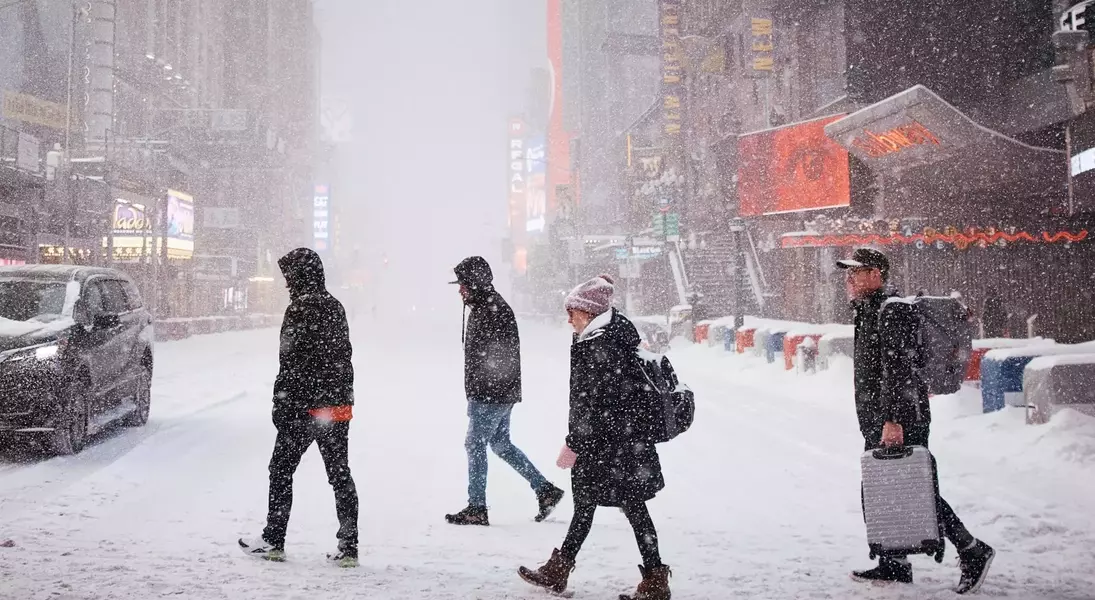
A recent snowstorm in New York City significantly impacted Broadway's financial performance, leading to a substantial decrease in ticket sales. Despite these challenges, certain productions demonstrated resilience, with one musical successfully recovering its initial production costs. This highlights the delicate balance between external factors, operational decisions, and economic success within the theater industry.
The severe weather conditions not only led to a decline in overall revenue but also sparked discussions regarding performer welfare and the broader implications for shows operating under adverse circumstances. The situation underscores the vulnerability of live entertainment to unforeseen events and the varying strategies employed by productions to mitigate losses and sustain their operations.
Snowstorm Disrupts Broadway Revenue
During a recent period, Broadway's financial intake saw a notable reduction, decreasing by approximately 14 percent, directly attributable to a snowstorm that swept through New York City. This weather event compelled numerous theater productions to call off scheduled performances, disrupting the bustling theatrical landscape. Approximately ten shows collectively canceled thirteen performances over the affected weekend. Despite these cancellations, the majority of the remaining productions proceeded as planned, albeit with reduced audience numbers, indicating the widespread impact of the inclement weather on attendance figures across the industry.
The impact of the New York City snowstorm on Broadway's box office was immediate and considerable. The cancellation of multiple performances by popular shows like '& Juliet,' 'Aladdin,' 'Harry Potter and the Cursed Child,' and 'The Lion King' directly contributed to the overall decline in gross revenues. Even productions that continued operating experienced a decrease in audience attendance, demonstrating the broader chilling effect of the severe weather and the declared state of emergency on theatergoers' willingness or ability to travel. This period served as a stark reminder of how external environmental factors can swiftly alter the economic trajectory of live entertainment venues.
Industry Adaptations and Success Amid Challenges
In response to the challenging conditions, some theatrical productions adopted proactive measures, such as offering significant ticket discounts to attract audiences. However, these efforts were not without consequence, as certain shows experienced considerable financial setbacks. The necessity for performers to navigate difficult travel conditions amid public transportation shutdowns also prompted widespread discussion and criticism within the Broadway community. Nonetheless, amidst these operational hurdles, the musical 'The Outsiders' announced a remarkable achievement: it had successfully recouped its substantial capitalization costs, becoming the first musical from its season to reach this financial milestone.
Despite the widespread disruption caused by the snowstorm, the Broadway community displayed a mix of adaptability and resilience. While some shows like 'Bug' attempted to lure audiences with steep discounts, highlighting the economic pressure to fill seats, this strategy often resulted in reduced grosses. The requirement for performers to report to work despite severe weather and transportation issues ignited a debate about their working conditions and safety. Paradoxically, during this period of downturn, 'The Outsiders' emerged as a beacon of financial success, fully recouping its $22 million investment. This accomplishment, particularly for a recent Tony Award winner, underscores that strategic planning and audience appeal can still lead to significant triumphs even when the industry faces external adversities.
