Automotive braking technology has long relied on a conventional hydraulic mechanism where pedal pressure activates fluid to engage calipers. While advancements such as anti-lock braking systems (ABS), brake force distribution, and regenerative braking have evolved, the fundamental hydraulic principle has remained constant across various vehicle types, from compact cars to high-performance supercars.
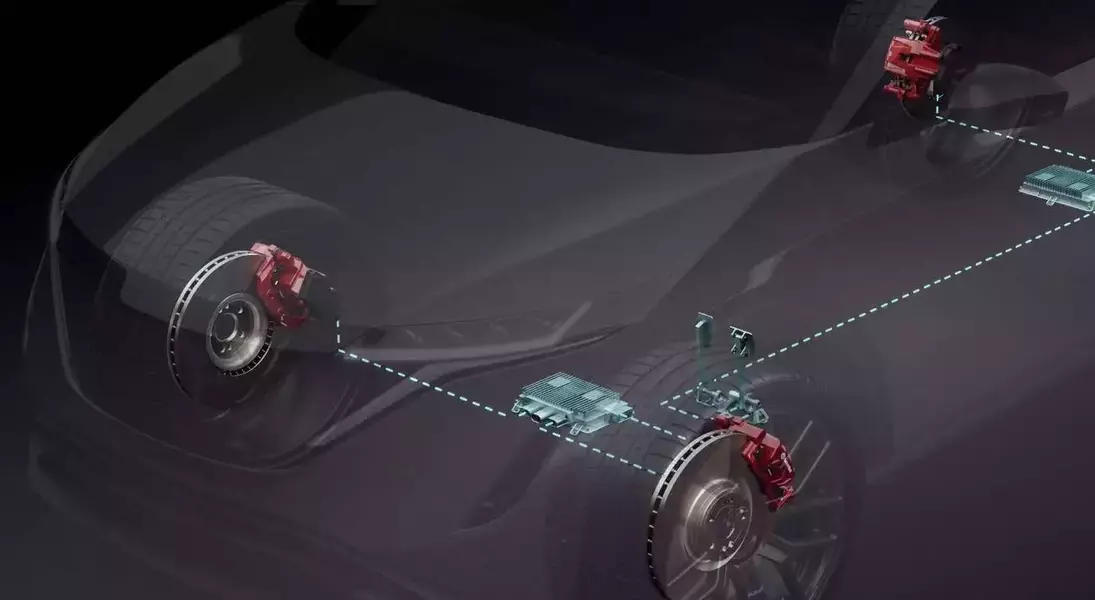
However, this long-standing paradigm is now undergoing a significant transformation with the introduction of Brembo's Sensify intelligent braking system, which is now entering full-scale production. This innovative system departs from traditional hydraulics, opting instead for a fluid-free, electronically controlled approach where each wheel's braking force is managed independently by sophisticated software. This allows for precise, real-time adjustments based on road conditions, vehicle dynamics, and tire grip, promising a new era of braking precision and performance.
The integration of Sensify into mass-produced vehicles represents a pivotal step towards the realization of software-defined automobiles, where vehicle functionalities, including driving characteristics, can be updated and customized through software. Although Brembo has not yet disclosed the specific manufacturer adopting this technology, the commitment to equip hundreds of thousands of units annually signals a significant industry-wide shift. This move underscores a broader trend towards electronic control systems in modern vehicles, where even fundamental mechanical components are being reimagined for greater efficiency, safety, and adaptability, ultimately rendering traditional hydraulic systems increasingly obsolete.
The arrival of Sensify signifies a leap forward in automotive safety and performance. As vehicles become increasingly sophisticated and software-driven, innovations like fluid-free braking will not only enhance the driving experience but also pave the way for safer, more responsive, and ultimately, more intelligent transportation systems. This commitment to pushing technological boundaries ensures that the future of driving is not just about getting from point A to point B, but about doing so with unparalleled control and confidence.
