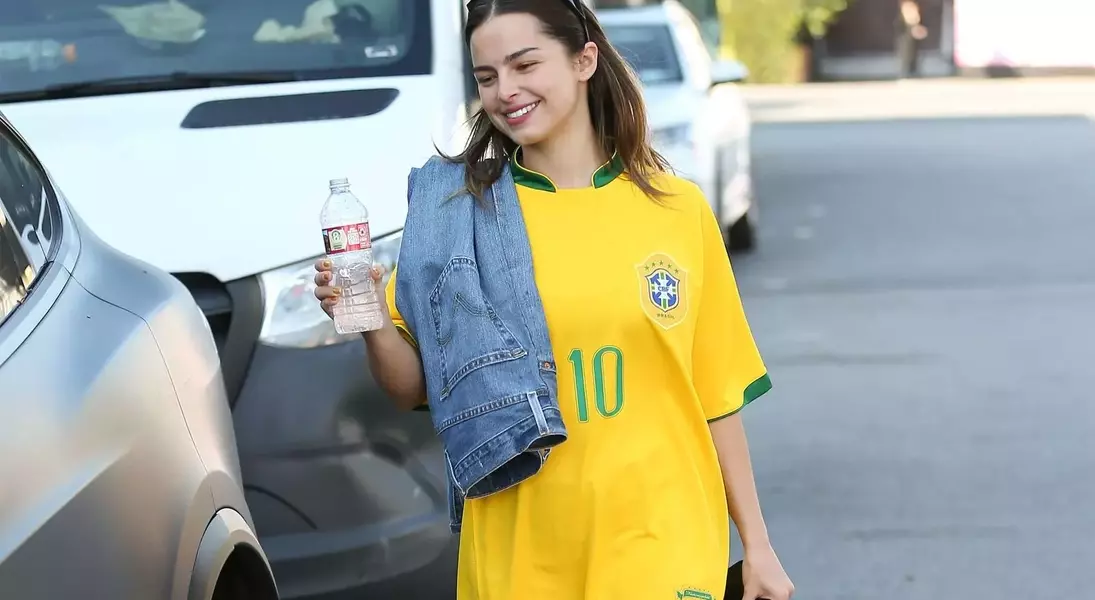
Brazilcore has emerged as a prominent summer fashion aesthetic, drawing inspiration from distinct elements of Brazilian style. This trend is recognized by signature items such as Brazil's national soccer jersey, Havaianas sandals, and Y2K-inspired mirrored sunglasses, all unified by a striking color scheme of vibrant yellow, deep blue, and vivid green. Brazilian designer Cece Hamali describes it as an "entry point" for international audiences, offering a condensed vision of 'brasilidade'—the essence of being Brazilian—as perceived by those outside the nation.
Major fast-fashion retailers, including H&M and Zara, have embraced this trend by launching collections featuring green and yellow apparel adorned with the names of Brazilian cities like Rio de Janeiro and Salvador. The allure of Brazilian style has also captivated fashion weeks in Copenhagen and Paris, particularly with the widespread popularity of the flip-flop brand Havaianas. Subtle nods to Brazil's vivid color palette have also appeared on high-fashion runways and in new product releases from esteemed houses like Chanel, Jil Sander, and Schiaparelli.
Recent market data from Lyst reveals a significant surge in interest in Brazil-related fashion, with a 91% increase between the first and second quarters of 2026. Brazilian fashion brands experienced an even more impressive 204% rise in interest. Havaianas led this growth with a 271% increase, while searches for Brazilian label PatBo rose by 62% and Nike Brazil by 71%. This trend, rooted in everyday Brazilian life, first gained significant momentum during the 2022 Qatar World Cup. At that time, the national team's jersey, which had been controversially associated with the far-right political movement of former president Jair Bolsonaro, was reappropriated by Brazilians. This offered an opportunity to reclaim a national symbol, transforming its political connotations into a fashion statement.
Social media platforms were inundated with Brazilians showcasing their Brazilcore outfits, fueled by the hope of their nation winning a sixth World Cup. Fashion labels such as Misci and Mirror Palais capitalized on this enthusiasm, propelling the trend's success with their designs being worn by celebrities like Rosalía and Emily Ratajkowski. Brazilian cinema also contributed to this cultural surge, with films such as I'm Still Here and The Secret Agent achieving international acclaim. By 2024, Brazilcore had reached the pages of British Vogue, with model Anok Yai gracing the March issue in a national canary jersey, a tribute to Carnival, photographed by Rafael Pavarotti. The 2026 World Cup further amplified Brazilcore's momentum, with a growing list of celebrities, including Sabrina Carpenter, Tyla, Alex Consani, Dua Lipa, and Addison Rae, embracing the style.
The current global fascination with Brazilcore extends beyond fleeting trends, as futurist Sabina Deweik observes. In an era dominated by sterile, AI-generated content, Brazilcore offers a refreshing sense of authentic human expression. Unlike many other fleeting fashion 'cores,' Brazilcore is perceived as more genuine, transforming everyday casualness into a coveted aesthetic in a world that often prioritizes curated experiences.
International fashion houses are interpreting Brazilcore in two distinct ways. Mass-market brands like A Vintage Fit and H&M adopt a more direct approach, emblazoning their garments with Brazil's name. In contrast, luxury brands opt for subtler interpretations, allowing the country's vibrant color palette to convey the message. Cece Hamali, however, believes that a mere replication of national symbols and colors is too simplistic. Instead, she seeks to embed the country's spirit into her designs through silhouettes, garment construction, and textures. Her custom latex Brazilian jerseys, worn by figures like singer Ludmilla and influencer Malu Borges, exemplify her aim to merge everyday Brazilian icons with unexpected materials. She emphasizes the idea of taking something popular and transforming it through a complex medium.
A significant hurdle is the limited global perception of Brazil. For a long time, countries like Brazil were marginalized within the fashion industry, often viewed through a colonial lens. While their symbols and cultural practices were frequently adopted by the fashion world, the original creators rarely received due recognition. Airon Martin, founder of the São Paulo-based brand Misci, highlights that when brands thoroughly research and acknowledge the origins of a symbol, the outcome is positive. However, when symbols are divorced from their cultural context and used solely for visual appeal, the product becomes hollow and disconnected from the people who embody that culture. Brazilians are increasingly vocal in calling out instances of cultural appropriation.
Hamali asserts that major brands, with their vast resources, should prioritize collaboration and credit local creators when profiting from cultural symbols. Martin echoes this sentiment, arguing that true change requires more than just consuming Brazilian references; it demands creating an equitable space for Brazilian brands and creatives to shape the narrative. Misci, named after 'miscigenação' (miscegenation), reflects Brazil's inherent diversity. Martin's work is driven by an ongoing exploration of the geographies, peoples, and structures that form Brazil's multifaceted identities, such as the Amazon rainforest, which he views as an endless wellspring of inspiration for materials, colors, and textures. He sees Brazil as a "virtually inexhaustible source of creativity."
The challenge lies in effectively translating this profound richness internationally. While the current Brazilcore trend incorporates national staples, it often remains superficial, interpreting Brazil through the narrow lens of summer, soccer, and casualness. This approach, as Deweik explains, results in a beautiful yet superficial interpretation, disconnected from its deep socio-historical context. Despite obstacles like tariffs affecting companies such as Grendene and Farm Rio in international markets, social media and industry conversations suggest a strong determination to overcome these barriers. Martin views Brazilcore as a powerful opportunity, believing that increased international curiosity can broaden its meaning. The lasting validation of Brazilian fashion on the global stage depends on recognizing the vibrant creative industry, rich culture, and talented creators behind these powerful symbols.
