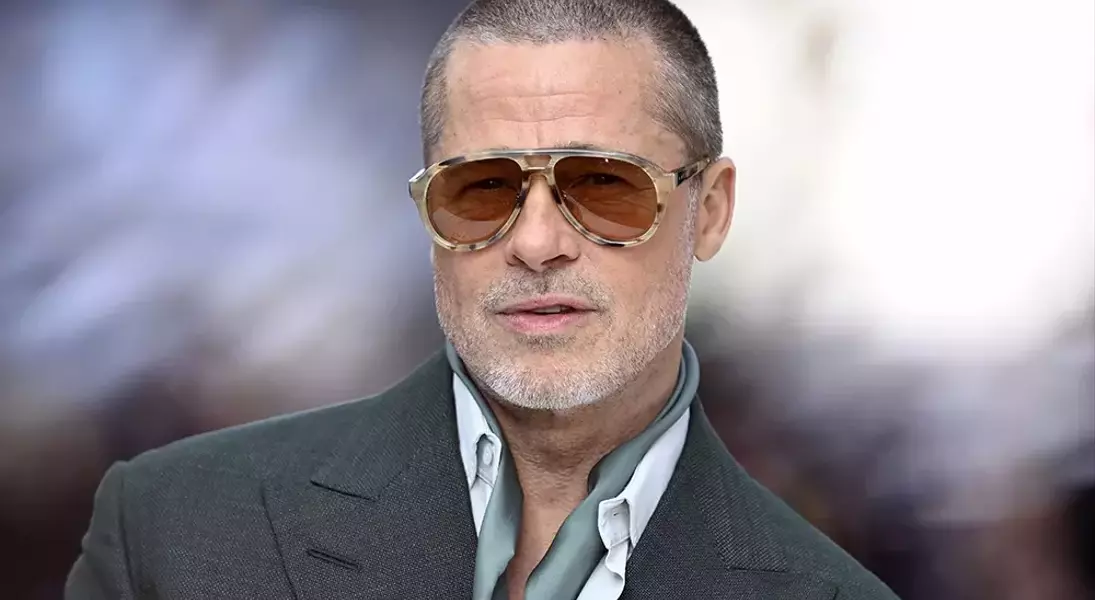
In a recent interview, celebrated actor Brad Pitt offered his thoughtful insights into the evolving landscape of cinematic production, particularly concerning the growing influence of artificial intelligence. He articulated a dual perspective, acknowledging AI's potential to significantly benefit the creation of mid-range budget films while simultaneously raising important questions about its ethical implications when it comes to replicating human performances and managing artists' digital likenesses. Pitt's remarks underscore a broader industry conversation about technological advancement meeting creative integrity and personal rights.
During an in-depth conversation featured in a prominent lifestyle magazine, the Academy Award-winning performer elaborated on his views regarding AI's application in visual effects. He posited that despite prevalent skepticism, AI could become a pivotal tool for movies with budgets ranging from $40 million to $90 million, enabling their realization by making complex visual elements more cost-effective. This perspective suggests a future where technological innovation could democratize filmmaking, opening doors for projects that might otherwise struggle to secure funding due to prohibitive production costs.
However, Pitt's enthusiasm for AI as a production aid is tempered by considerable apprehension regarding its deployment to imitate actors' portrayals. When asked about the possibility of AI duplicating his own performances, he emphasized the critical role of human direction and intent. Pitt highlighted that while AI might be capable of generating a performance, the emotional depth and creative choices embedded in an actor's work are intrinsically linked to human agency. He voiced concern that an AI-generated rendition might lack the authentic artistic nuances and discoveries that define an actor's contribution, implying a potential dilution of creative ownership and artistic integrity.
Further addressing the contentious issue of body scanning, a common practice for stunts, combat sequences, or digital de-aging, Pitt disclosed his long-standing contractual stipulation to retain ownership of his scans and ensure their subsequent destruction. He candidly referred to this practice as a precaution stemming from his 'Ozark boy' paranoia, expressing regret that he hadn't preserved them for historical or personal reasons. This revelation brings to light the broader industry debate surrounding the intellectual property rights of actors' digital assets and the potential for unauthorized or unintended future uses of these digital replicas. The conversation around AI and digital likenesses is indeed poised to be a fascinating, albeit complex, experiment for the entertainment sector.
Beyond his reflections on technology, Pitt also touched upon his upcoming cinematic endeavors. He is set to star in "Heart of the Beast," portraying a special forces soldier who survives a plane crash alongside his dog. Furthermore, he will reprise his acclaimed role as Cliff Booth from Quentin Tarantino's "Once Upon a Time in Hollywood" in a new project titled "The Adventures of Cliff Booth," directed by David Fincher. Pitt shared an anecdote about how he facilitated Fincher's involvement after Tarantino, who penned the script, decided not to make it his final film. Pitt's personal appeal to Fincher, hand-delivering the script on a plane, swiftly secured the director's commitment, underscoring the collaborative spirit that continues to drive significant projects in Hollywood.
Brad Pitt offers a balanced viewpoint on AI's role in cinema, recognizing its capacity to make mid-budget films more feasible while cautioning against its use to replace human artistic expression. He emphasizes the importance of human intentionality in performance and advocates for actors' control over their digital likenesses, revealing his own practice of ensuring the destruction of his body scans. His forthcoming projects, including a new collaboration with David Fincher, illustrate his continued engagement with the evolving art of filmmaking.
