
This analysis delves into the recent trends in Bitcoin's options market, focusing on how investor sentiment is reflected through open interest, implied volatility, and risk reversals on the CME Group platform. It explores the interplay between price movements and options positioning, highlighting both the prevalent risk aversion and potential for future recovery.
Navigating Bitcoin's Volatile Seas: A Glimpse into Options Market Expectations
Recent Price Instability and Market Anxiety
The cryptocurrency market has recently experienced significant turbulence, with Bitcoin's value sharply declining from approximately $90,000 to $60,000 within a few days. This abrupt correction has fueled considerable apprehension among investors, shifting overall market sentiment toward extreme caution.
Options Market Dynamics Hint at a Potential Rebound
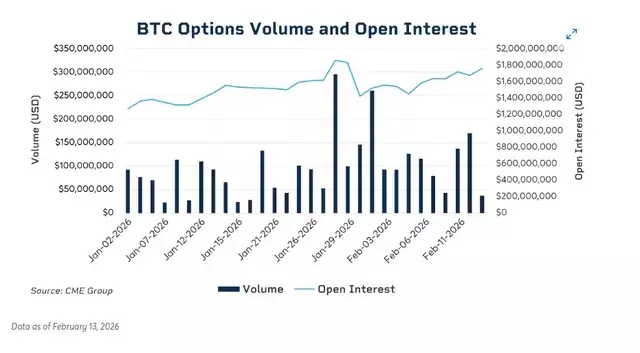
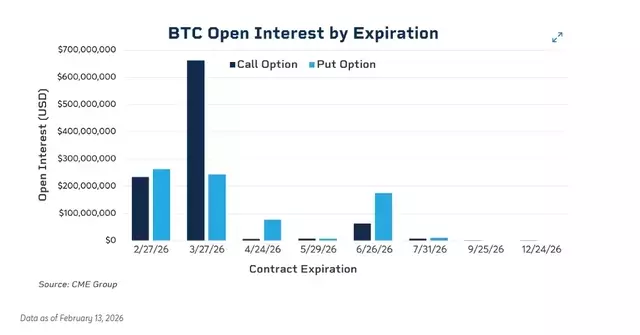
Despite the prevailing bearish atmosphere, data from CME Group's options market presents a more intricate narrative. For March expirations, the ratio of call to put open interest stands at roughly 3:1, indicating a notable preference for call options. This suggests that a segment of investors is strategically positioning for a potential price resurgence by the end of the first quarter, counteracting the immediate panic.
Unprecedented Volatility Levels in 2022
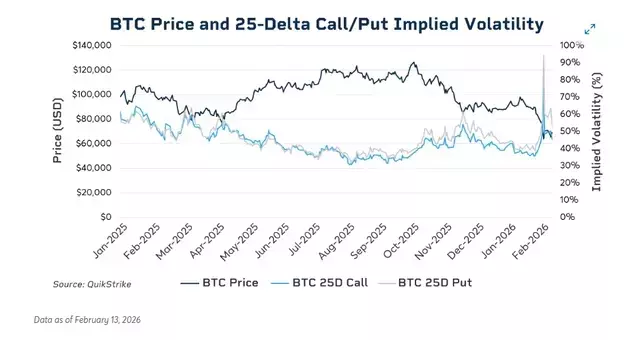
The intense market uncertainty was particularly evident in the 25-delta implied volatility (IV). On February 5, IV for both call and put options escalated to 75% and 95% respectively, reaching their highest points since 2022. While put IV has moderated slightly, it remains elevated compared to the 2025 average of 46%, signaling that the market has yet to fully stabilize.
Risk Reversal Indicates Strong Demand for Downside Protection
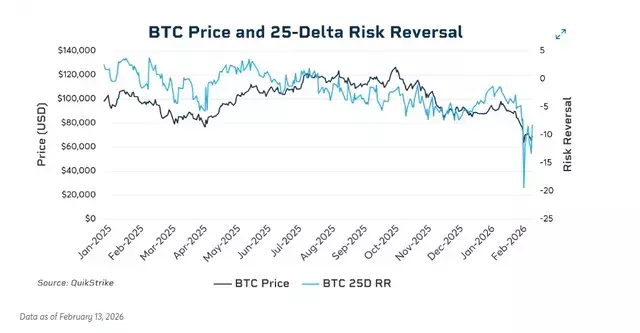
The 25-delta risk reversal (RR), which gauges the market's inclination to prioritize upside potential over downside risk, plummeted to -19.34 on February 5, 2026. This marked the lowest level in over three years, illustrating a robust demand for put options. This trend, which began in August 2025, reflects investors' sustained efforts to safeguard their portfolios against further depreciation, even during periods of price appreciation.
A Distinct Shift in March Expiration Outlook
While February contracts showed a relatively balanced open interest between puts and calls, the March expiration exhibits a clear bullish bias. With call open interest at $660 million against $240 million in puts, the overwhelming preference for calls points towards investor confidence in a recovery by Q1 2026. However, a more conservative stance is observed in June expirations, where put open interest surpasses calls.
Key Strike Price Levels for Market Monitoring
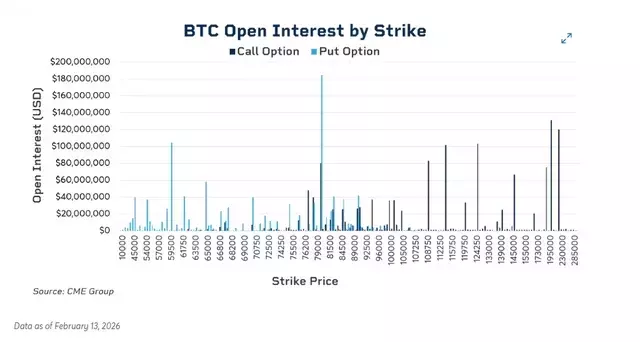
A closer examination of strike distributions reveals critical price points. Put open interest is heavily concentrated between $60,000 and $90,000, with significant activity at the $60,000 and $80,000 levels. Many of these hedges are currently "in the money" as Bitcoin trades near $70,000. Conversely, there is substantial out-of-the-money (OTM) call open interest ranging from $110,000 to $220,000. These positions might represent call-overwriting strategies aimed at generating yield amidst high volatility or a gradually recovering market. The $80,000 call strike also stands out as a focal point for market participants.
