Bitwise Chief Investment Officer Matt Hougan posits that Bitcoin could reach a valuation of $1 million within the next decade, contingent on its ability to secure a notable portion of the burgeoning global store-of-value sector. This ambitious forecast is underpinned by Bitcoin's increasing institutional acceptance and the robust performance of Bitcoin exchange-traded funds, which signal a potential paradigm shift in investment priorities. While this perspective offers a bullish outlook on Bitcoin's future, other market participants, such as Arthur Hayes, advocate for a more reserved approach, highlighting the critical role of central bank monetary easing in catalyzing substantial market upswings.
Hougan's analysis suggests that Bitcoin's ascent to $1 million would necessitate its market share growing to approximately 17% of the global store-of-value market. This expansion is considered plausible given the historical growth of this market, exemplified by gold's substantial appreciation over the past two decades. The recent trend of net inflows into Bitcoin ETFs, coupled with outflows from gold-backed funds, further supports the narrative of a maturing cryptocurrency market gaining traction among a broader investor base. This dynamic interplay between digital and traditional assets underscores a pivotal moment in global finance, where Bitcoin is increasingly recognized as a legitimate contender for long-term wealth preservation.
Bitcoin's Trillion-Dollar Trajectory and Market Share Expansion
Bitwise CIO Matt Hougan forecasts Bitcoin reaching $1 million within the next decade, driven by its potential to capture a larger share of the growing global store-of-value market. This projection implies a significant increase from its current valuation, underscoring the expanding influence of digital assets in the financial landscape. Hougan's analysis frames Bitcoin as a direct competitor to traditional assets like gold, evaluating its long-term price potential based on the overall size of the store-of-value market and Bitcoin's proportionate share within it. This perspective suggests that as the market continues to expand, even a modest increase in Bitcoin's market penetration could lead to substantial price appreciation.
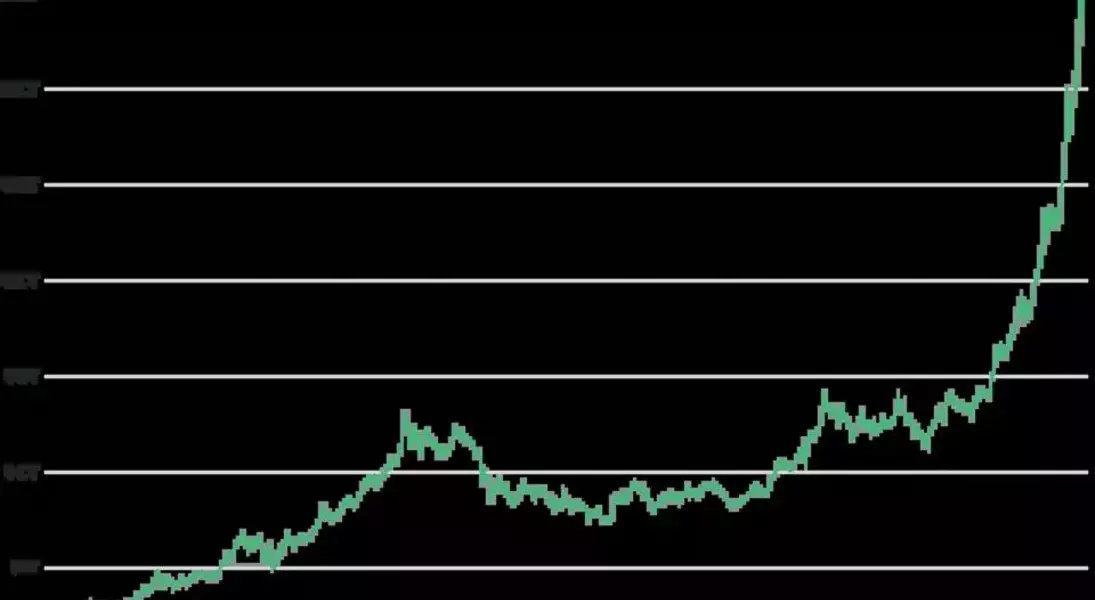
The store-of-value market, currently valued at close to $38 trillion with gold dominating at $36 trillion and Bitcoin holding a smaller, yet growing, $1.4 trillion, presents a considerable opportunity for Bitcoin's growth. Hougan points out that if the market continues its historical 13% annual growth rate, it could reach $121 trillion in 10 years. In such a scenario, Bitcoin would only need to secure about 17% of this market to hit the $1 million mark. This shift is not merely theoretical; the increasing institutional adoption of Bitcoin, including allocations from major endowments and sovereign wealth funds, along with the rapid growth of Bitcoin ETFs, indicates a tangible movement towards broader acceptance and investment in cryptocurrency.
Investor Sentiment and Macroeconomic Influences on Bitcoin's Outlook
Recent data from Bitcoin exchange-traded funds (ETFs) indicates a resurgence of investor confidence, with net inflows reversing earlier withdrawals. This renewed interest, particularly in products like BlackRock's iShares Bitcoin Trust, suggests a shift in investor preference from traditional assets, as evidenced by outflows from gold-backed ETFs. This evolving sentiment is crucial for Bitcoin's projected growth, aligning with bullish forecasts from analysts who anticipate significant price increases in the coming market cycles. The interplay between traditional and digital asset markets highlights a transformative period in investment strategies, where cryptocurrencies are increasingly viewed as viable investment avenues.
Despite the prevailing optimism, some market observers maintain a cautious stance, emphasizing the importance of macroeconomic factors. Maelstrom Fund CIO Arthur Hayes, for instance, advocates for a wait-and-see approach, arguing that a substantial rally in Bitcoin prices would necessitate a renewed wave of global liquidity, particularly from central banks engaging in aggressive monetary easing. Hayes's strategy, which involves holding defensive positions in cash and gold until clearer signals of monetary expansion emerge, underscores the vulnerability of the cryptocurrency market to broader economic policies and geopolitical tensions. This highlights the complex relationship between global financial conditions and the future trajectory of Bitcoin's valuation, reminding investors that while potential rewards are high, so are the external risks.
