
In a dynamic healthcare landscape, two biotechnology firms, Precigen and Mineralys Therapeutics, have recently captured market attention with their impressive stock performance. Both companies have seen their share prices more than double since the close of July, signaling strong investor confidence in their innovative pipelines. This surge is primarily driven by pivotal developments in their respective drug candidates. However, as with any rapid market appreciation, the crucial question remains: can these companies maintain their momentum and translate their recent successes into sustained long-term growth and profitability?
Biotechnology Firms Achieve Milestones: Precigen Secures FDA Approval, Mineralys Therapeutics Boosts Funding for Hypertension Drug
In a significant development for the healthcare sector, two pioneering biotechnology companies, Precigen and Mineralys Therapeutics, have recently made headlines with substantial advancements in their clinical pipelines, leading to remarkable surges in their stock values. From late July through September 5, Precigen's shares experienced an extraordinary 155% increase. This impressive ascent was primarily fueled by the U.S. Food and Drug Administration's (FDA) approval of its novel treatment, Papzimeos. This cell-based immunotherapy is designed to combat recurrent respiratory papillomatosis (RRP), a rare condition characterized by tumor growth in the respiratory tract. Papzimeos stands as the first and sole FDA-approved therapy for RRP, targeting an estimated patient population of 27,000 individuals. The FDA's decision to grant full approval, rather than conditional, was based on compelling single-arm trial data where 18 out of 35 patients successfully avoided tumor removal surgery for at least 12 months post-treatment. Furthermore, a remarkable 15 of these initial responders remained surgery-free for 24 months, underscoring the treatment's efficacy. Following this pivotal approval, Wall Street analyst Swayampakula Ramakanth of HC Wainwright reaffirmed a 'buy' rating for Precigen, setting an ambitious price target of $8.50, which suggests a potential 95% upside.
Meanwhile, Mineralys Therapeutics saw its stock climb by an impressive 146% during the same period. The company's recent success is attributed to a highly successful new funding round, which raised $287.5 million, bolstering the continued development of its leading drug candidate, lorundrostat. This aldosterone inhibitor is currently in late-stage clinical trials for hypertension. Notably, the market reacted positively to Mineralys' progress, especially after AstraZeneca unveiled its 12-week data for a similar aldosterone inhibitor, baxdrostat, which appeared less effective compared to lorundrostat's trial results. Lorundrostat demonstrated a significant reduction in systolic blood pressure by 16.9 millimeters of mercury after six weeks, far surpassing the placebo group's 7.9 millimeters of mercury reduction. In light of these promising developments, Bank of America analyst Greg Harrison raised his price target for Mineralys to $43 per share, indicating a potential 24% increase from its recent valuation.
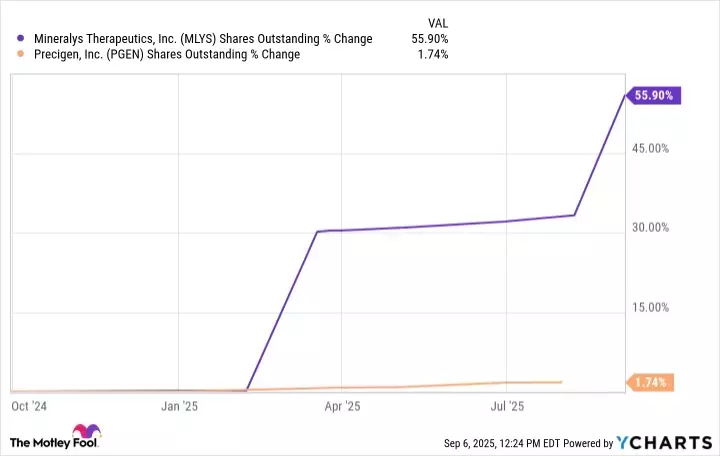
Considering the remarkable achievements of both Precigen and Mineralys Therapeutics, investors are presented with distinct opportunities and challenges. Precigen's Papzimeos, already approved and poised to dominate its niche market, represents a compelling investment. Despite the relatively small patient population for RRP, the annual treatment cost exceeding $200,000 per patient suggests a potential for over $1 billion in peak annual sales. This revenue potential, combined with the typical valuation multiples for pharmaceutical companies, positions Precigen as an attractive addition to a diversified investment portfolio. For Mineralys Therapeutics, while its lorundrostat shows immense promise in the hypertension market, caution is warranted. The company's significant market capitalization of $2.7 billion, coupled with recent capital raising through shareholder dilution, highlights the competitive landscape and the need for timely regulatory approval. The race against AstraZeneca's similar candidate underscores the importance of swift market entry for Mineralys to secure a substantial market share. Therefore, a more prudent approach for investors might be to observe Mineralys' progress towards FDA approval before committing further, allowing the company to demonstrate its ability to navigate regulatory hurdles and secure its position in the competitive hypertension drug market.
