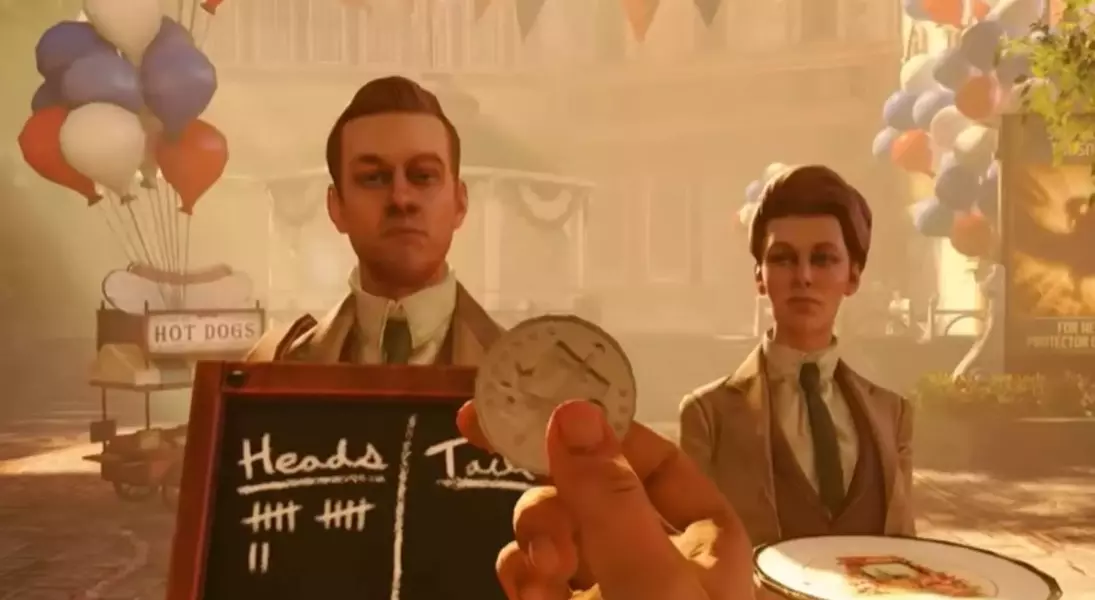
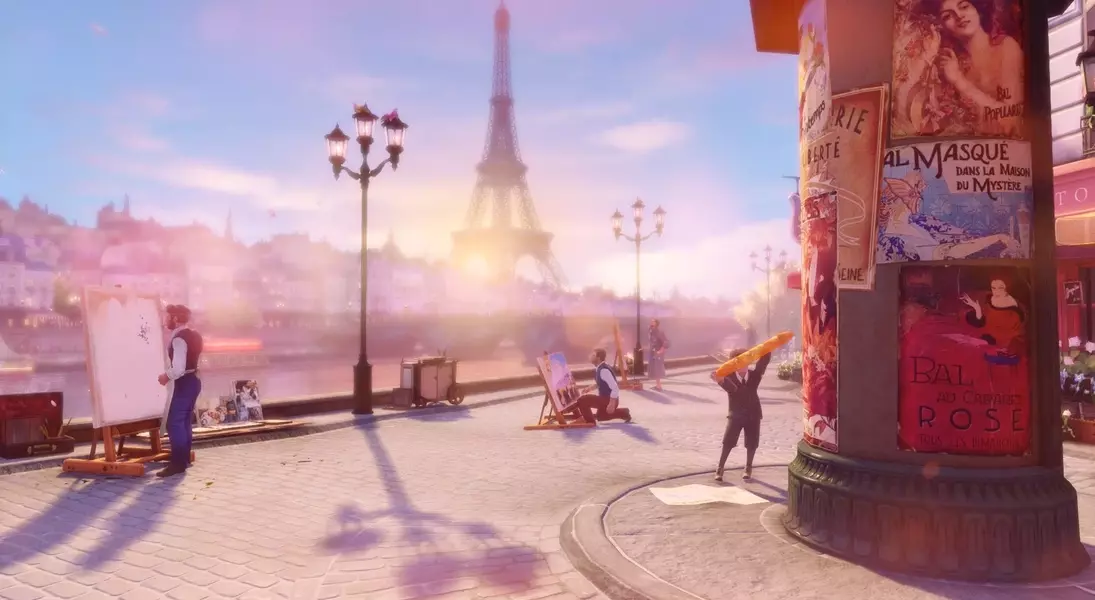
The critically acclaimed video game BioShock Infinite, released over a decade ago, continues to be celebrated for its innovative storytelling, particularly its use of music. The game's setting, the floating city of Columbia in 1912, is meticulously crafted, yet a keen ear might detect anachronistic musical pieces that subtly challenge the player's perception of reality. This deliberate inclusion of modern songs, re-imagined in period-appropriate styles, serves as a powerful narrative tool, drawing players deeper into the game's complex themes without overtly disrupting the immersive experience.
This unique approach to sound design extends beyond mere background music; it actively contributes to the game's central mystery. These musical clues, often presented in seemingly innocuous ways, are revealed to be integral to the plot, pointing towards the existence of tears in the fabric of space and time. Through these temporal rifts, characters within the game gain access to music from different eras, subtly weaving modern melodies into the early 20th-century soundscape of Columbia. This clever integration demonstrates how music can transcend its traditional role, becoming a vital element in constructing a game's intricate narrative and thematic depth.
The Anachronistic Symphony of Columbia
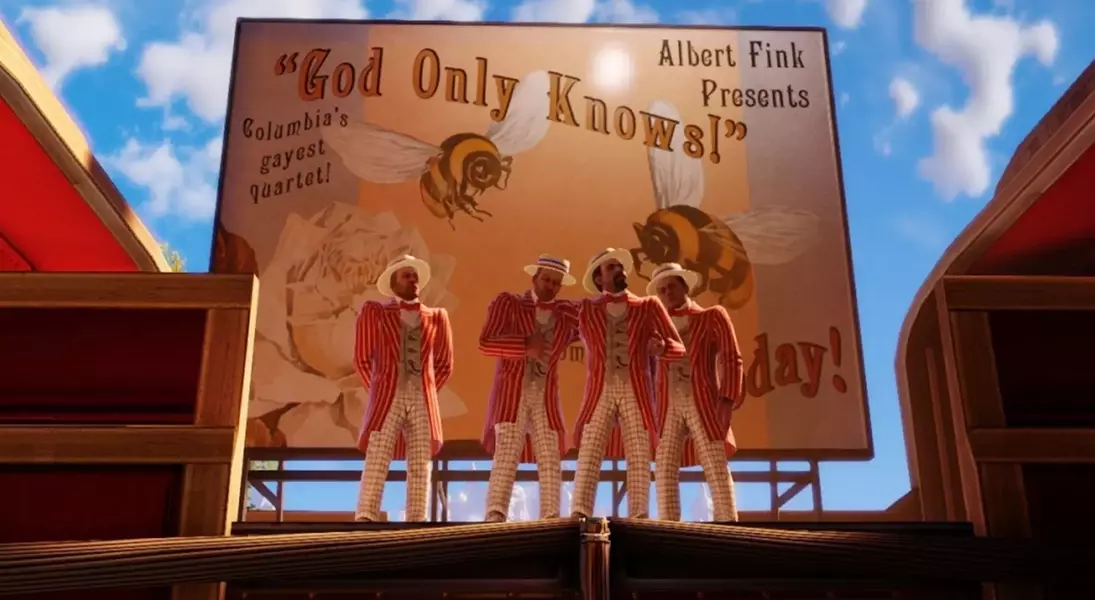
BioShock Infinite's soundscape is a carefully curated paradox, with barbershop quartets and calliope bands performing tunes that would not exist for another half-century or more. This deliberate use of anachronistic music, such as the Bee Gees' "God Only Knows" or Tears for Fears' "Everybody Wants to Rule the World" rendered in a 1912 style, is a subtle yet potent narrative device. Initially, these familiar melodies, presented in an unfamiliar guise, create a sense of uncanny familiarity rather than immediate cognitive dissonance. The game capitalizes on the player's subconscious recognition, fostering an underlying sense of unease that something is not quite right in the idyllic city of Columbia, long before the narrative explicitly reveals its temporal anomalies. This musical subversion is a masterful stroke, building suspense and hinting at the profound twists that underpin the game's storyline without resorting to overt exposition.
The genius of BioShock Infinite's musical choices lies in their careful balance between familiar and foreign. The songs selected are those deeply ingrained in cultural consciousness, yet their arrangement into early 20th-century styles prevents them from sounding jarringly out of place. This subtle manipulation of player expectation serves as a breadcrumb trail, guiding them towards the game's core revelations about parallel universes and temporal manipulation. The experience is akin to a gentle nudge, a constant whisper that challenges the established reality of Columbia. Even a seemingly simple, optional scene featuring an acoustic rendition of "Will the Circle Be Unbroken" underscores the game's profound narrative power, demonstrating how music can evoke deep emotional resonance and enhance character development. These musical elements, far from being mere set dressing, are fundamental to the game's intricate world-building and its enduring impact on players.
Music as a Gateway to Narrative Revelation
In BioShock Infinite, music transcends its traditional role as ambiance or emotional backdrop, evolving into a crucial element of the narrative itself. The inclusion of songs like "Tainted Love" and "Girls Just Wanna Have Fun," performed in an old-timey fashion, serves a dual purpose: it grounds the player in a recognizable cultural landscape while simultaneously sowing seeds of temporal distortion. This subtle discord is not merely for artistic flair; it directly foreshadows the game's central mechanic of "tears," which allow characters to peer into and draw elements from alternate realities. These musical anomalies are among the earliest and most persistent clues, suggesting that the idyllic facade of Columbia hides a much deeper, more complex, and ultimately fractured reality, prompting players to question the very fabric of the world they inhabit.
The game meticulously layers these musical hints, with characters like the composer Albert Fink explicitly utilizing dimensional rifts to acquire future musical pieces. This provides an in-universe explanation for the anachronisms, transforming them from stylistic choices into integral plot points. Furthermore, collectible voxophone recordings offer additional context, detailing Fink's brother's bewilderment at the "wonderful music trumpeting from holes in thin air." These narrative justifications solidify music's role as a key to unraveling the mysteries of Columbia. Even beyond the licensed tracks, the game’s original score and the interactive musical moments, such as the poignant duet of Booker and Elizabeth singing "Will the Circle Be Unbroken," demonstrate music's profound capacity to deepen emotional connections, enhance character arcs, and drive the overarching narrative, making it an indispensable part of BioShock Infinite's enduring legacy.
