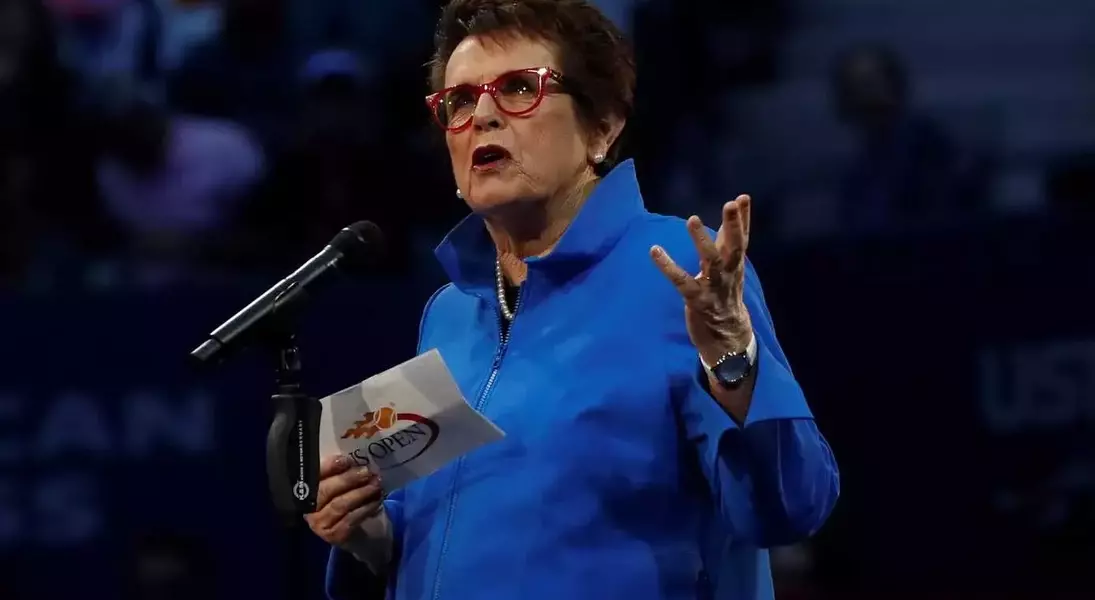
In a powerful statement, tennis legend Billie Jean King calls for an empathetic approach to integrating transgender athletes into the world of sports, stressing the necessity of understanding their individual journeys. This article explores King's perspective, contrasting it with differing views within the tennis community and examining her broader insights into the sport's evolving landscape, including the controversial decision to host major events in new territories.
Empathy, Inclusion, and the Future of Sport: A Call to Action from an Icon
Fostering Inclusivity: Billie Jean King's Vision for Transgender Athletes in Tennis
The esteemed former world number one, Billie Jean King, has voiced a compelling appeal for a more accepting environment for transgender individuals within the athletic arena. For a considerable period, the eligibility of trans athletes in women's tennis has been a subject of intense discussion and contention. While figures like Martina Navratilova have openly expressed reservations across various platforms, notably social media, King has now positioned herself as a strong advocate for inclusivity.
Understanding the Transgender Journey: A Plea for Compassion and Dialogue
In a recent interview, the 81-year-old icon conveyed her profound conviction that many fail to grasp the immense challenges and difficulties faced by trans individuals. She implored audiences to attentively engage with their narratives, emphasizing the act of listening rather than dictating. King underscored the inherent uniqueness of every person and the critical need to cultivate a sense of belonging for all, suggesting that true understanding begins with an open mind and a willingness to inquire.
Navigating Controversy: The WTA Finals in Saudi Arabia and Long-Term Vision
Beyond the discourse on transgender athletes, women's tennis has recently encountered other significant controversies. A notable instance was the decision to hold last year's WTA Finals in Saudi Arabia, a move that drew considerable criticism from various segments of the tennis world. However, King offered a distinct perspective, positing that this contentious choice is likely to yield positive long-term outcomes for the sport, even if its immediate reception is met with skepticism.
The Power of Engagement: Driving Progress Through Active Participation
King firmly believes that meaningful change is unattainable without active participation and engagement. She articulated the paradoxical nature of such decisions, acknowledging that they often invite both praise and condemnation. Nevertheless, she maintained that in the grand scheme, such initiatives will prove beneficial. Recalling the positive impact on young girls and mothers who witnessed the WTA Finals, she highlighted how individual encounters can profoundly shape lives, echoing sentiments she often shared with the legendary Muhammad Ali about the stagnation that results from a lack of engagement.
