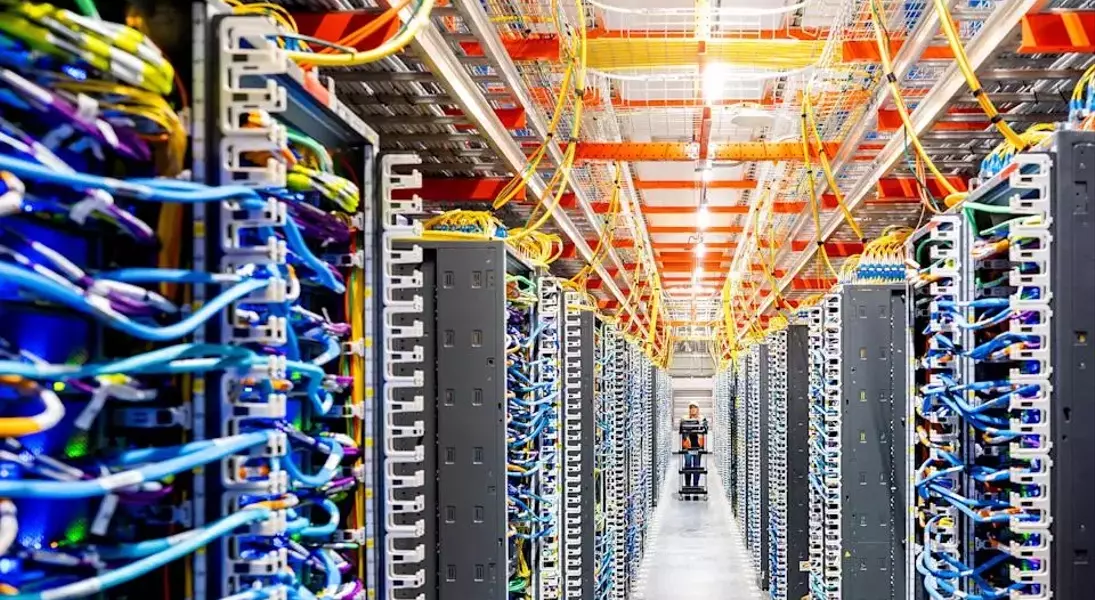
Major technology corporations, including Microsoft, Alphabet, Amazon, and Meta, are on track to allocate a staggering sum exceeding $650 billion towards artificial intelligence initiatives by the year 2026. This substantial financial commitment underscores a pivotal shift towards AI-driven growth, with a primary focus on bolstering infrastructure such as advanced AI chips, cutting-edge servers, and expansive data centers. Despite a notable surge in capital expenditure compared to prior periods, a segment of investors maintains a cautious outlook. However, the overarching belief in AI's transformative capacity continues to fuel these unprecedented investments, signaling a new era of technological advancement and market evolution.
Hyperscalers Drive AI Capital Expenditures
The four major technology giants, commonly referred to as "hyperscalers"—Microsoft, Alphabet, Amazon, and Meta—are collectively poised to invest over $650 billion in artificial intelligence by 2026. This ambitious spending plan represents a significant leap from previous years, with individual companies like Amazon committing approximately $200 billion and Alphabet projecting between $175 billion and $185 billion in capital expenditures. Meta aims to spend $115 billion to $135 billion, while Microsoft is set to allocate around $145 billion. This massive financial outlay, marking a 67% to 74% increase from 2025, is predominantly channeled into acquiring advanced AI chips, enhancing server capabilities, and expanding data center infrastructure to support the growing demands of artificial intelligence. The scale of these investments highlights a concerted effort by leading tech firms to dominate the rapidly evolving AI landscape, driving innovation and shaping the future of technology.
The collective investment by these tech behemoths is projected to reach approximately $635 billion at the lower end and $665 billion at the higher end of their respective forecasts, demonstrating an extraordinary surge in spending. This allocation represents a dramatic increase, ranging from 67% to 74% compared to their combined expenditures of $381 billion in 2025. The core of these investments lies in strengthening the foundational elements of artificial intelligence: sophisticated AI processors, high-performance servers, and state-of-the-art data center facilities. This strategic financial commitment underscores the industry's unwavering focus on advancing AI capabilities and integrating it across various platforms and services. The scale of this investment is unprecedented, reflecting a strategic pivot towards deep technological integration and expansion within the global digital economy.
Investor Caution Amidst AI Spending Boom
Despite the immense investments in AI, market reactions have been mixed, with some investors exhibiting caution. Amazon's stock, for instance, experienced an 8% drop following its spending announcement, while Alphabet's shares declined by 3%. Microsoft also saw an 11% dip after its quarterly results, partly due to concerns over its Azure cloud unit's growth. This skepticism, noted by analysts like Gil Luria of DA Davidson, indicates a "very healthy" level of scrutiny from investors who are demanding clearer returns on these substantial AI infrastructure investments. The market is becoming increasingly wary of a potential AI bubble, prompting a shift in focus towards companies that can tangibly demonstrate profitability and efficiency from their AI endeavors. This cautious sentiment, however, may ultimately contribute to a more stable and sustainable growth trajectory for the AI market by preventing excessive speculation.
The financial markets have responded to these spending revelations with a degree of apprehension, leading to fluctuations in the stock values of these major tech players. Notably, Amazon's stock declined significantly, and both Alphabet and Microsoft experienced notable downturns post-announcement, fueled by investor concerns regarding the immediate returns on these massive AI outlays and, in Microsoft's case, slower growth in its cloud division. Experts suggest that this investor caution, while impacting short-term stock performance, is a positive indicator of market maturity, contrasting with previous tech booms. Investors are now more discerning, scrutinizing the tangible benefits and financial viability of AI investments rather than simply reacting to hype. This heightened scrutiny encourages tech companies to not only invest heavily in AI but also to articulate clear strategies for how these investments will translate into sustained revenue and profitability, thus mitigating the risks of an overheated market.
