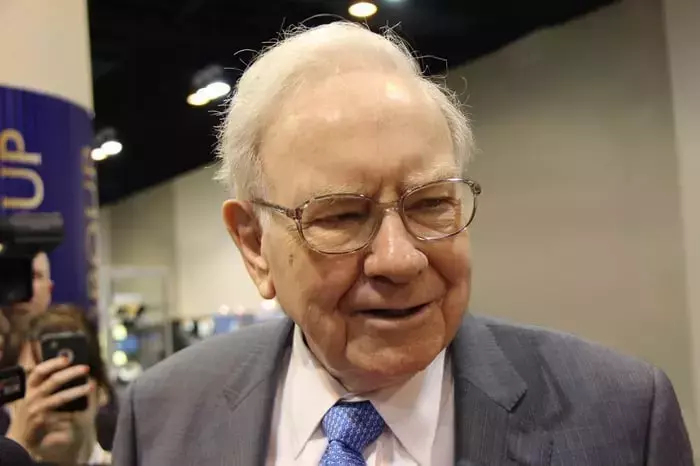
Berkshire Hathaway stands at a pivotal juncture as its iconic leader, Warren Buffett, transitions from his long-held CEO position. This shift, while initially prompting some market apprehension, paves the way for new leadership under Greg Abel, supported by skilled investment managers Todd Combs and Ted Weschler. The company's robust financial position, highlighted by a significant cash reserve and a diverse portfolio, suggests a promising future despite the departure of its legendary figure. This strategic realignment is expected to introduce fresh perspectives and investment approaches, ensuring Berkshire's continued relevance and potential for growth in a dynamic global economy.
Since 1965, Warren Buffett has been synonymous with Berkshire Hathaway, guiding it to an impressive average annual return of 20%. Now, at 95, his decision to hand over the leadership to Greg Abel, the vice chairman of Non-Insurance Operations, marks a monumental change. Investment responsibilities will be entrusted to Todd Combs and Ted Weschler, handpicked by Buffett and the late Charlie Munger. This transition follows a period where Berkshire's stock performance has trailed the broader market, presenting what some analysts view as an opportune moment for investors to consider the company's shares, especially given its conservative valuation and considerable financial liquidity.
The market's cautious reaction to Buffett's retirement announcement in May is understandable, as his presence has long provided a sense of stability and strategic foresight. However, the chosen successors bring formidable credentials to their new roles. Todd Combs, with his hedge fund background and recent success in reshaping GEICO, demonstrates a capacity for impactful leadership. Ted Weschler's personal investment track record, including an extraordinary 31% annual return on his Roth IRA over 28 years, underscores his profound understanding of value creation. Their collective expertise, particularly in identifying and integrating technology companies like Apple, Amazon, and Snowflake into Berkshire's portfolio, signals a more adaptive and modern investment strategy compared to the traditional, more cautious stance of Buffett and Munger, who often avoided ventures outside their immediate sphere of understanding.
A critical asset in Berkshire Hathaway's continued strength is its vast cash and short-term investment holdings, totaling $340 billion as of June 30, predominantly in U.S. Treasury bills. This enormous liquid capital not only provides a cushion against economic uncertainties but also generates substantial investment income, amounting to $5 billion in the first half of 2025 alone. This financial flexibility empowers the new leadership to explore and seize emerging growth opportunities across various sectors. Berkshire's operational diversity, spanning insurance, transportation, manufacturing, service, and retail, further solidifies its position by providing consistent cash flows from multiple industries. The combination of seasoned new leadership, a diversified business model, and an expansive cash reserve positions Berkshire Hathaway favorably for future expansion and innovation.
As Berkshire Hathaway embarks on this new chapter, the integration of fresh leadership with a robust financial foundation promises to maintain the company's long-term value. The strategic capabilities of Todd Combs and Ted Weschler, coupled with the continued strength of Berkshire's diverse business units and significant cash reserves, position the company for sustained success. This period of transition is not merely a changing of the guard but an evolution of investment philosophy, balancing time-tested principles with a forward-looking approach to capitalize on new market dynamics. Ultimately, Berkshire Hathaway remains a compelling investment choice, ready to adapt and thrive under its renewed direction.
