This article delves into the intriguing paradox of a stable general stock market coexisting with extreme volatility in the artificial intelligence (AI) sector, specifically within semiconductor companies. It examines the factors contributing to this divergence, analyzing market indicators and recent stock performance to understand the underlying anxieties among investors.
Unveiling the Hidden Turbulence in the AI Investment Landscape
The AI Hype Versus Market Reality: A Tale of Two Trends
While the AI industry maintains its compelling cultural appeal, as exemplified by the remarkable sale of Jensen Huang's autographed leather jacket, the financial markets tell a more complex story. The very same day saw semiconductor stocks enter a bear market, highlighting a growing chasm between public enthusiasm and investor apprehension.
Decoding the Discrepancy: Volatility in Chip Stocks Soars
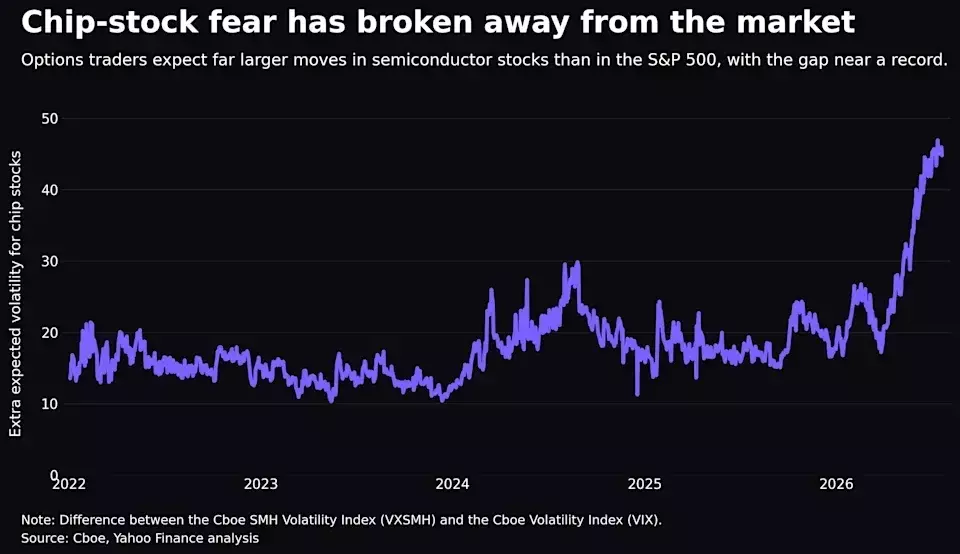
A stark contrast is evident when comparing the volatility in chip stocks to the broader market. The Cboe SMH Volatility Index, which gauges expected price movements in the VanEck Semiconductor ETF, shows a significantly higher level of anticipated turbulence compared to the S&P 500's Cboe Volatility Index. This disparity suggests that investors are bracing for much larger swings in the semiconductor sector.
Historical Context: A Shift in Market Fear Dynamics
Historically, broad market panics, such as the one triggered by the 2025 tariffs, saw widespread fear. However, current market conditions reveal a concentrated anxiety specifically within the chip industry. The volatility premium for semiconductors, currently near record highs, was less than half its present level during the widespread market turmoil of 2025, indicating a unique and targeted concern among traders today.
The Financial Impact: Trillions Erased from Chip Valuations
The recent downturn has been substantial, with global chip stocks shedding approximately $3.3 trillion from their peak values. The PHLX Semiconductor Index (SOX) breached a critical support level of 12,000, underscoring the severity of the sell-off. While the index has since recovered above this threshold, the rebound lacks conviction, and the elevated volatility premium persists, signaling ongoing investor caution.
Broader Market Resilience Amidst Sectoral Stress
Despite the intense pressure on the semiconductor sector, the wider market has demonstrated remarkable resilience. A significant majority of stocks across the S&P 500, S&P 400, and S&P 600 indices remain above their 200-day moving averages, indicating overall market strength. Furthermore, the S&P 500 advance-decline line, a key breadth indicator, recently hit a record high, suggesting healthy market participation beyond the troubled tech segment.
Navigating the Future: Key Indicators for Market Stability
The stability of the broader market hinges on the ability of the SOX to maintain its position above the 12,000 mark and for widespread market participation to remain robust. If the SOX were to fall below this crucial level again, it could signal that the stress currently confined to the chip trade is beginning to spread, potentially impacting the wider market's resilience.
