\"One Battle After Another,\" the latest cinematic endeavor from Paul Thomas Anderson, distinguishes itself through its monumental scope and the intricate tapestry of Californian landscapes it presents. Production designer Florencia Martin meticulously orchestrated a visual journey, transforming diverse locations across the Golden State and even parts of Texas into a cohesive, yet distinct, cinematic reality. The film weaves together a narrative set in a 'sort-of present day,' where characters navigate expansive deserts, dense redwood forests, and the complex environment of the U.S.-Mexico border, culminating in a visually stunning and emotionally resonant experience for the audience. The production's commitment to authenticity, from consulting with real-life 'weed nuns' to recreating border detention camps with historical accuracy, underscores the depth and ambition behind this cinematic achievement.
Unveiling the Setting: A Journey Through California's Hidden Realms for 'One Battle After Another'
In the expansive and often challenging realm of filmmaking, Paul Thomas Anderson's latest masterpiece, \"One Battle After Another,\" stands as a testament to the power of imaginative production design. The film, released on September 27, 2025, embarks on a sprawling journey across California's lesser-seen locales, from the desolate stretches east of San Diego to the lush, ancient redwood forests of Northern California, touching upon the bustling border with Tijuana, Mexico. This ambitious project, loosely inspired by Thomas Pynchon's \"Vineland,\" required an unparalleled vision from production designer Florencia Martin, whose previous work on \"Licorice Pizza\" showcased her ability to meticulously recreate historical settings.
Martin's quest to find the perfect backdrops commenced even before the global pandemic, intensifying into serious scouting efforts by 2022. The film's narrative follows Sean Penn's character, Col. Steven J. Lockjaw, in his relentless pursuit of Bob, a depressed stoner portrayed by Leonardo DiCaprio, and Bob's resilient teenage daughter, Willa, played by Chase Infiniti. This high-stakes chase unfolds against a backdrop that Martin describes as \"a tapestry of California that we don't really know.\"
The production, benefiting from an $8.4 million subsidy from California, ventured into at least nine counties within the state, along with shooting in El Paso, Texas. Rather than focusing on California's iconic coastal vistas, Martin sought out distinctive inland settings: the industrial rail yards of Sacramento, the raw reality of the Otay Mesa border crossing near Tijuana, and the dramatic, undulating hills of the Anza-Borrego desert. These locations collectively imbue \"One Battle After Another\" with a unique visual identity, setting it apart from other films shot in the Golden State.
Central to the film's enigmatic atmosphere is the fictional city of Baktan Cross, a composite of Eureka, California, and El Paso, Texas. Eureka High School served as the vibrant setting for a pivotal dance sequence, featuring actual students. Meanwhile, Sacramento's historic Reagan Mansion was fittingly chosen as the headquarters for the nefarious Christmas Adventurer's Club.
Creating Sanctuary and Struggle: Bob and Willa's Secluded Abode
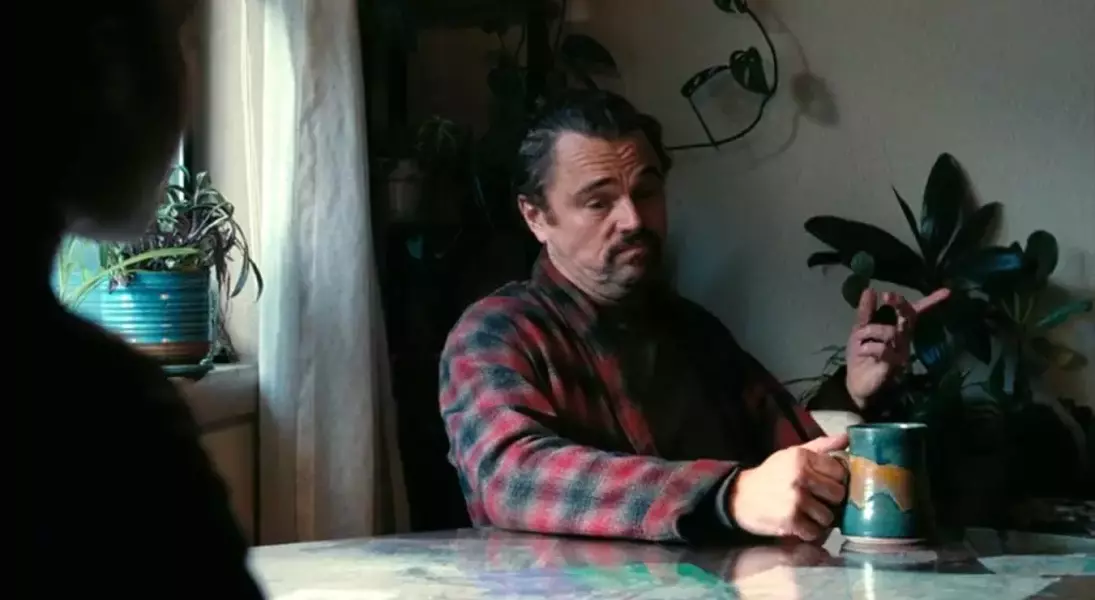
Bob and Willa's sanctuary, a single-bedroom house nestled within the embracing redwoods, reflects Bob's evolution from a political activist to a recluse. Martin and her team ingeniously built a redwood outhouse among an eclectic collection of moss-covered miniature cars found on the property, hinting at Bob's quirky hobbies. Willa's bedroom, an extension of this small cottage, was adorned with personal mementos provided by the cast and crew, including Paul Anderson's children's artwork and Chase Infiniti's baby photos, alongside karate trophies and a calendar that later becomes a crucial clue in the narrative.
Sensei's Haven: A Labyrinth of Life in El Paso
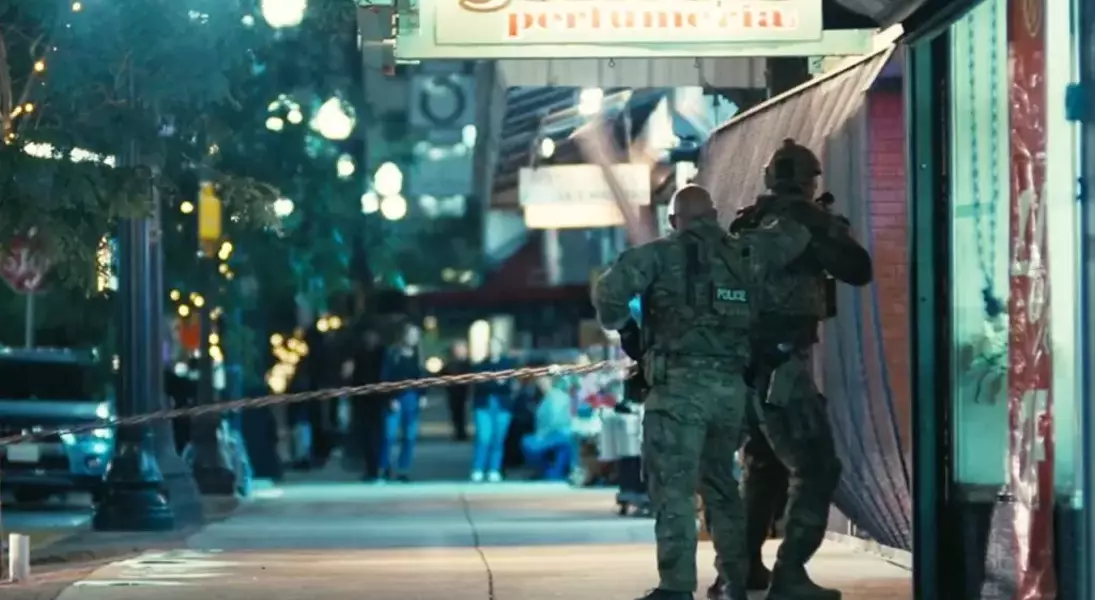
El Paso's rich history and vibrant Latino culture provided the ideal setting for Sensei's sprawling apartment building, a haven for refugees overseen by Benicio del Toro's character. Martin's team discovered Genesis Perfumeria, where Benicio del Toro's wife works in the film, an incredibly vivid fluorescent green interior filled with thousands of perfume bottles. The stairs from this perfumeria led to an empty second floor spanning the entire block, which Martin transformed into Sensei's meticulously detailed apartment. Each living space was imbued with a distinct story, developed in close collaboration with set decorator Anthony Carlino and casting director Cassandra Kulukundis, to reflect the diverse families seeking shelter there.
The Sisters of the Brave Beaver: A Mission of Cannabis and Compassion
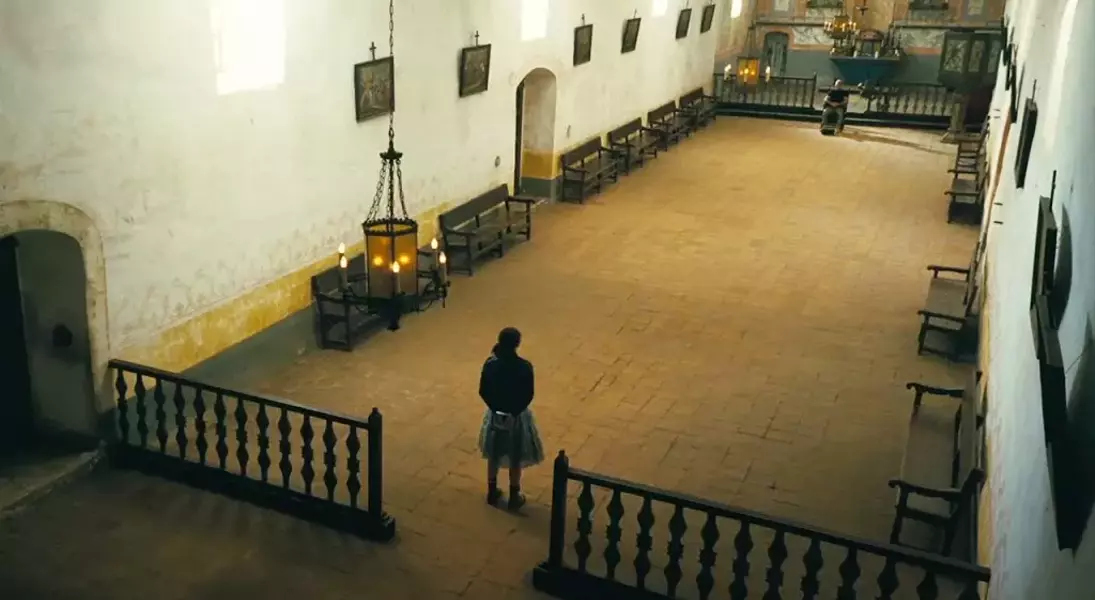
The compound of the Sisters of the Brave Beaver, an intriguing concept informed by consultations with real-life, non-religious \"weed nuns\" from Merced, California (the Sisters of the Valley), was brought to life at the La Purisima Mission in Lompoc, north of Santa Barbara. This now-public park provided the perfect dilapidated, yet believable, backdrop for a community of women initially seeking sanctuary, who later monetize their cannabis cultivation to sustain their collective. The mission's sanctuary, with its authentic chapel, became the poignant setting for Col. Lockjaw's perverse paternity test with Willa.
The Stark Reality: Border Detention Camps
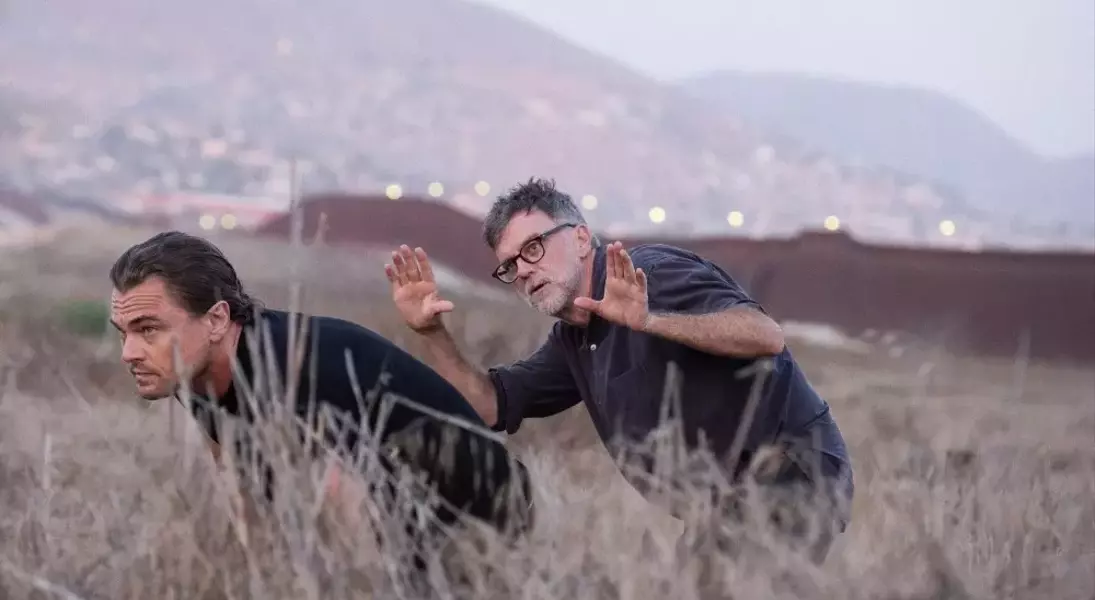
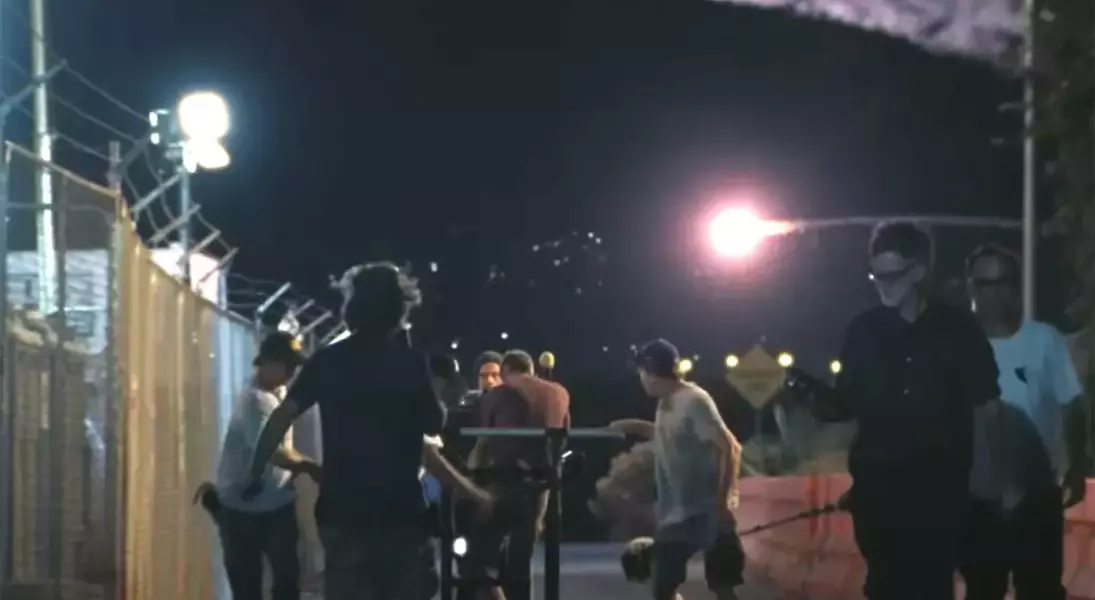
To depict the sobering reality of border detention camps, Martin delved into contemporary and historical photographs, collaborating with a military advisor. The team's location manager, Michael Glaser, discovered an extraordinary site under an overpass, allowing them to construct a temporary camp adjacent to the actual border wall. This challenging undertaking, marked by the presence of Border Patrol and immigrants during filming, was approached with immense sensitivity and respect, aiming to portray the heartbreak of separated families and detained children with authenticity rather than fictionalized interpretation.
The Epic Chase: A River of Hills in the Desert
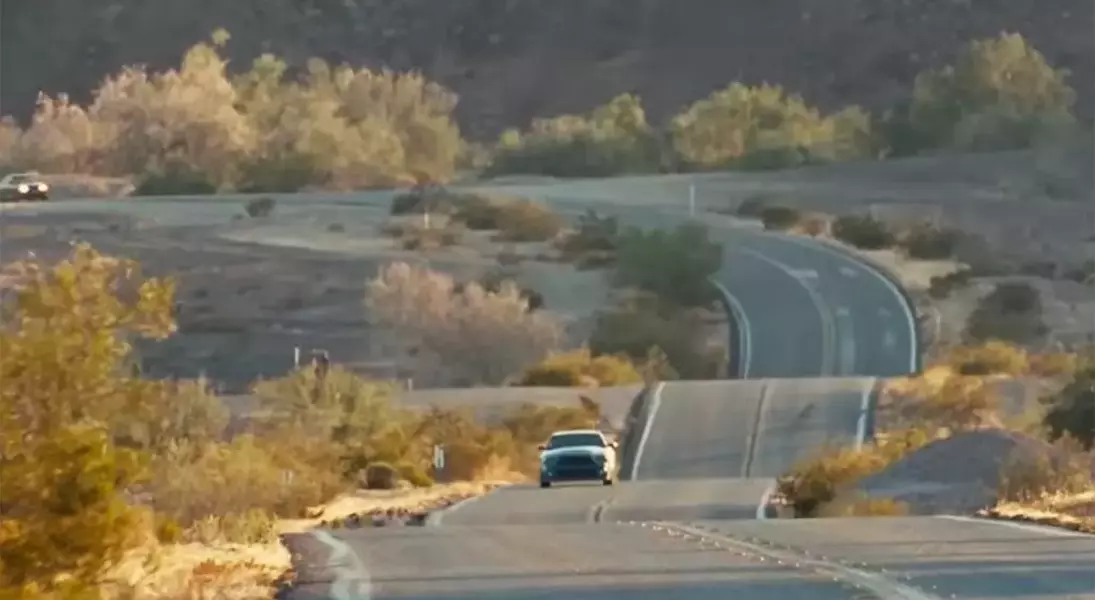
The film's climactic car chase scene found its dramatic canvas in the Anza-Borrego desert. Returning from a scouting trip near the Arizona border, Martin serendipitously discovered a road that plunged and soared through hills, which the crew affectionately dubbed \"the river of hills.\" This breathtaking landscape, particularly the \"Texas Dip\" in Borrego Springs, provided the perfect natural architecture for the high-octane pursuit. The team meticulously planned the sequence, considering the time of day and natural light, while also allowing room for spontaneous creativity, a hallmark of Paul Thomas Anderson's filmmaking approach.
\"One Battle After Another\" thus emerges as a profound cinematic achievement, not only for its compelling narrative but for the extraordinary vision and dedication of its production team in crafting a world that is both deeply rooted in reality and wonderfully unique.
The creation of \"One Battle After Another\" serves as a powerful reminder of the meticulous artistry involved in filmmaking, particularly in production design. Florencia Martin's dedication to authenticity and her ability to transform diverse locations into an integral part of the narrative underscores the profound impact that setting can have on storytelling. The film's ambitious scope, requiring extensive scouting and creative problem-solving, highlights the collaborative spirit and innovative thinking essential to bringing a director's vision to life. This endeavor also sheds light on the importance of local resources and expertise, from the historical insights provided by \"weed nuns\" to the geographical knowledge of local scouts, in enriching the cinematic experience. Ultimately, the film's success in weaving a complex narrative through a rich tapestry of Californian landscapes offers a compelling case for the artistic and logistical challenges inherent in creating truly immersive on-screen worlds.
