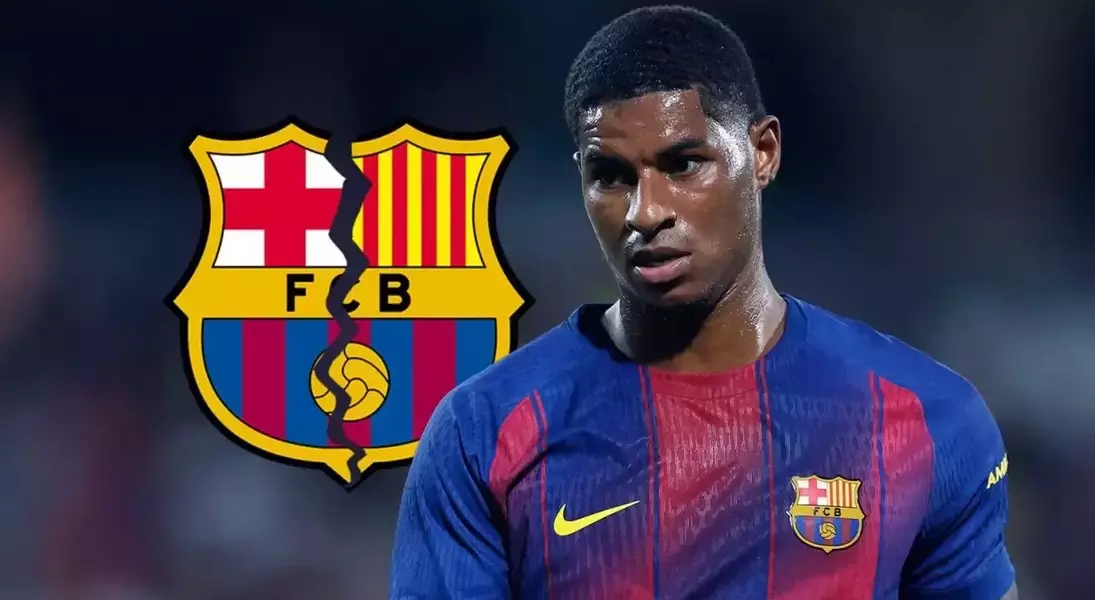
Marcus Rashford's transition to FC Barcelona, initially hailed as a significant acquisition, has quickly become a focal point of internal apprehension. Despite a recent resurgence in form that made him an attractive prospect for many top clubs, Barcelona's hierarchy and dressing room are reportedly grappling with 'alarm bells', fearing that the English forward might echo the underwhelming tenure of Joao Felix, characterized by a perceived lack of sustained commitment and consistency. This apprehension comes at a time when Rashford himself has publicly dissected the challenges faced by his former club, Manchester United, attributing their extended period of flux to a deviation from the foundational principles established under the legendary Sir Alex Ferguson.
This developing narrative underscores the high stakes involved in elite football transfers, where past performance and inherent talent must align with a club's demanding culture and strategic vision. The trepidation within Barcelona’s ranks reflects a cautious approach to integrating new talent, particularly players arriving with a history of fluctuating form. Meanwhile, Rashford’s candid assessment of Manchester United’s post-Ferguson era highlights a broader issue in modern football: the struggle for established clubs to maintain a cohesive identity and consistent philosophical framework in the absence of a long-standing, guiding figure. This convergence of immediate performance pressures at Barcelona and historical reflections on Manchester United's trajectory paints a nuanced picture of a player at a critical juncture in his career and the institutional challenges faced by footballing giants.
Barcelona's Apprehension Regarding Rashford's Arrival
Marcus Rashford's recent loan transfer to FC Barcelona, complete with an option for a permanent deal, has reportedly ignited concerns within the Catalan club. While the English forward, following a successful loan spell at Aston Villa where he rediscovered his scoring touch, was seen as a valuable addition to Hansi Flick's squad, initial reports from Spain indicate a growing unease among Barcelona players. The primary fear articulated is that Rashford's tenure might mirror that of Joao Felix, whose time at the club was marked by inconsistency and a perceived lack of dedication, ultimately failing to meet expectations. This parallel suggests a deeper worry within the locker room about Rashford's ability to maintain high levels of performance and commitment.
This apprehension stems from two main concerns: Rashford's past struggles with form at Manchester United and a perceived wavering commitment. Although he demonstrated his versatility and improved statistics during his loan spell at Villa, scoring four goals and providing six assists, the memory of his inconsistent 18 months prior to leaving Old Trafford looms large. Barcelona's pursuit of Rashford came after they missed out on other targets like Luis Diaz and Nico Williams, highlighting their pressing need for a new winger. However, despite his brief appearance in Barcelona's 3-0 victory over Mallorca, replacing Ferran Torres, the internal debate about his long-term suitability is already underway. The club's trepidation is a clear indicator of the high standards and intense scrutiny new signings face at an institution like Barcelona, especially when a player's past performance raises questions about consistency and adaptability.
Rashford's Perspective on Manchester United's Struggles
Amidst the burgeoning concerns at his new club, Marcus Rashford has offered his own insights into the protracted difficulties faced by his former team, Manchester United, since the departure of Sir Alex Ferguson. Speaking on 'The Rest is Football' podcast, Rashford pointed to a fundamental issue: the absence of a consistent, overarching philosophy or 'principles' that once permeated every level of the club, from the first team down to the academy. He argued that under Ferguson, there was a clear identity and way of playing that every player understood, regardless of their age group. This established framework, he believes, is what has been missing, leading to the club's prolonged struggles.
Rashford elaborated on this point, asserting that Manchester United has been in a perpetual state of 'transition' that has yet to truly begin. He suggested that successful football clubs, over extended periods, operate with core principles that new coaches and players must either align with or actively enhance. In contrast, he feels United has often adopted a reactive approach, signing players based on immediate needs rather than fitting into a clear, long-term system. This reactionary transfer policy, coupled with a shifting strategic direction, has hindered the club's ability to establish a stable and winning environment. Rashford's reflections provide a poignant commentary on the challenges of maintaining institutional consistency and a coherent footballing philosophy in the highly competitive and ever-evolving landscape of professional football.
