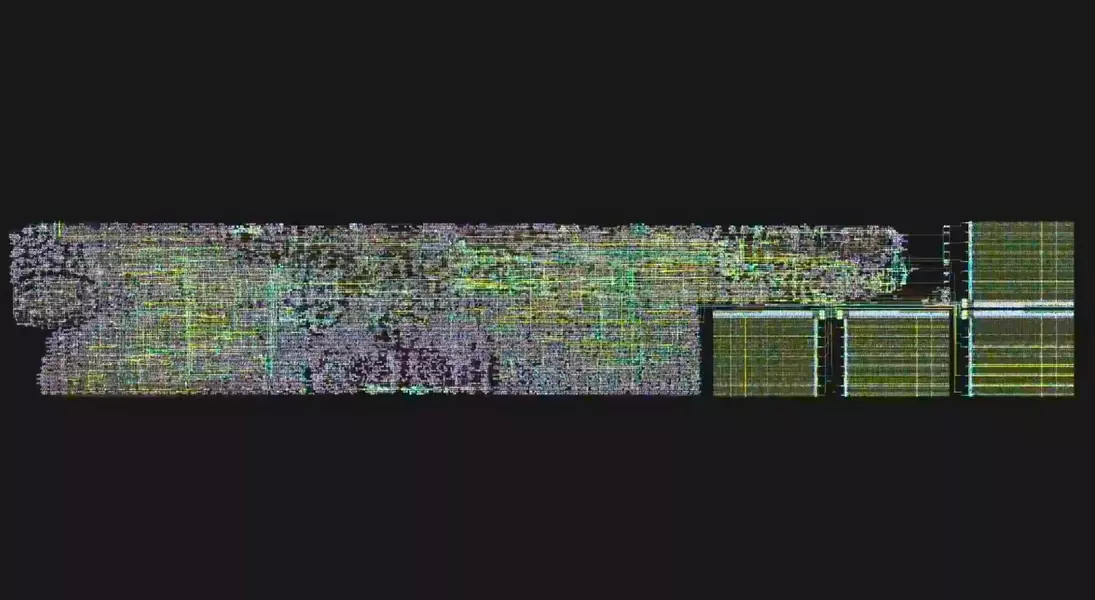

Delve into the intricate world of early computing with a mesmerizing simulation showcasing the Atari 2600's data retrieval process. This article explores a designer's creation that brings to life the inner workings of a nearly five-decade-old processor, revealing the fundamental architecture that paved the way for modern technology.
Witness the Microscopic Dance of Data in a Retro Computing Masterpiece
Unveiling the Atari 2600's Inner Workings Through Advanced Simulation
For enthusiasts eager to understand the foundational mechanics of classic computers, a recent simulation provides an exceptional opportunity. Crafted by a skilled designer, this visual marvel meticulously depicts how the venerable Atari 2600, a gaming console from a bygone era, accesses data stored within its Read-Only Memory (ROM). The simulation offers a rare glimpse into the complex, yet elegant, operations occurring at the CMOS FET (Complementary Metal-Oxide-Semiconductor Field-Effect Transistor) level.
A Detailed Look at CMOS FET-Level Data Retrieval
The creator, Alex Mordvintsev, shared a brief video on social media platform X, showcasing the Atari 2600's data fetching process. This highly detailed visualization traces the movement of data across the integrated circuits, illustrating the microscopic pathways and interactions involved. Despite the extreme intricacy that might initially overwhelm the viewer, the simulation stands as a testament to the sophistication and ingenuity embedded in early computing hardware.
The Genesis of the Simulation: Tiny Tapeout's Collaborative Platform
Mordvintsev's simulation leverages the TT09 Atari circuit, a component provided by Tiny Tapeout. This innovative platform fosters collaboration and open-source development, enabling users to design and experiment with chip models. By building upon Tiny Tapeout's established framework, Mordvintsev successfully developed a simulation that offers an unprecedented level of detail and insight into the Atari 2600's architectural design.
Anticipating Public Access to the Atari 2600 Simulation
Exciting news for budding engineers and retro computing aficionados: Mordvintsev has indicated plans to release a version of the simulation for public testing. This initiative will soon allow a wider audience to explore and interact with the data fetching processes of the Atari 2600, and potentially other historical processors, offering a hands-on educational experience.
A Glimpse into the Atari 2600's Historic Specifications
The Atari 2600, originally launched in North America in 1977, represented a significant leap in home entertainment. Its initial price point, approximately $200 at the time, translates to about $1,000 in today's economy. The console boasted a modest 128 bytes of RAM and an 8-bit, 1.19 MHz CPU. Games were delivered via ROM cartridges, starting at a mere 2KB and eventually expanding to 64KB through innovative bank switching techniques, a marvel of resource management for its time.
Reflecting on Technological Progress Through a Retro Lens
While a simulation of a 48-year-old device might seem to lack immediate practical applications in today's high-tech world, its value lies in its ability to underscore the monumental advancements in technology. Observing the rapid and complex data flows in this simulation highlights the foundational principles that continue to govern modern computing, all while provoking a sense of nostalgia for a simpler, yet profoundly innovative, technological era. It also serves as a poignant reminder of how pervasive digital information has become, a stark contrast to the physical ROMs that once defined gaming experiences.
