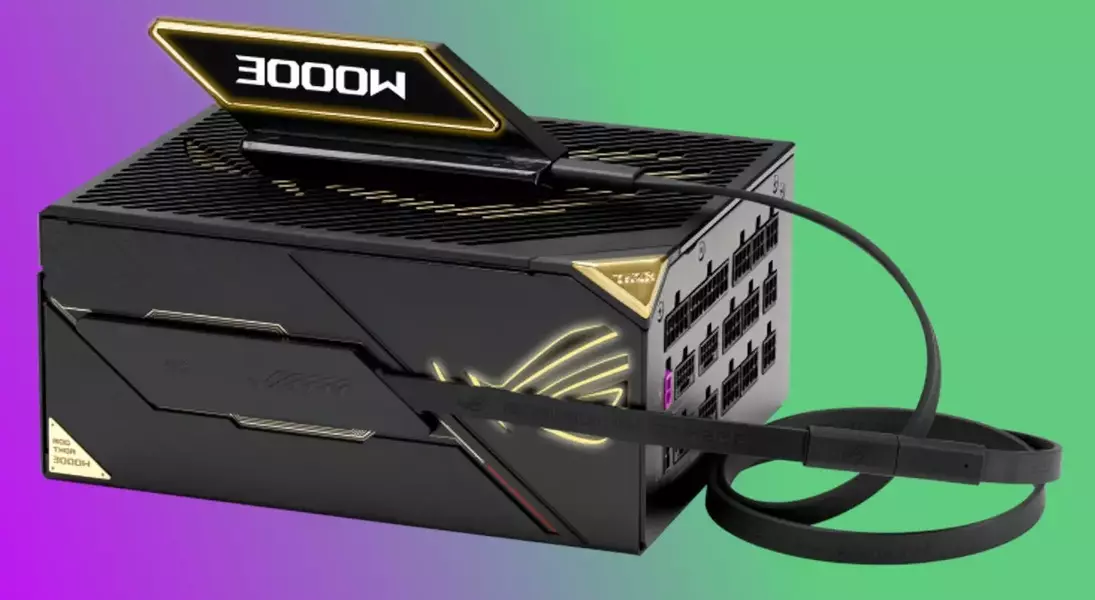
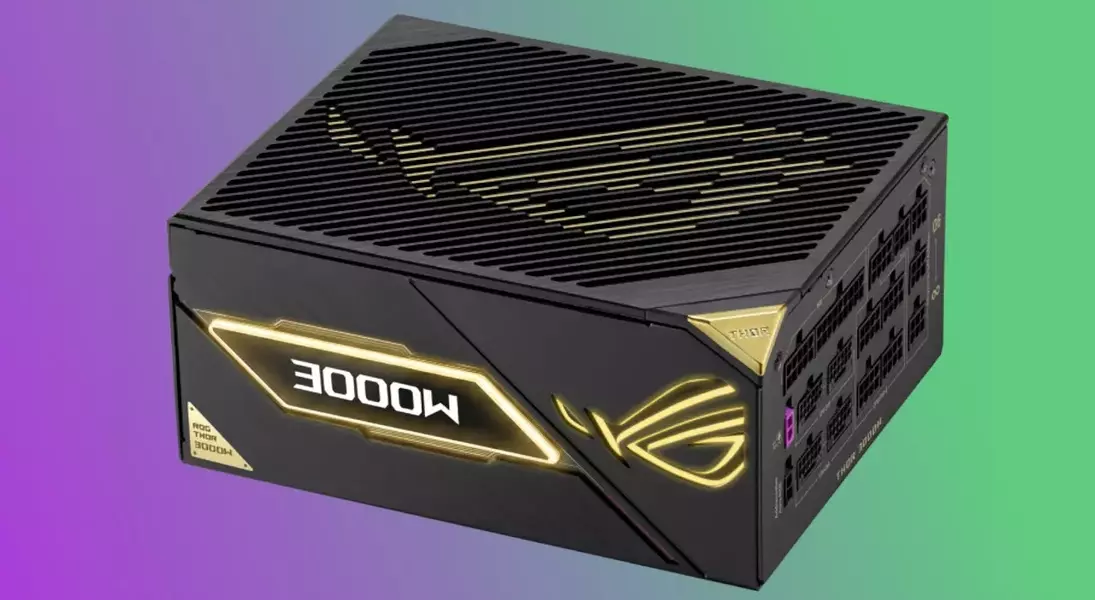
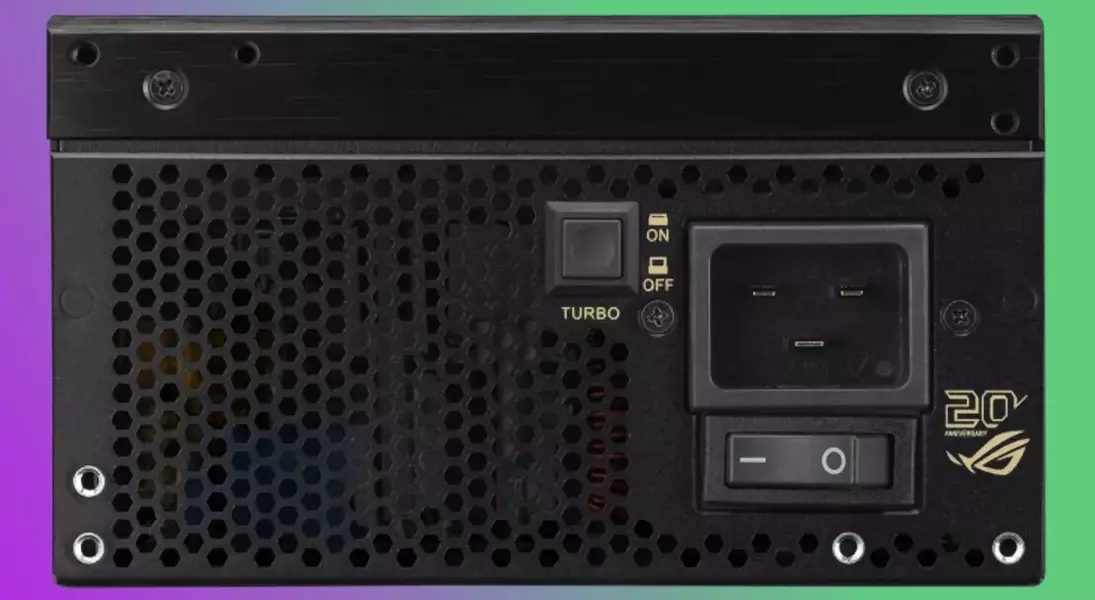
Asus has introduced a new 3000W power supply unit (PSU), the ROG Thor 3000W Titanium III Edition 20, as part of its ROG brand's 20th anniversary. This high-wattage PSU is presented as a premium offering for gaming PCs. However, similar 3 kW PSUs are typically found in workstation environments, such as those from Corsair (WS3000) or Asus's own Pro WS 3000W Platinum. For a gaming setup, this level of power is excessive and largely without practical benefit.
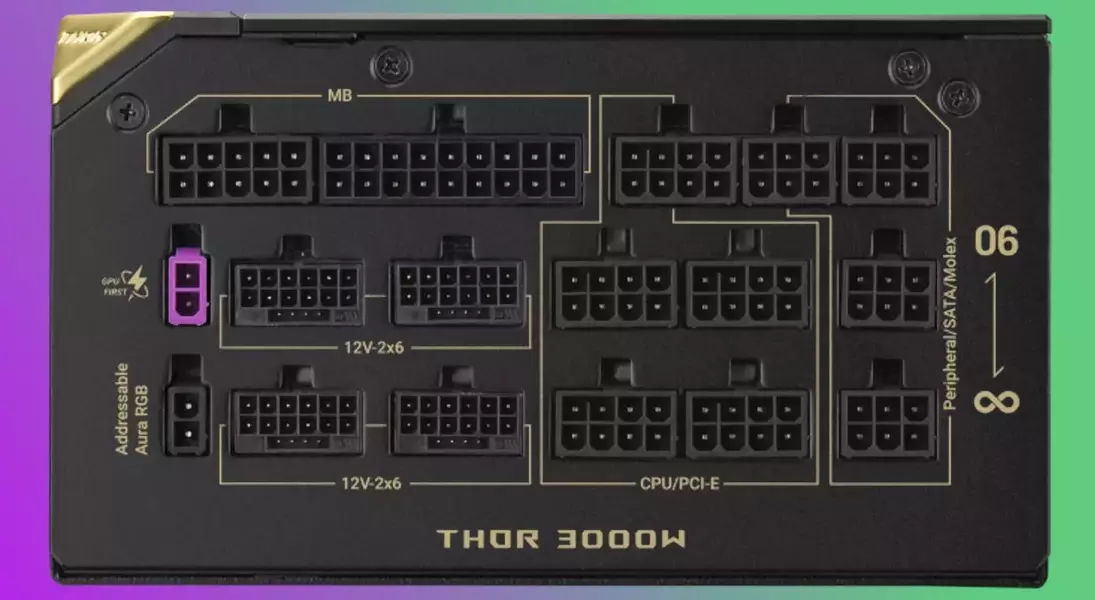
The company markets this new power supply for gaming, despite its impracticality for this segment. The unit features four 12V-2x6 power connectors, which is far more than what a single high-end graphics card like an RTX 5090 would require for optimal performance. While theoretical multi-GPU setups might utilize more power, they do not translate to significantly faster gaming experiences. The Thor 3000W Titanium III Edition 20 does include gaming-oriented features, such as an OLED display and a voltage monitoring system, but these do not justify its extreme power output for gaming purposes. Even at its peak efficiency, around 1600W, the PSU vastly exceeds the demands of any current gaming configuration.
Ultimately, this new product appears to be more of a marketing statement by Asus, showcasing the brand's capacity for producing high-spec components rather than fulfilling a genuine need for gamers. Despite its advanced specifications, a closer inspection of the device's images reveals a standard internal design and some potentially misaligned components, suggesting it may not be a uniquely crafted unit. For consumers seeking a high-performance power supply for their gaming rigs, exploring alternatives that offer a more balanced and practical power output would be a more sensible approach.
Innovation in technology, while sometimes pushing boundaries, should always aim to provide tangible benefits and efficiency for its users. This product highlights how companies can often prioritize showcasing capabilities over delivering practical and truly beneficial solutions, especially in a market where consumers are constantly seeking the next big thing. True progress lies in designing hardware that meets evolving needs with thoughtful engineering and genuine utility, fostering growth and excitement within the computing community.
