
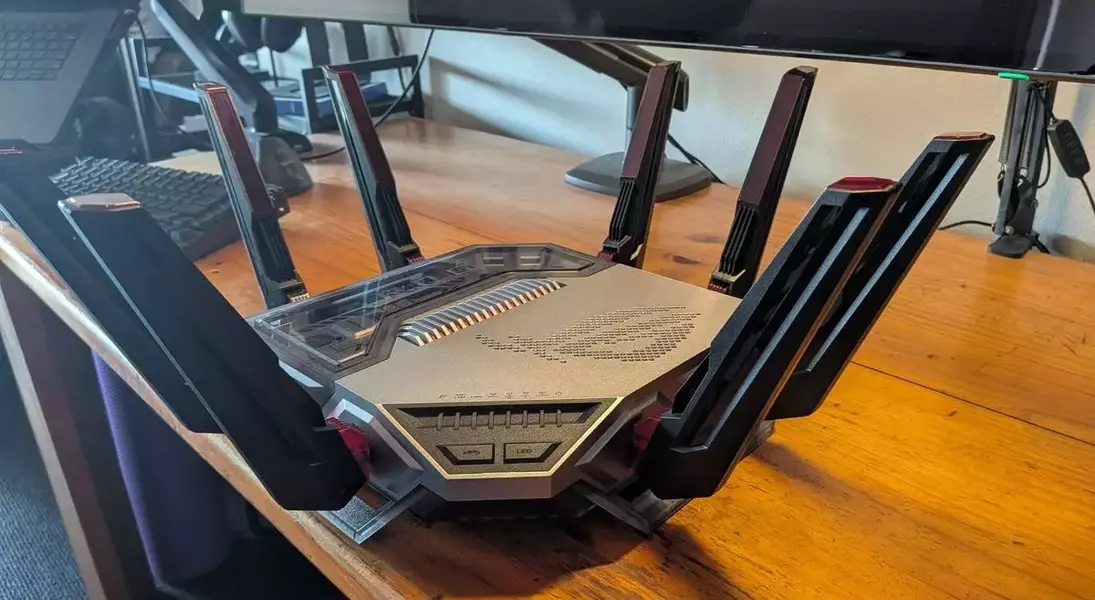
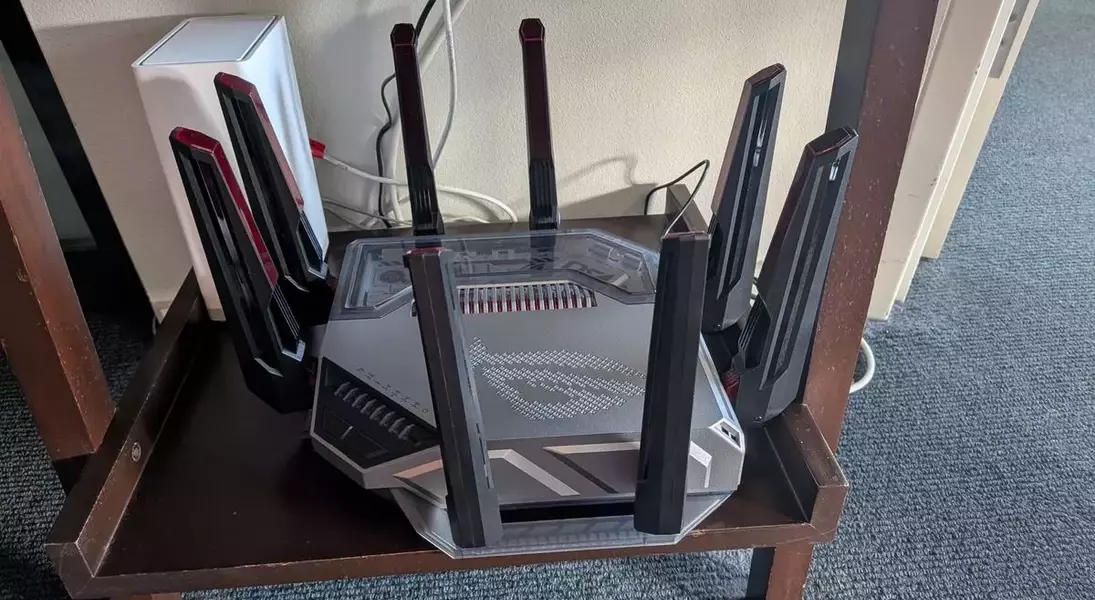



Asus has introduced the GT-BN98 Pro, its pioneering Wi-Fi 8 router, aiming to redefine network performance, especially for gaming and smart-home ecosystems. This device distinguishes itself not by raw short-range speed, which is currently outpaced by some Wi-Fi 7 counterparts, but by its unparalleled ability to sustain strong connections across longer distances and in heavily trafficked wireless environments. Incorporating cutting-edge technologies like Unequal Modulation (UEQM) and Enhanced Long Range (ELR), the GT-BN98 Pro promises a more consistent and robust network experience for a diverse range of users.
The review provides a comprehensive look at the router's specifications, including its Wi-Fi 8 (802.11bn) draft standard, impressive speed of 24.43 Mbps, and tri-band operating frequencies. It also highlights the extensive connectivity options and a suite of advanced features, such as parental controls, game acceleration, and robust security. Through detailed real-world testing, the article demonstrates how the GT-BN98 Pro outperforms previous generations in maintaining signal integrity and upload speeds over distance, making it a compelling, albeit expensive, choice for those seeking a future-proof networking solution.
Enhanced Reliability and Extended Range in Wireless Networks
Asus has launched the GT-BN98 Pro, an innovative Wi-Fi 8 router, designed to offer superior network reliability and extended range. This router represents a significant leap forward in wireless technology, focusing on delivering a more stable and consistent internet experience rather than merely boosting peak speeds. Its core advancements, such as Unequal Modulation (UEQM) and Enhanced Long Range (ELR) technologies, are particularly impactful in environments with numerous connected devices or over considerable distances. These features ensure that signal degradation is minimized, and performance remains high even at the fringes of the network, which is crucial for modern smart homes and expansive properties.
The GT-BN98 Pro leverages these sophisticated technologies to address common wireless network frustrations. UEQM smooths out performance as devices move further from the router, preventing abrupt drops in speed often seen in older Wi-Fi standards. ELR strengthens weak connections and improves upload speeds, benefiting everything from IoT devices in remote corners of a house to gamers streaming live content. Furthermore, the router incorporates Multi-AP Coexistence technologies, such as Coordinated Beamforming and Coordinated Spatial Reuse, which enable multiple access points to work in harmony, optimizing channel usage and reducing interference in crowded wireless landscapes. This comprehensive approach to network enhancement positions the GT-BN98 Pro as a robust solution for a future where seamless and reliable connectivity is paramount.
Performance Analysis and Value Proposition of the GT-BN98 Pro
In evaluating the Asus ROG Rapture GT-BN98 Pro, real-world testing reveals its strengths and how it compares to existing Wi-Fi 7 models. While its close-range speed of 1,788 Mbps is notable, it doesn't quite reach the raw throughput of its Wi-Fi 7 predecessors, like the BE19000AI, which hit over 3,000 Mbps. However, the GT-BN98 Pro truly shines in maintaining performance over distance. In tests conducted two rooms away, it delivered 894 Mbps, significantly outpacing Wi-Fi 7 devices struggling to maintain 500 Mbps. Its ability to sustain 120 Mbps in a garden 15 meters away also marked a vast improvement over the 12 Mbps of a comparable Wi-Fi 7 router, demonstrating Wi-Fi 8's inherent advantages in range and stability.
Beyond its core performance metrics, the GT-BN98 Pro is equipped with a rich array of features that enhance its value. These include specialized game acceleration settings to reduce latency for competitive gaming, comprehensive network and device security without requiring subscriptions, and robust parental controls. It also supports media and file server functionalities, VPN, and the ability to integrate older Asus routers as range extenders, forming a cohesive network. Priced at approximately $999, it is a significant investment but offers a future-proof solution with advanced capabilities that justify its cost, especially when considering the lack of subscription fees found in some competing Wi-Fi 7 mesh systems. The router's ability to maintain performance under heavy load, even with multiple 4K streams, further underscores its suitability for demanding modern households.
