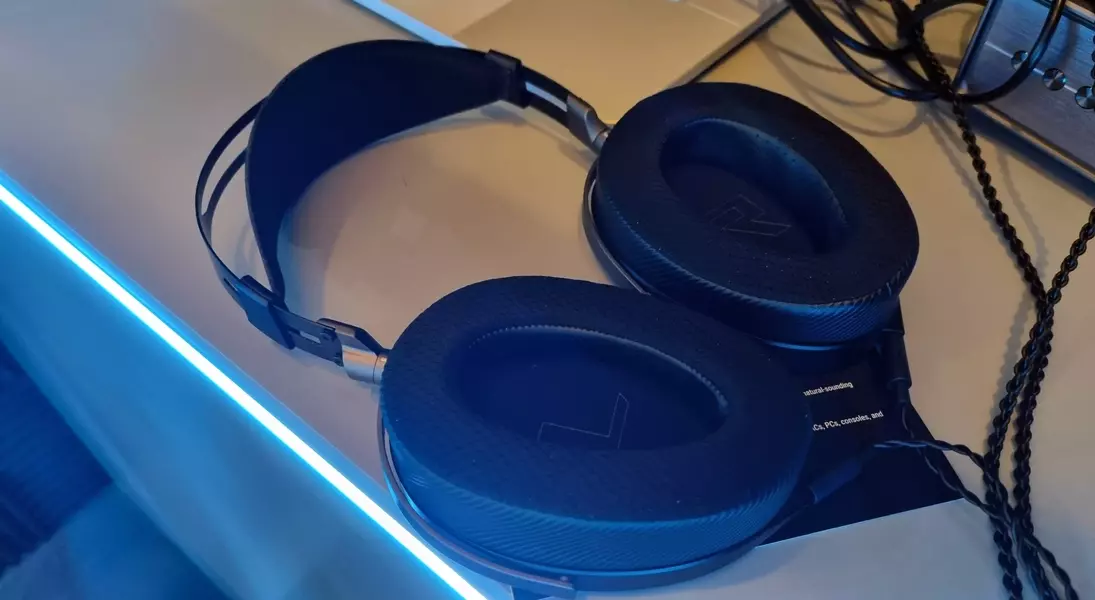

ASUS has surprised the gaming peripheral market with the introduction of its ROG Kithara gaming headset, a product that integrates planar magnetic driver technology through a partnership with specialist audio manufacturer Hifiman. This collaboration seeks to combine Hifiman's expertise in high-fidelity sound with ASUS's gaming-focused design, promising an elevated audio experience for gamers.
Planar magnetic drivers are renowned in the audiophile community for their ability to produce remarkably clear and precise sound. Unlike traditional dynamic drivers, they employ a thin, magnet-suspended diaphragm that results in superior transient response and lower distortion. Historically, a drawback of planar magnetic technology has been its performance with lower frequencies, often requiring substantial amplification to achieve impactful bass. However, ASUS claims to have optimized Hifiman's 100mm planar magnetic drivers in the ROG Kithara to deliver a powerful low-end, addressing this common challenge.
The ROG Kithara is designed with compatibility in mind, offering a balanced 4.4mm plug alongside two 3.5/6.3mm single-ended plugs, ensuring broad connectivity with various digital-to-analog converters (DACs), amplifiers, PCs, and gaming consoles. Additionally, a USB-C to dual 3.5mm adapter is included, catering to users of laptops and mobile devices. Despite its versatility, the headset's 16 Ohm impedance rating raises questions about its performance without external amplification, a critical consideration for many gamers who may prefer a plug-and-play experience without investing in additional audio equipment.
Positioned in the premium segment, the ROG Kithara is expected to carry a retail price between $300 and $350. This places it directly in competition with established high-end gaming headsets, notably the newly announced Audeze Maxwell 2, which also utilizes planar magnetic technology and offers wireless connectivity. The Kithara's wired design contrasts with its wireless competitors, meaning it will need to deliver exceptional audio quality and unique features to justify its price point in a competitive market. The initial impressions suggest a compelling audio profile, particularly in dynamic gaming scenarios, but a thorough evaluation under typical gaming conditions will be crucial to ascertain its true value proposition.
This new offering from ASUS signifies a push towards integrating advanced audiophile technology into gaming peripherals, aiming to meet the demands of discerning gamers who prioritize sound quality. The collaboration with Hifiman highlights a trend in the industry to bridge the gap between high-fidelity audio and gaming, offering products that cater to both performance and immersive experiences.
