

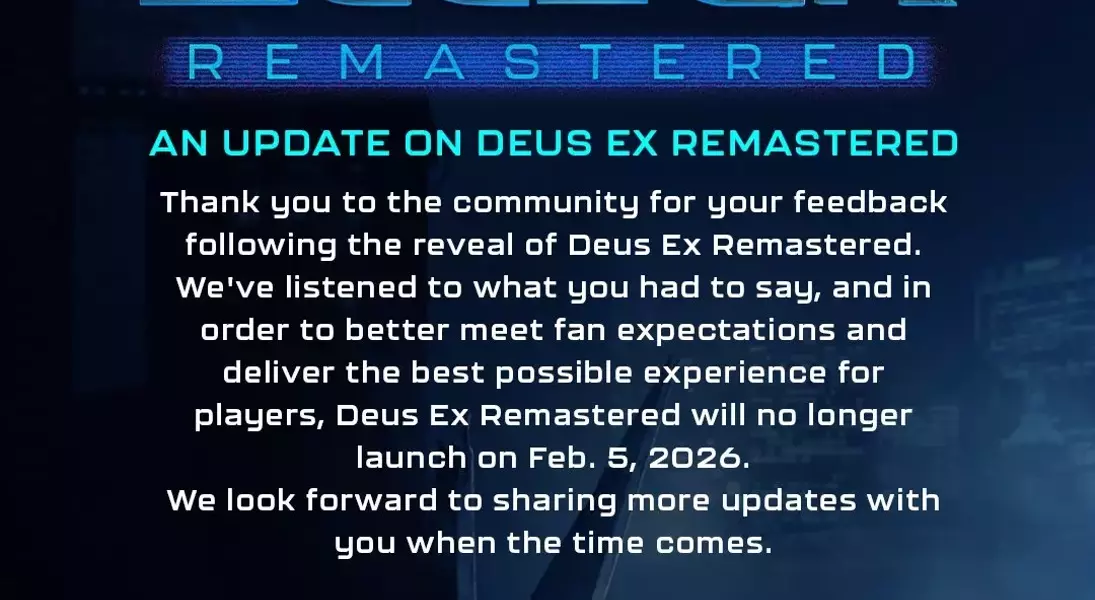
Aspyr, the game developer, has decided to postpone the much-anticipated "Deus Ex Remastered" following a wave of critical feedback from the gaming community. Originally scheduled for release on February 5, 2026, the project's future is now uncertain, with all existing preorders being fully reimbursed.
The 'Deus Ex Remastered' Debacle: A Deeper Look into Aspyr's Decision
In a significant development for the gaming world, Aspyr Media has announced an indefinite delay for its highly anticipated "Deus Ex Remastered" title. The decision, revealed via an official statement on X (formerly Twitter), comes in direct response to overwhelming fan discontent regarding the remaster's initial reveal. The game, a modern rendition of the seminal immersive sim, was originally targeting a February 5, 2026, launch date. However, the unfavorable reception, particularly concerning the visual fidelity and artistic direction, prompted the developer to reconsider its timeline. Notably, even Jerry O'Flaherty, the original art director for "Deus Ex," expressed his strong disapproval of the remaster's appearance, a sentiment echoed widely across the gaming landscape. Fans and critics alike pointed out that the visual updates failed to capture the original's essence, instead presenting a rendition that felt dated and uninspired, especially when compared to the highly regarded original, which is available at a significantly lower price point. Aspyr has taken the unusual step of refunding all preorders, a move that suggests a fundamental re-evaluation of the project's scope and direction. This incident places "Deus Ex Remastered" alongside other projects with uncertain futures, highlighting the challenges of re-imagining beloved classics while meeting contemporary player expectations.
This situation serves as a poignant reminder of the intricate balance developers must strike between nostalgia and innovation. The passionate backlash against the "Deus Ex Remastered" reveal underscores the deep emotional connection players have with iconic titles. It highlights that a successful remaster goes beyond mere graphical upgrades; it demands a nuanced understanding of the original's artistic vision and a commitment to enhancing, rather than detracting from, its core identity. This outcome could inspire greater transparency and earlier engagement with fan communities in future remaster projects, ensuring that development aligns with player expectations from the outset.
