
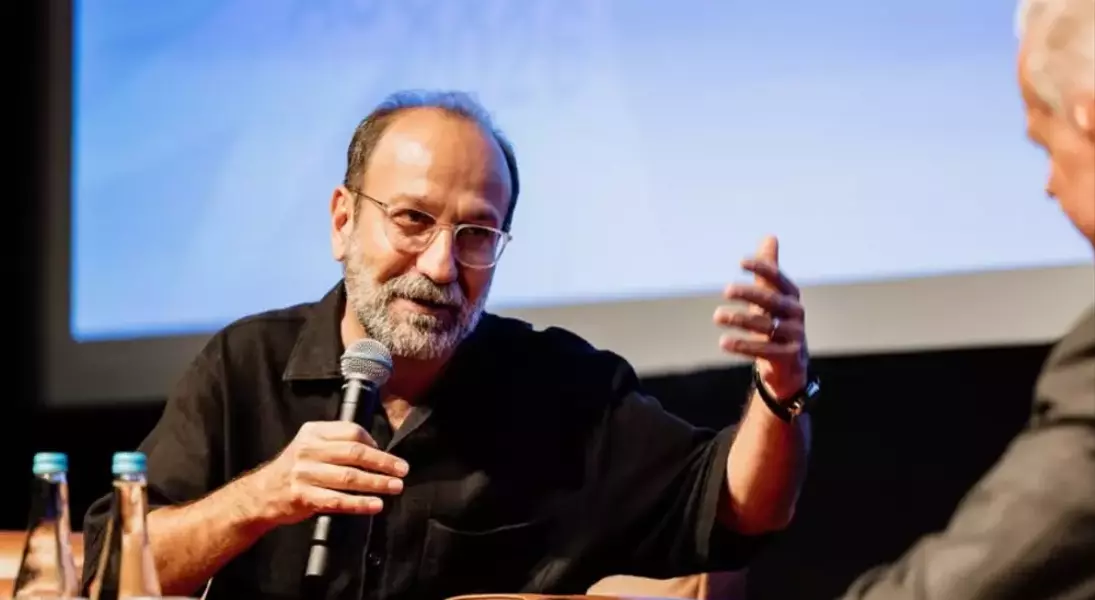
Award-winning Iranian filmmaker Asghar Farhadi recently voiced his concerns about the media and political narratives that accentuate societal differences, urging a shift towards recognizing shared human experiences. Speaking at the Sarajevo Film Festival, where he received an honorary award, Farhadi championed the power of universal emotions in cinema, drawing parallels between his acclaimed works and those of Japanese masters like Ozu and Kurosawa. He stressed that fundamental human feelings, such as a mother's love, transcend cultural boundaries, a truth often obscured by those who seek to divide. Furthermore, he offered a cautionary message to aspiring directors, emphasizing the deceptive allure of success and advocating for a focus on genuine artistic expression over the pursuit of accolades.
Farhadi's reflections extended to the profound impact of global events, illustrating how the media's framing of tragedies can desensitize audiences to suffering by portraying distant victims as inherently different. He posited that fostering empathy requires acknowledging our common humanity, suggesting that direct interaction and understanding could dissolve animosity. His philosophy for filmmaking is rooted in authenticity and local narratives, believing that stories deeply connected to human experience in specific contexts possess universal resonance. He advised filmmakers against prioritizing commercial triumph, characterizing it as a "dangerous" distraction that can distance artists from the very people their work aims to touch. He articulated a preference for the creative journey over its outcome, distinguishing between those who love the craft of filmmaking and those who merely desire the title of a filmmaker.
The Unifying Power of Humanity in Cinema
Asghar Farhadi, the celebrated Iranian director known for his impactful films such as "A Separation" and "The Salesman," used his platform at the Sarajevo Film Festival to deliver a powerful message on the importance of shared humanity. Farhadi, a recipient of two Oscars and a Golden Bear, critically examined how media and political discourses often magnify differences among people, leading to a fragmented global perspective. He argued that despite superficial variations, the core human emotions and experiences are universal, citing classic Japanese cinema as an example where audiences connect deeply with characters without needing specific cultural knowledge. This connection, he explained, stems from the universal themes of humanity embedded in these narratives. He highlighted how maternal love, for instance, remains a constant across all cultures, irrespective of its diverse expressions, and stressed that focusing on such fundamental commonalities is essential to bridge divides. Farhadi passionately urged for a re-evaluation of how global events are portrayed, advocating for narratives that emphasize our collective human identity rather than those that highlight distinctions and foster animosity.
During his address, Farhadi elaborated on his concerns regarding the prevalent media emphasis on societal distinctions, suggesting that this approach leads to a diminished sense of empathy and connection among people worldwide. He used a vivid example of a bombing in Afghanistan, observing that media portrayals often inadvertently normalize such tragedies by subtly implying that the victims, including children, are somehow fundamentally different from those in other parts of the world. He challenged this dangerous perception by asking why a mother's love in Afghanistan should be considered any different from a mother's love elsewhere, thereby underscoring the intrinsic sameness of human emotions. Farhadi firmly believes that if individuals from conflicting backgrounds were given opportunities to genuinely interact and understand one another, much of the existing hatred and misunderstanding would dissipate. He posited that authentic, locally-rooted stories, when crafted with honesty and a focus on human realities, inherently possess a universal appeal that can resonate with audiences globally. This perspective reinforces his artistic ethos, where the local and the human are seen as pathways to universal relevance, contrasting sharply with approaches that prioritize broad commercial appeal over deep, truthful storytelling.
The Deceptive Allure of Success and the Purity of Filmmaking
In addition to his critique of societal divisions, Asghar Farhadi offered invaluable advice to emerging filmmakers, cautioning them against the pitfalls of chasing success. Having achieved significant international acclaim, including multiple prestigious awards, Farhadi shared his personal experience, revealing that widespread success can be a double-edged sword. He described it as a "dangerous" phenomenon that can inadvertently create a distance between the artist and the public, hindering the authentic, grassroots connections he values. He expressed a longing for a more unassuming period in his career when he could attend festivals and engage directly with people without the burden of celebrity. Farhadi emphasized that genuine artistic fulfillment comes from the creative process itself, rather than from the external validation of awards or box office numbers. He distinguished between filmmakers who are passionate about the act of creating and those who are primarily driven by the prestige and recognition associated with the profession, advocating for the former as the path to true artistry and longevity.
Farhadi's discourse on success delved deeper into its potential to stifle creativity and authentic decision-making. He suggested that the pressure accompanying significant recognition can lead filmmakers to avoid risks and make choices based on guaranteed outcomes, rather than artistic impulse. This cautious approach, he argued, can prevent the vital mistakes and explorations necessary for true innovation and growth in filmmaking. He advocated for a focus on the intrinsic joy and challenge of the filmmaking process, rather than being motivated by the eventual triumph. Farhadi further highlighted the importance of crafting nuanced characters, drawing from the rich tapestry of language and culture, as he does in his Iranian films. He praised British director Mike Leigh for his unique and structured improvisational process, underscoring the value of distinct artistic methods. Farhadi also expressed his enduring passion for filmmaking, hoping to continue his craft throughout his life, having recently premiered "Parallel Tales" and already embarking on a new project in Farsi, demonstrating his commitment to the art form beyond the pursuit of accolades.
