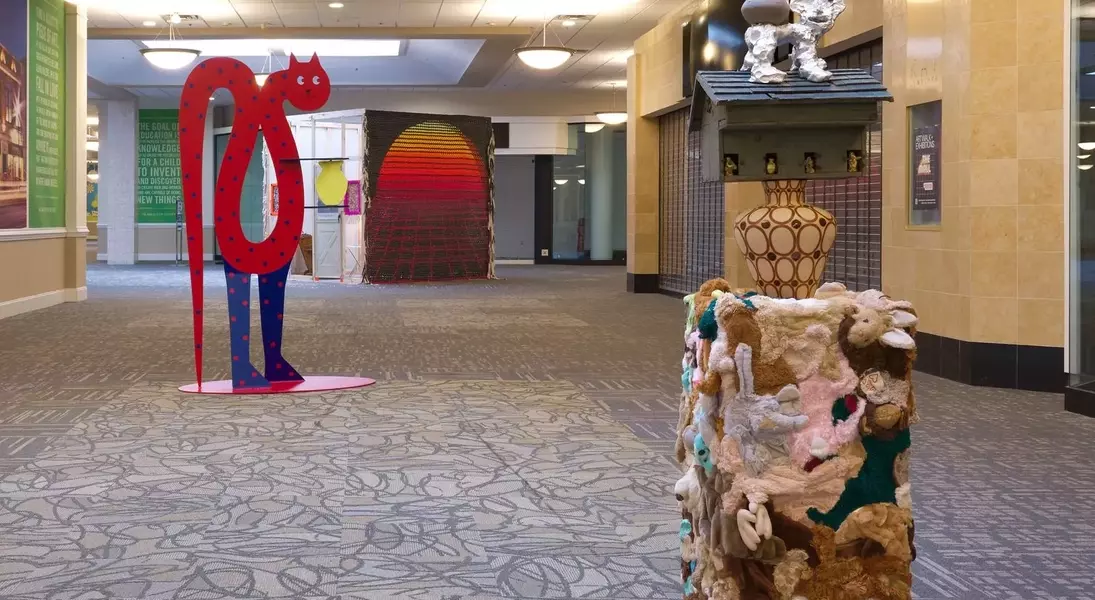
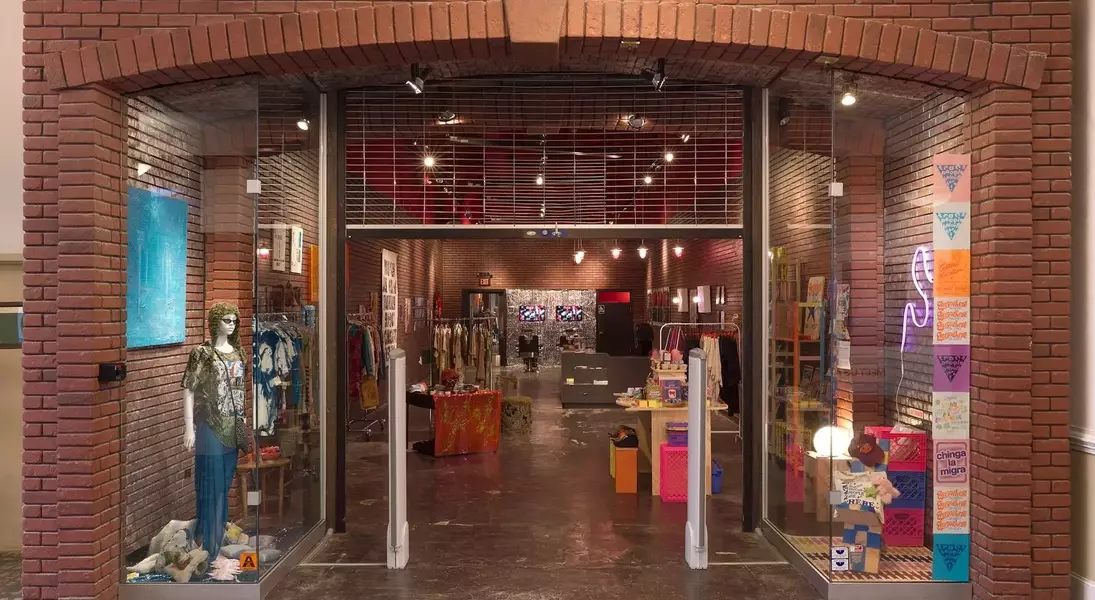
Once a vibrant commercial hub, the Hudson Valley Mall, like many American shopping centers, has seen its glory days fade. From its peak in the late 1980s and early 1990s with dozens of stores and a lively food court, it now features numerous empty units alongside a few surviving businesses such as a hair salon, cinema, gyms, and a Target. However, this atmosphere of obsolescence has become an unexpected canvas for creativity and reimagination.
A collaborative project, spearheaded by curator Marly Hammer and the artistic group Jasper Richmus, co-founded by Kate Asmus and John Richey, is breathing new life into this fading retail landscape. Their initiative, named “The Mall,” integrates modern artistic expressions including paintings, sculptures, installations, video art, photography, and design directly into the mall's existing structure. Former storefronts and quiet hallways are transformed into temporary galleries, honoring the mall’s past significance as a place for personal discovery, commerce, and social interaction. This endeavor is a highlight of the seventh annual Upstate Art Weekend, an increasingly popular cultural event featuring over 160 exhibitions, open studios, and performances across the Hudson Valley and Catskills regions.
Reimagining Spaces: Art in the Aisle
The curators behind “The Mall” project viewed the Hudson Valley Mall not just as a retail complex, but as a crucible for identity and community, much like it was for many in their youth. Before the age of social media, malls offered spaces for self-expression through makeup counters, music stores, bookstores, and food courts. They were destinations for back-to-school shopping and leisurely afternoons spent with friends, serving as places where individuals explored who they aspired to be. This foundational understanding informed their decision to lean into the mall's intrinsic history, incorporating themes of consumerism, popular culture, nostalgia, and community into their artistic vision, turning its decline into an opportunity for cultural resurgence.
The concept originated when the organizers observed the mall’s vacant spaces during a cinema visit, envisioning them as future exhibition sites. Following extensive negotiations, they secured access to three empty units, which were then revitalized with fresh paint and thorough cleaning to remove years of accumulated dust. Crucially, they chose to preserve the historical essence of these spaces rather than erase them completely. For instance, the former GNC now hosts “Gallery New Contemporary,” an exhibition delving into consumer culture. It features miniature ceramics by Dina Cline, including replicas of a Tamagotchi and Game Boy, alongside Jeffrey Augustine Songco’s oversized Friendship Bracelets, which elevate simple adolescent tokens into architectural statements. Similarly, the erstwhile Hot Topic space has been transformed into “Off Topic,” an exhibition that delves into alternative teen mall culture with tributes to 1990s music, movies, and teen angst, featuring meticulously hand-painted VHS cases by VHS Girl and digitally printed T-shirts by Richey, evoking a strong sense of nostalgia for a past era.
Engaging Audiences: Art Beyond the Gallery
The organizers aimed for the exhibition's audience to reflect the diverse, democratic nature of the mall itself. They hoped to see art collectors and art-world professionals, attending for Upstate Art Weekend, mingling with families en route to the movies, gym patrons passing through, and teenagers drawn in by the unusual displays in the windows. This vision sought not merely to showcase art, but to bridge the gap between contemporary art and everyday life. Stuart Lantry's Ferris wheel, adorned with food and consumer goods, sits near the food court, featuring sculptures of hot dogs, Doritos bags, and McDonald’s sandwich boxes, humorously referencing a political event. At the opposite end of the corridor, Linda Colletta’s immersive installation, “TV Dinners,” recreates a childhood living room with period furniture and a classic film playing, evoking personal memories. Marianna Peragallo's houseplants, growing in thermoplastic shopping bags, add another layer of nostalgia, reminiscent of millennial childhood toys.
This initiative intentionally targets individuals who might feel less at ease in traditional art venues, inviting them into a familiar mall setting to encounter art. Richey emphasized that by engaging with art in a comfortable, unexpected environment, visitors are encouraged to step outside their comfort zones and experience something novel. For this particular weekend, the act of casual browsing transforms into deliberate looking, and everyday collecting evolves into purposeful curating. Consequently, the mall undergoes a remarkable metamorphosis, once again becoming a place where new possibilities can be envisioned and explored, demonstrating that art can thrive beyond conventional gallery walls and integrate seamlessly into public spaces, enriching community life and fostering unexpected cultural dialogues.
