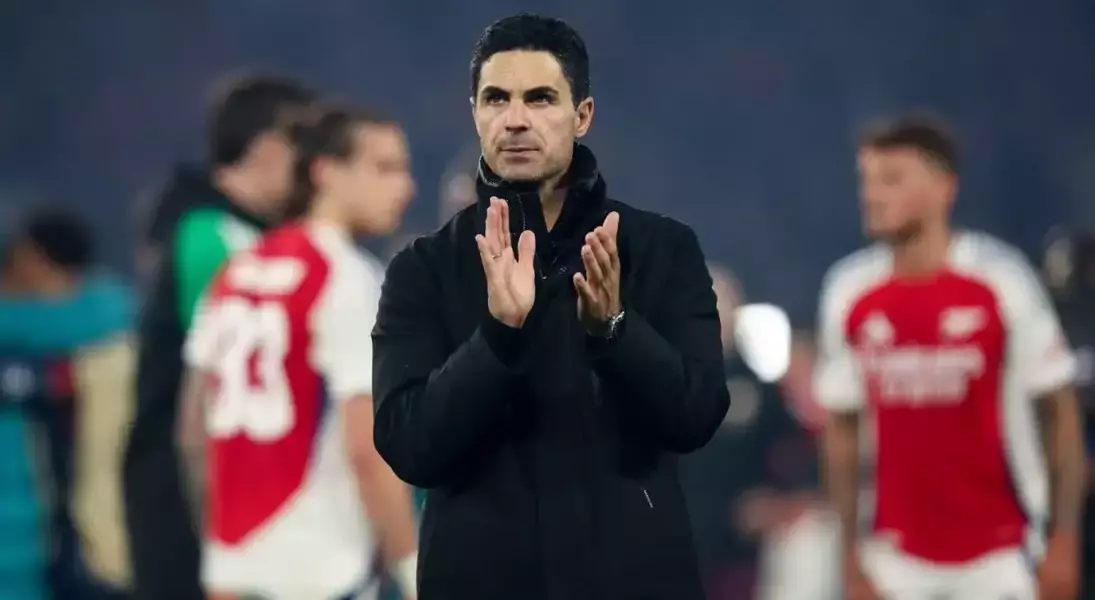
The upcoming football season presents a pivotal moment for Arsenal and its manager, Mikel Arteta. After a tenure marked by significant structural and performance improvements, yet a consistent inability to clinch top honors in the Premier League or Champions League, speculation mounts regarding his long-term prospects. Pundits and fans alike are scrutinizing whether the substantial investment and development under Arteta's leadership will finally translate into tangible silverware, or if the consistent 'nearly-man' status will lead to a change at the helm. This season is widely seen as a defining period for the club's trajectory under his guidance.
Jamie O'Hara, a former player for Tottenham Hotspur, has voiced a strong opinion on this matter, suggesting that Arteta’s continued employment at Arsenal is contingent upon winning a major trophy in the 2025/26 campaign. His perspective highlights a growing sentiment among observers that despite transforming the team’s dynamics and securing three successive second-place finishes in the Premier League, the absence of significant silverware is becoming untenable. Arteta's solitary triumph remains the FA Cup, achieved in his very first year at the club, marking five years since Arsenal last lifted a major piece of hardware.
The demand for trophies extends beyond the elite competitions. O'Hara indicates that even a Carabao Cup victory would serve to alleviate concerns within the Arsenal fanbase, who are keen to see their club's progress culminate in championship glory. He emphasizes the substantial financial outlay on player acquisitions under Arteta's watch, asserting that a team of Arsenal's caliber and investment ought to be securing titles. The argument is simple: if the Gunners conclude another season without a trophy, despite significant spending and a strong roster, the question of progress will inevitably lead to calls for a change in leadership, as fans seek concrete results for their patience and support.
Adding to the narrative, Oleksandr Zinchenko, one of Arsenal’s players, has publicly expressed his personal struggles with limited playing time last season, describing it as "the worst season" of his professional career. His comments, published in his autobiography, reveal a player deeply dissatisfied with his reduced role. He attributes his benching to his own performance, stating, "If I don’t play, it means that I didn’t work hard enough, didn’t do enough, didn’t play well enough." Zinchenko’s current contract expires next year, and he is reportedly considering seeing it through. This internal discord, coupled with external pressures for success, adds another layer of complexity to Arteta's challenge in guiding Arsenal to glory.
The upcoming season truly represents a critical juncture for Arteta. The transformation he initiated at the Emirates is undeniable, reshaping Arsenal into a formidable force within the Premier League. However, the ultimate measure of success in top-tier football is trophies, and the Gunners have fallen short in the most prestigious competitions despite coming agonizingly close. This season, therefore, will be the acid test of whether Arteta can convert potential into palpable success, validating his long-term vision and securing his place at the helm.
