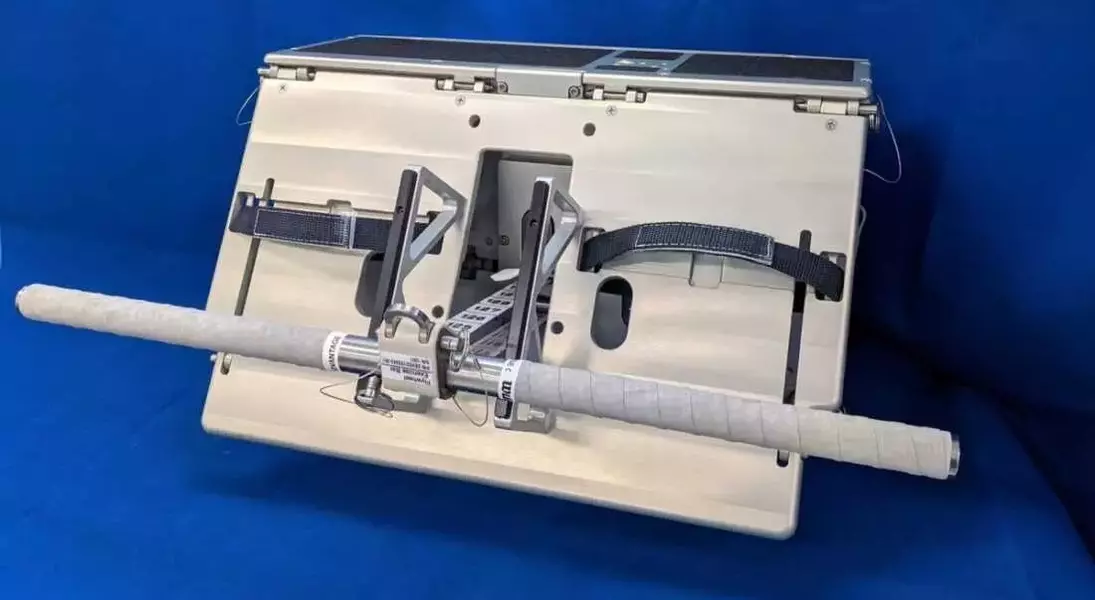

Astronauts on the Artemis II mission utilize a compact and highly efficient exercise device, the flywheel, to combat the rapid muscle and bone degradation that occurs in microgravity. This innovative machine provides comprehensive cardiovascular and resistance training within the confined spaces of the Orion spacecraft, offering up to 400 pounds of resistance for various exercises. Its development involved extensive research, including studies on 'pillownauts' who demonstrated its effectiveness in preventing physical decline, comparable to a full gym workout. The flywheel's success in space suggests potential widespread applications on Earth, addressing the challenges of limited space and time for exercise, and helping to mitigate age-related bone and muscle loss for the general population. This scientific advancement not only secures the health of space explorers but also offers valuable insights into maintaining physical well-being in diverse environments.
The journey to the moon aboard the Artemis II mission highlights the critical need for astronauts to maintain peak physical condition against the detrimental effects of zero gravity. Even short durations in space lead to significant muscle and bone atrophy. To counteract this, the crew relies on the flywheel, a remarkable piece of engineering designed to provide a robust workout in an extremely compact form factor. This device is a testament to human ingenuity in overcoming environmental challenges, ensuring that astronauts remain healthy and capable throughout their mission. Its principles, stemming from years of research into human physiology in extreme conditions, underscore a broader understanding of how the human body responds to various stressors and what measures can be taken to preserve its integrity. The integration of such advanced fitness solutions is paramount for the success of long-duration space travel and for the long-term health of those who undertake these extraordinary journeys.
The Flywheel: A Compact Solution for Astronaut Fitness
In the challenging environment of space, where gravity's absence rapidly weakens the human body, the Artemis II crew depends on the flywheel—a specially designed, compact exercise machine. This innovative device is crucial for preventing muscle and bone atrophy, which can occur even during short missions. Functioning much like a rowing machine, it provides both cardiovascular and resistance training, allowing astronauts to perform a range of exercises from squats to curls. Despite its small size, comparable to an extra-large shoebox, the flywheel delivers up to 400 pounds of resistance, making it an indispensable tool for maintaining the physical strength and endurance of astronauts in the cramped quarters of the Orion spacecraft. Its development represents a significant step in space health technology, ensuring the crew remains fit and healthy during their lunar expedition.
The physiological changes experienced by astronauts in microgravity are profound, with bone and muscle density declining rapidly without the natural resistance of Earth's gravity. The flywheel addresses this by providing a dynamic and adaptable workout solution. Astronauts secure their feet and pull on a cable, activating a spinning flywheel that generates resistance proportional to the effort applied. This design is particularly ingenious for space travel, as it requires minimal space—a critical consideration in the 316 cubic feet of the Orion capsule. Canadian astronaut Jeremy Hansen lauded its ability to deliver a comprehensive workout, while Reid Wiseman appreciated its quiet operation, which avoids disturbing fellow crew members. The efficiency and versatility of the flywheel were validated through extensive terrestrial studies involving 'pillownauts,' individuals who remained bedridden for extended periods to simulate the effects of microgravity. These studies confirmed that the flywheel could effectively prevent physical decline as well as a full gym, making it a cornerstone of astronaut well-being and a model for future space missions.
Terrestrial Applications: Combating Age-Related Decline and Everyday Constraints
The lessons learned from the development and use of the flywheel extend far beyond space travel, offering significant implications for public health on Earth. The rapid muscle and bone loss experienced by astronauts in space mirrors the age-related decline that many individuals face, particularly the elderly or those with limited mobility. Radiologist Thomas Lang notes that bone density peaks in early adulthood before a gradual decline, which accelerates for women during menopause and for men in their later years. The flywheel's ability to prevent such declines in a compact and efficient manner suggests it could be a valuable tool for maintaining physical health in the general population, especially for those with time and space constraints in their daily lives. This technology holds the promise of a future where effective fitness solutions are accessible to everyone, regardless of their living situation or physical capabilities.
Jessica Scott, an exercise physiologist involved in the flywheel's early prototypes, emphasizes the broader applicability of this space-age technology. She envisions a future where compact flywheels could be integrated into everyday life, fitting under a desk at work or in a small home office, thereby making effective exercise more accessible. The success of the 'pillownaut' studies, where participants maintained physical fitness using the flywheel during prolonged bed rest, demonstrates its potential to combat muscle atrophy in various contexts, not just in space. For individuals struggling with the constraints of busy schedules or limited access to conventional gyms, a personal flywheel could offer a convenient and potent solution for cardiovascular health and strength training. This innovation underscores a hopeful future where cutting-edge scientific advancements in space exploration contribute directly to enhancing the quality of life and health outcomes for people across the globe, addressing common challenges such as physical inactivity and age-related physiological changes.
