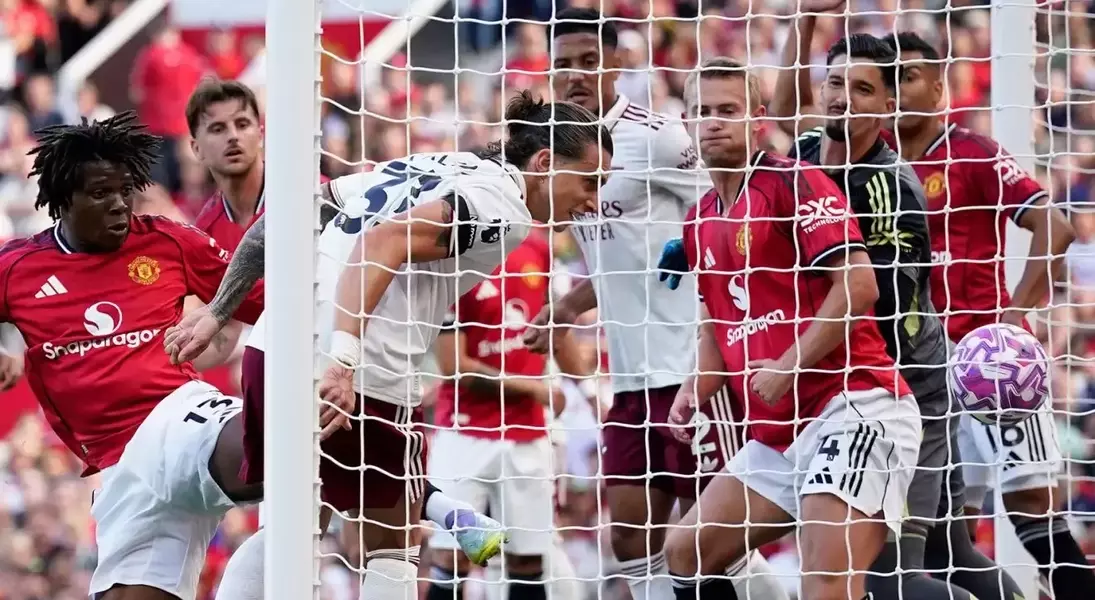
This match served as a pivotal early-season clash, offering insights into the evolving strategies and team dynamics of two English football giants. The encounter, while decided by a single goal, revealed tactical nuances and highlighted areas for improvement for both Manchester United and Arsenal. It was a contest that, despite its low scoring, resonated with significant implications for their respective campaigns, underscoring the ongoing challenges and aspirations within the Premier League.
Tactical Battle Unfolds at Old Trafford
In a gripping encounter at the historic Old Trafford stadium, Arsenal secured a crucial one-goal advantage over Manchester United. The decisive moment unfolded when Riccardo Calafiori, seizing an opportunity from a precise corner kick, skillfully headed the ball into the net. This solitary goal, a direct result of an error by Manchester United's goalkeeper, Altay Bayindir, provided Arsenal with the lead. Despite being the visiting team, Arsenal adopted a notably cautious and pragmatic approach following their early advantage. Their strategy, while effective in securing the win, seemed to prioritize defensive solidity over expansive attacking play, leaving some observers pondering their offensive ambition. Meanwhile, Manchester United, striving to recover from the deficit, displayed moments of attacking intent. Players like Bryan Mbeumo and Mattheus Cunha injected bursts of energy, particularly in the latter stages of the match, challenging Arsenal's steadfast defense. Cunha, in particular, demonstrated flashes of individual brilliance, weaving through Arsenal's backline and forcing a remarkable save from David Raya. However, despite these efforts and a late surge of pressure, Manchester United could not breach Arsenal's goal, ultimately succumbing to the visitors.
This match served as a stark reminder of the fine margins in top-tier football and the significant impact of individual errors. For Arsenal, the victory, while perhaps not aesthetically pleasing, underscored their growing resilience and ability to grind out results, a crucial characteristic for any title contender. However, it also raised questions about their attacking philosophy, especially with new acquisitions like Viktor Gyokeres. From a Manchester United perspective, the game highlighted the persistent need for greater consistency and clinical execution in the final third. The team's inability to convert periods of dominance into tangible outcomes suggests that further tactical refinement and perhaps strategic personnel changes are necessary. Ultimately, for both clubs, this match serves as a valuable learning experience, prompting reflection on their current strengths and the areas requiring significant development as the season progresses. The ongoing narrative for both teams will undoubtedly revolve around how they address these challenges and whether they can truly elevate their performances to meet the high expectations of their passionate fan bases and the demanding Premier League.
