
Arm has unveiled its cutting-edge mobile GPU architecture, integrating advanced neural rendering capabilities that promise to revolutionize mobile gaming. A recent demonstration, featuring a collaboration with game studio Sumo Digital, showcased ray-traced graphics, AI-powered denoising (NSSD), and neural frame generation (NFRU). This technological leap raises an intriguing question: could these powerful mobile chips serve as a viable alternative for handheld gaming PCs, potentially surpassing current AMD or Intel-based solutions?
The 'Neural Dawn' demo, built on Unreal Engine 5.6 and utilizing its Megalights feature, is a concise yet impactful interactive experience. While it will be released as a brief game later this year, its primary purpose is to highlight the impressive capabilities of Arm's neural rendering technology. This includes Neural Super Sampling and Denoising (NSSD), which functions similarly to Nvidia's DLSS Ray Reconstruction, and Neural Frame Rate Upscaling (NFRU), akin to Nvidia's DLSS Frame Generation.
These technologies have been present in desktop gaming PCs for several years, with frame generation debuting with DLSS 3 in 2022 and ray reconstruction following with DLSS 3.5 in 2023. Bringing such sophisticated rendering to mobile devices is a remarkable achievement, paving the way for more graphically intensive games on smartphones. However, the article suggests that handheld gaming PCs might be a more fitting platform for these innovations, especially given the growing interest in Windows on Arm.
High-end mobile phones already boast displays that often outperform those found in leading handheld PCs. Integrating mobile phone hardware into a larger handheld PC form factor could allow these processors to operate at higher frequencies for extended periods, as exemplified by the Apple MacBook Neo, which essentially houses iPhone 16 Pro components within a laptop chassis. This could lead to handheld gaming PCs that are not only exceptionally powerful but also highly energy-efficient.
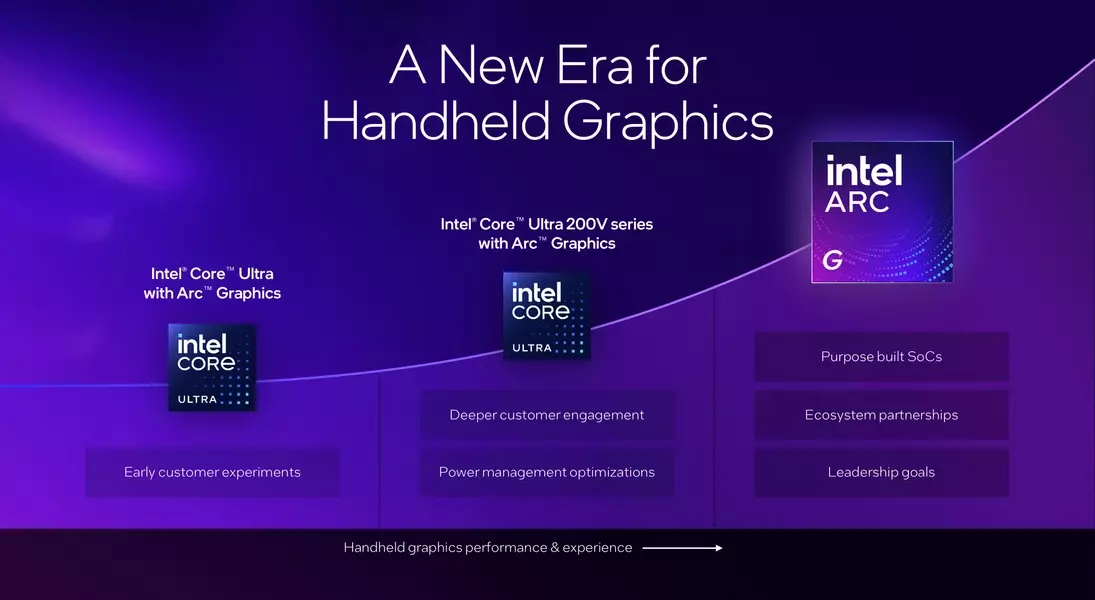
While Nvidia has shown little interest in the handheld market, Intel is actively pursuing it. This presents an opportunity for innovative portable PC manufacturers to explore a completely Arm-based approach, moving away from the prevalent AMD APUs or Intel's new chips. The primary hurdle, however, lies not in the hardware itself, but in securing full support from game developers for yet another set of rendering technologies. History shows that even well-established technologies like AMD's FSR and Intel's XeSS often struggle to gain widespread adoption compared to Nvidia's DLSS.
The prospect of a powerful, energy-efficient, and truly mobile handheld gaming PC with ray-traced graphics powered by Arm is compelling. However, until the current economic challenges surrounding components, particularly RAM, stabilize, the financial viability of such a venture remains questionable. The full realization of an Arm-based handheld PC capable of delivering cutting-edge graphics may still be a distant future.
