
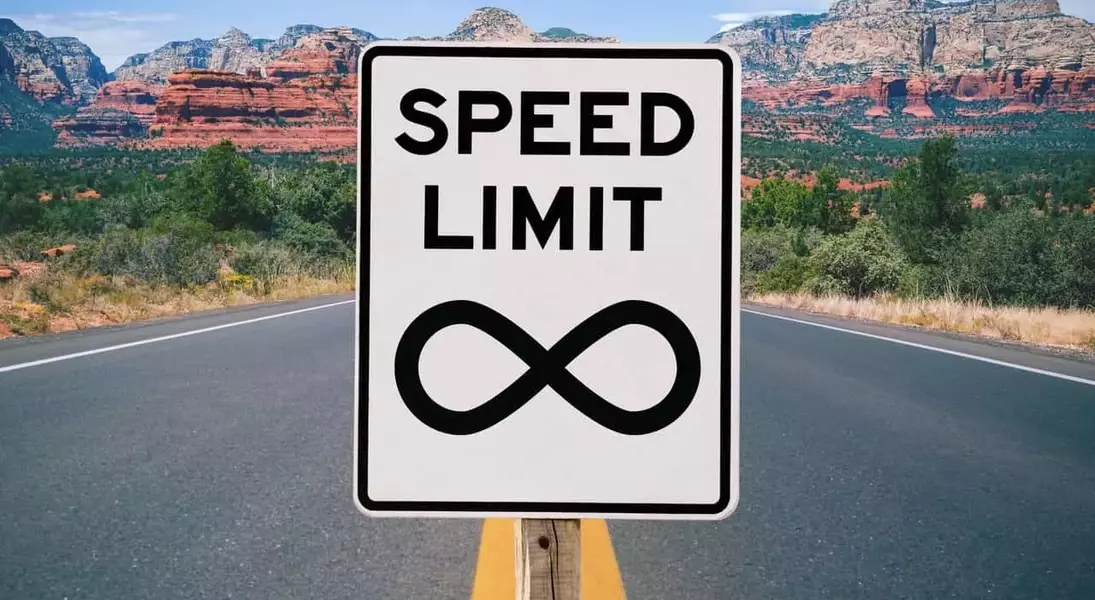
Arizona is currently contemplating a legislative change that could redefine highway driving by removing speed limits on certain stretches of its rural interstates. This initiative, known as the RAPID Act, aims to test the safety and efficiency of such zones through a pilot program before broader implementation.
Pioneering Unrestricted Driving: Arizona's Bold Highway Vision
Arizona's Proposed Bill: The 'RAPID' Act
A new legislative proposal in Arizona seeks to eliminate speed restrictions on designated rural interstate segments. Spearheaded by State Representative Nick Kupper, this measure is formally titled the "Reasonable and Prudent Interstate Driving Act," or "RAPID." The bill targets daytime speed limits on highways located in sparsely populated areas, specifically those with fewer than 50,000 residents.
Speed Regulations Under the RAPID Act
Under the provisions of the RAPID Act, while daytime speed limits would be removed in specific rural zones, nighttime speeds would be capped at 80 miles per hour, which is still an increase of 5 mph compared to Arizona's current maximum speed. Additionally, commercial vehicles would consistently observe an 80 mph limit, regardless of the time of day.
Pilot Program for Safety Evaluation
Before the full enactment of the RAPID Act, a one-year pilot project is planned to assess its safety implications. A segment of Interstate 8, stretching from Casa Grande to Yuma, is slated to become a "derestricted speed zone" for this trial period. This will allow legislators to gather crucial data on accident rates and overall safety before expanding the program. Representative Kupper believes this pilot will demonstrate the safety benefits of the proposal, despite initial skepticism.
Scope of Derestricted Zones
If the bill is fully approved, major sections of Interstates 10, 17, 19, and 40, alongside a portion of I-15 in Arizona's northwestern region, would also be designated as derestricted speed zones. This extensive coverage highlights the potential for a significant shift in the state's driving landscape.
National Context of Speed Limit Changes
Should this bill pass, Arizona would become the first state in the nation to feature completely unrestricted speed limits on certain roads. While other states have recently considered or implemented higher speed limits on rural highways, none have gone as far as proposing their complete removal. As of May, several states, including North Dakota, Idaho, Montana, Nevada, Oklahoma, South Dakota, Utah, and Wyoming, already permit speeds of at least 80 mph, with Texas holding the record for the highest posted limit at 85 mph on a specific highway stretch.
Evidence from Other States
Proponents of Arizona's bill often reference states like Montana, which have higher speed limits without experiencing a disproportionate increase in crash rates. This evidence supports the argument that higher, or even eliminated, speed limits may not necessarily lead to a rise in vehicular incidents. The bill is anticipated to be presented during Arizona's legislative session in 2026.
