
This analysis delves into Archer Aviation's audacious project to introduce electric air taxis, examining both its groundbreaking potential and the formidable challenges that lie ahead.
Soaring Ambition or a Financial Freefall?
The Dawn of a New Transportation Era: Archer Aviation's Vision for Urban Mobility
For decades, personal transportation has largely remained unchanged, with innovations primarily focusing on how we interact with existing vehicle types. However, Archer Aviation is spearheading a transformative shift with its electric vertical takeoff and landing vehicles (eVTOLs), aiming to establish an extensive air taxi network. This innovative concept promises to redefine urban travel by offering rapid, point-to-point aerial transit, circumventing conventional traffic. Archer’s ambitious plans include deploying these services in major metropolitan hubs like New York, Los Angeles, and Abu Dhabi, with a significant push to be operational for the 2028 Summer Olympics in Los Angeles.
Navigating Regulatory Hurdles and the Path to Certification
A pivotal challenge for Archer Aviation lies in securing full certification from the Federal Aviation Administration (FAA) for its Midnight aircraft. Given that these air taxis are intended to operate over densely populated areas, stringent safety and reliability standards must be met, making the certification process inherently complex and time-consuming. The exact timeline for FAA approval remains uncertain, posing a significant potential obstacle to Archer's operational growth and market entry. Timely certification is crucial for the company to proceed with large-scale production and commercial deployment of its air taxi services.
The Financial Landscape: High Burn Rate and the Quest for Scale
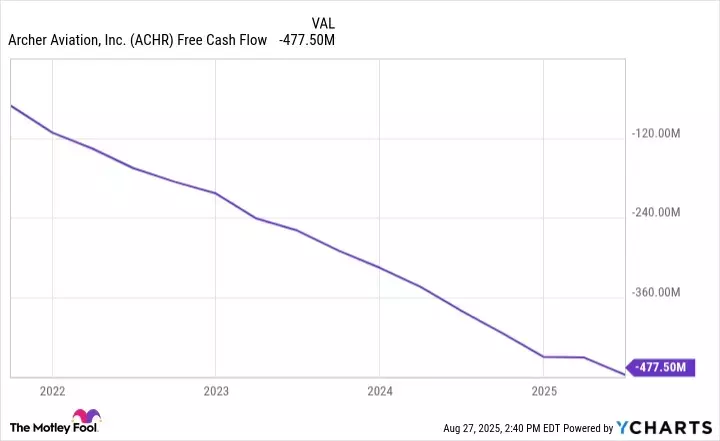
Developing an entirely new mode of transportation demands substantial financial investment, as evidenced by Archer Aviation’s current financial standing. The company is actively expanding its manufacturing capabilities across the United States, with a target of producing 50 Midnight aircraft annually. Despite having no current revenue, Archer is experiencing a significant free cash flow deficit, burning approximately $477.5 million per year. While the company has successfully raised over $1 billion in funding this year, providing it with considerable liquidity, achieving profitability will necessitate a dramatic increase in aircraft sales. Current orders for hundreds of Midnights, priced at around $5 million each, suggest that even hitting annual production targets would not fully offset the existing cash burn, highlighting the critical need for massive operational scaling and potential alternative revenue streams, possibly through partnerships with entities like United Airlines.
Investment Outlook: Weighing the Risks and Rewards of Archer Aviation
While Archer Aviation introduces an exciting technological advancement, the investment landscape for its stock presents considerable risks. The company’s substantial cash burn, coupled with its zero revenue generation and the ongoing uncertainties surrounding FAA approval, raise significant concerns. Furthermore, the inherent low-margin nature of manufacturing suggests that Archer would need to sell hundreds of aircraft annually to justify its current market valuation and achieve sustainable profitability. This scenario, if it materializes, is still many years in the future. Given these formidable challenges and the speculative nature of its business model, prospective investors are advised to exercise caution and potentially avoid investing in Archer Aviation stock at this juncture, despite its trading price being below its initial public offering.
