In an era where speculative gambles like lottery tickets capture public imagination with their astronomical potential, a more grounded, albeit still ambitious, investment avenue emerges in the form of Archer Aviation. This company, specializing in the development of electric vertical takeoff and landing (eVTOL) aircraft for future air taxi services, offers a significantly higher probability of return compared to the infinitesimal chances of winning a lottery. While the scale of potential gains may differ, Archer Aviation presents a compelling proposition for those looking to invest in the rapidly evolving landscape of urban air mobility, transforming futuristic concepts into tangible, commercially viable transportation solutions.
The widespread excitement generated by the prospect of a massive Powerball lottery jackpot, estimated at nearly $1.3 billion, highlights humanity's persistent fascination with life-altering windfalls. Despite the overwhelming odds—a mere 1 in 292 million chance of clinching the top prize—millions still flock to purchase tickets, accepting the near certainty of a complete financial loss. This phenomenon underscores a societal willingness to embrace high-risk, high-reward scenarios, even when the probabilities are stacked against them. However, for a more strategic approach to wealth generation, the investment world offers opportunities that, while not guaranteeing overnight riches, provide a far more reasonable expectation of positive outcomes.
Enter Archer Aviation, a pioneering startup dedicated to revolutionizing urban transportation with its battery-powered small aircraft. Far from being a mere pipe dream, the concept of flying taxis has gained considerable traction due to advancements in materials science, enabling lighter and stronger aircraft construction, and the maturation of energy-dense lithium-ion batteries, largely popularized by the electric vehicle industry. These technological leaps have liberated engineers from traditional design constraints, leading to innovative aerial designs.
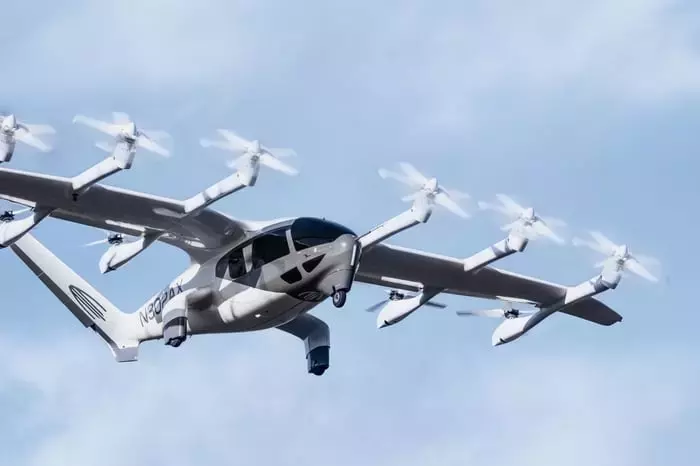
Archer's flagship aircraft, the 'Midnight,' epitomizes this progress. It's a five-passenger vehicle equipped with eight powerful pivoting electric motors, allowing it to perform vertical takeoffs and landings, much like a helicopter, yet transition to efficient horizontal flight using its wings, similar to a conventional airplane. This is not merely a theoretical design; two prototypes of the Midnight have already undergone extensive flight testing, completing hundreds of successful flights. An additional six aircraft are currently under construction, with three nearing completion, signaling a robust developmental pipeline. Although full Federal Aviation Administration (FAA) certification for commercial use is still pending, the Midnight has secured initial certifications necessary for advanced test flights, paving the way for future approvals.
The future outlook for Archer Aviation appears increasingly promising. The company's ultimate objective is to establish eVTOL aircraft as the cornerstone of air taxi services in congested metropolitan areas. This vision is supported by key partnerships, notably with United Airlines, aimed at launching an air taxi service in New York City. Such a service could dramatically reduce travel times between downtown Manhattan and local airports, transforming a typical hour-long car journey into a mere 10-minute flight, with an estimated cost of $50 to $100 per passenger. Beyond New York, Archer is expanding its global footprint, with initial designs for a hybrid heliport in the United Arab Emirates already approved and test flights commencing in Abu Dhabi. Furthermore, Archer Aviation has been designated as the official air taxi service provider for the 2028 Summer Olympics in Los Angeles, indicating a strong vote of confidence from major stakeholders even before full FAA certification.
The burgeoning eVTOL industry is also benefiting from favorable regulatory tailwinds. A recent executive order signed by President Donald Trump mandates the Secretary of Transportation to establish an "eVTOL Integration Pilot Program" to accelerate the deployment of safe and lawful eVTOL operations in the United States. This governmental support, coupled with industry projections, paints a vibrant picture for the sector. Precedence Research, for instance, forecasts that the global flying taxi market will experience a nearly 29% average annual growth rate through 2034, with the United States expected to lead this expansion. Within this context, Archer's ambitious goal of constructing a manufacturing facility capable of producing 650 eVTOLs annually by 2030 appears not only plausible but also strategically aligned with anticipated market demand.
Despite the optimistic outlook, Archer Aviation, like any innovative enterprise, faces inherent risks. The ultimate FAA approval for the Midnight aircraft is not an absolute certainty, despite promising test results. Moreover, even with certification, consumer adoption of battery-powered flying taxis remains to be fully proven, and securing sufficient landing zones in dense urban environments poses logistical challenges. The profitability of these operations also hinges on effective cost management and widespread public acceptance. Nevertheless, the probability of these challenges being successfully navigated by Archer Aviation is orders of magnitude greater than the odds of winning a lottery jackpot. While the financial returns for investors may not match the lottery's fantastical sums, the potential for a substantial and reliable payoff is considerably higher. The analyst community echoes this sentiment, with a consensus one-year target price for Archer Aviation stock suggesting an upside of over 30% from its current valuation, and the majority of analysts rating it as a strong buy, making it an intriguing speculative investment opportunity.
