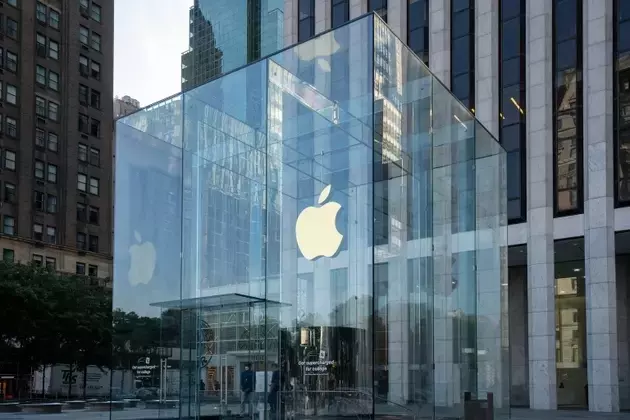
Apple's recent financial results have underscored its ongoing market strength, with the company successfully surpassing analyst expectations for both its revenue and earnings in the latest fiscal quarter. This robust performance was primarily fueled by exceptional sales within its iPhone category and a remarkable expansion of its Services division. The continuous growth of the Services segment, which now accounts for a substantial portion of Apple's total income, highlights a strategic shift and diversification in the company's business model. Despite these positive indicators, the tech giant faces the persistent challenge of fostering innovation in its hardware offerings, which could be a key factor in sustaining future growth. Furthermore, the company's valuation remains at a premium, prompting investors to closely scrutinize its long-term potential for revaluation and sustained market leadership.
Apple's Strong Quarterly Performance: A Deep Dive into iPhone and Services Success
Apple recently announced impressive financial outcomes for its fiscal quarter, outperforming both top-line revenue and bottom-line profit forecasts. This strong performance was primarily driven by record-breaking sales of its iPhone 17 series and a significant surge in its Services division. The Services segment, encompassing various digital offerings such as the App Store, Apple Music, and iCloud, achieved a new revenue high of $30.0 billion, now contributing a substantial 21% to the company's overall revenue. This increasing proportion underscores the strategic importance of Services as a consistent and growing revenue stream for Apple, offering diversification beyond its core hardware business. The successful integration and expansion of these services are crucial as the company navigates an evolving technology landscape and seeks to maintain its competitive edge.
The exceptional demand for the latest iPhone models played a pivotal role in the quarter's success, demonstrating the enduring appeal and market dominance of Apple's flagship product. This robust sales performance suggests strong consumer loyalty and effective product positioning, even in a competitive smartphone market. The growth in Services revenue further solidifies Apple's ecosystem, creating a powerful synergy between its hardware and software offerings. This interconnectedness not only enhances user experience but also fosters recurring revenue streams, contributing to the company's financial stability. Despite these positive developments, Apple must continue to innovate across its product lines to sustain this momentum, particularly in an environment where technological advancements are rapid and consumer expectations are constantly rising.
Navigating Future Growth: Innovation Challenges and Valuation Outlook
Despite its recent successes, Apple faces significant challenges in sustaining top-line growth, primarily due to a perceived slowdown in hardware innovation beyond the iPhone. While the iPhone continues to perform strongly, other hardware categories have shown limited breakthroughs, raising questions about future revenue expansion. This situation compels the company to explore new avenues for growth and continuously refresh its product portfolio with groundbreaking technologies. Apple maintains the second-highest gross profits among major tech companies, reflecting its strong brand, premium pricing, and efficient supply chain. However, this financial strength is tempered by a premium valuation, with a forward P/E ratio of 28X, suggesting that much of its future growth potential may already be priced into its stock.
The high valuation limits the potential for significant revaluation, indicating that future stock price appreciation might be more closely tied to fundamental earnings growth rather than multiple expansion. Furthermore, the risk of stagnation in hardware revenue, particularly outside the iPhone category, poses a considerable concern for investors. To mitigate these risks, Apple must prioritize substantial innovation in its non-iPhone hardware segments and continue to expand its high-margin Services division. A balanced approach combining strategic hardware development with sustained growth in services will be essential for Apple to justify its premium valuation and ensure long-term investor confidence. Without renewed innovation, especially in emerging tech sectors, the company could struggle to maintain its growth trajectory and market leadership.
