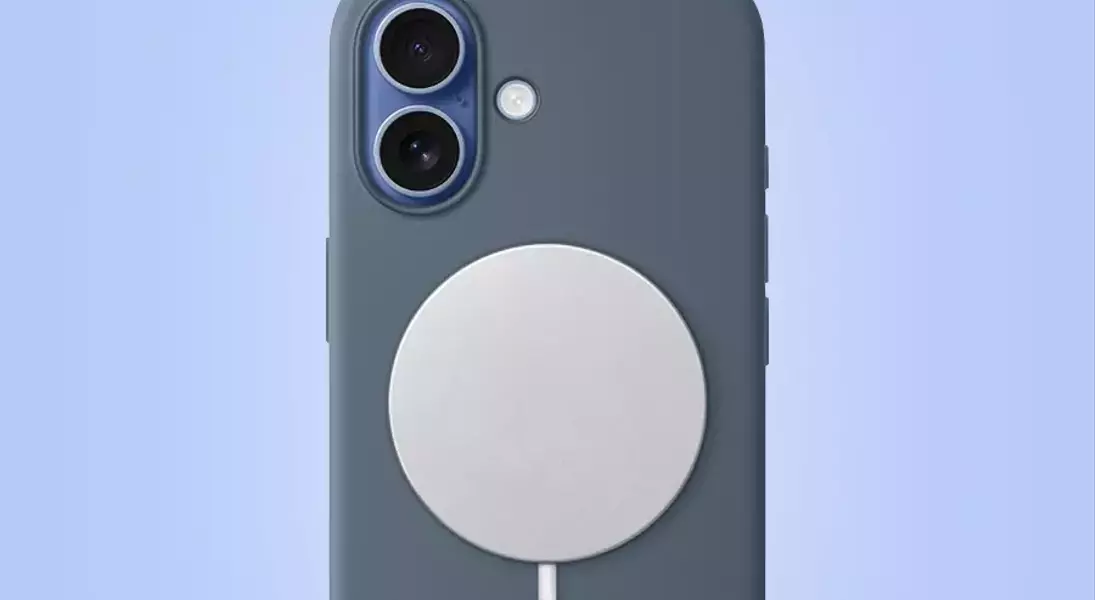
Apple has released an enhanced version of its MagSafe charging device, now supporting the Qi2.2 standard. This upgrade enables 25W wireless charging for the latest iPhone 17 models, including the iPhone 17 Pro and 17 Pro Max. Crucially, it also extends this faster charging capability to other devices that comply with the Qi2.2 standard, such as the Google Pixel 10. This marks a notable shift from previous versions, which limited faster charging rates exclusively to Apple's own iPhone 16 series.
Enhanced MagSafe Charger Offers Wider Compatibility and Faster Charging
On September 11, 2025, Apple officially launched its new MagSafe Charger, addressing a key limitation of its predecessor. Previously, Apple's wireless charger provided 25W charging only to the iPhone 16 lineup, while other devices, including older iPhone models, were restricted to a slower 15W. The updated charger, which was first hinted at in June through a leak from Taiwan's National Communications Commission, now fully embraces the Qi2.2 specification. This means it can deliver 25W of power to any device compatible with the Qi2.2 standard, greatly expanding its utility beyond Apple's ecosystem. The new charger is readily available for purchase on Apple's official online store, with options for a 1-meter USB-C cable priced at $39, and a 2-meter cable for $49. The widespread adoption of Qi2.2 compatibility, especially with the release of iOS 26 for the iPhone 16 series, signifies a move towards more universal high-speed wireless charging. However, it's worth noting that the iPhone Air will still be limited to a maximum wireless charging rate of 20W.
This advancement in MagSafe technology signifies a positive step towards broader interoperability in the wireless charging landscape. By adopting the Qi2.2 standard, Apple is not only enhancing the user experience for its own devices but also contributing to a more unified charging ecosystem. This could encourage other manufacturers to adopt similar standards, ultimately benefiting consumers with more efficient and universally compatible charging solutions. The move suggests a future where high-speed wireless charging is less proprietary and more accessible across various brands and devices.
