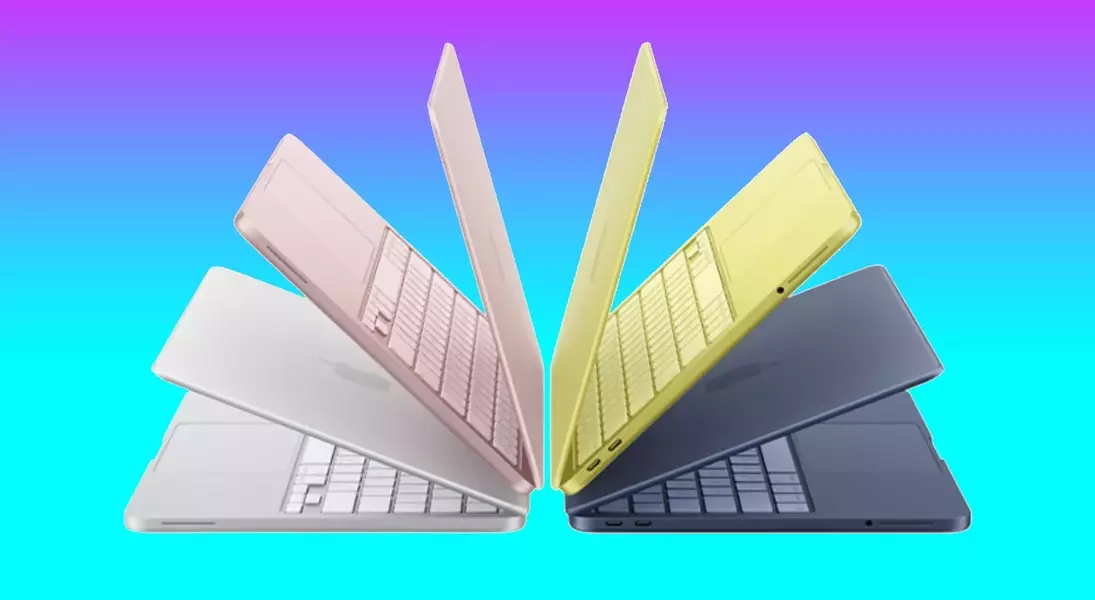

In a groundbreaking development that is poised to send ripples through the personal computing market, Apple's latest entry, the MacBook Neo, powered by an advanced iPhone chip, has achieved an astonishing feat. Recent benchmark results have revealed that this economical laptop surpasses every single x86 central processing unit currently available in terms of single-core performance, specifically within the demanding Cinebench 2024 testing environment. This remarkable achievement includes even the most powerful desktop contenders from industry giants like AMD and Intel, firmly establishing Apple's M-series architecture as a force to be reckoned with.
Details of the Breakthrough Performance
The remarkable performance of the MacBook Neo was meticulously documented by Notebookcheck, a reputable source for hardware analysis. Their comprehensive evaluation put the new, affordably priced laptop through rigorous testing. The MacBook Neo, which is available to consumers at a competitive price point of $599, or an even more accessible $499 for eligible educational buyers, delivered an impressive score of 147 points in the Cinebench 2024 rendering benchmark. This score not only places it ahead of all existing x86 processors but positions it second only to other Apple-designed CPUs.
To put this into perspective, the highly acclaimed AMD Ryzen 9 9950X registered a score of 139 points, while Intel's potent Core Ultra 9 285HX achieved 135 points in the same test. The fact that a chip primarily designed for mobile phones can achieve such superior single-core performance is nothing short of incredible, though perhaps not entirely unexpected given Apple's consistent advancements in silicon technology. This is largely attributed to the A18 Pro iPhone chip's close architectural ties to the Apple M4 silicon found in higher-end Mac devices. Both share the same sophisticated Performance and Efficiency cores, albeit the A18 Pro features a more condensed configuration with fewer cores and operates within a lower power envelope, resulting in slightly reduced clock speeds. Despite these differences, the underlying single-thread instructions-per-clock capability remains on par with the M4 series, showcasing a foundational strength in Apple's chip design.
While the A18 Pro's P cores peak at 4.04 GHz compared to the M4's 4.46 GHz (with Pro and Max variants pushing slightly higher), the raw efficiency and power of these cores are undeniable. It's worth noting that the even newer M5 chip further elevates the performance bar, scoring an astounding 200 points in Notebookcheck’s Cinebench 2024 tests. Although some might dismiss a single benchmark as an isolated data point, the established lineage and architectural similarities between the A18 Pro and Apple's M-series chips lend significant credibility to these findings. Apple has undeniably mastered the creation of exceptionally potent CPU cores, challenging traditional notions of performance, even if dedicated gaming applications might still favor high-clocked x86 CPUs with specialized cache architectures, such as AMD's X3D series.
This development underscores a fascinating trend: the processing power housed within a mobile device like an iPhone is now capable of rivaling, and in some cases exceeding, the capabilities of conventional desktop processors. While thermal limitations prevent an iPhone from sustaining such peak performance for extended periods, the sheer processing potential is awe-inspiring. Furthermore, the A18 Pro is not even the latest iPhone chip; the A19 Pro in the newest iPhone 17 Pro promises even greater speeds, hinting at a future where the lines between mobile and desktop computing continue to blur with dizzying rapidity.
