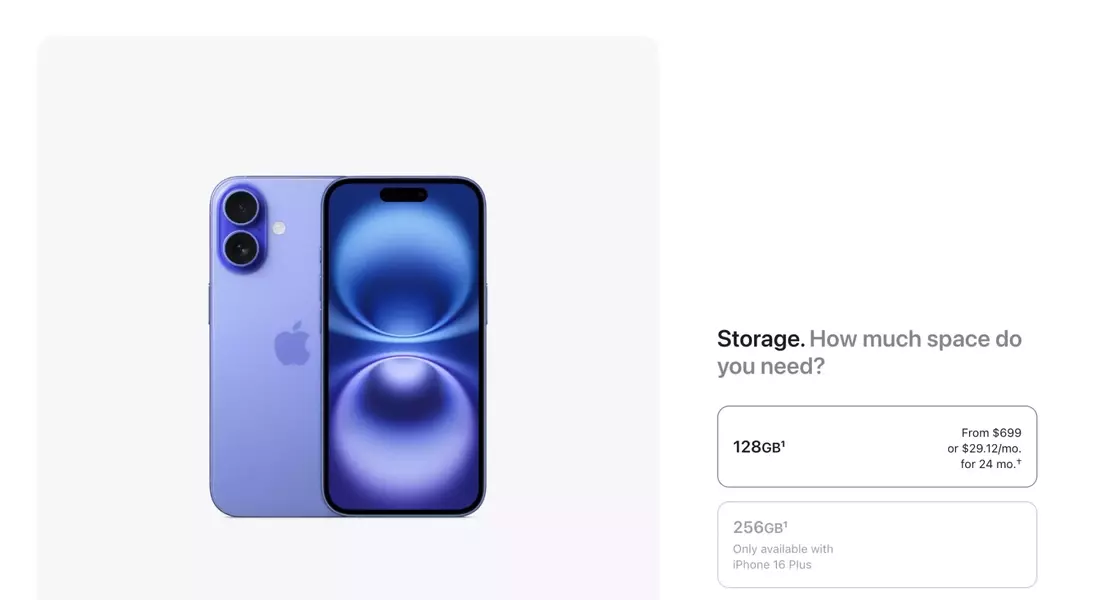

Apple has recently made a significant adjustment to its iPhone 16 product line, following the introduction of its latest iPhone 17, iPhone 17 Pro, Pro Max, and iPhone Air models. The iPhone 16 Pro and Pro Max variants have been discontinued, and surprisingly, the base iPhone 16 model is now exclusively offered with a 128GB storage capacity. This strategic decision by Apple appears to be a calculated move to prevent the older models from overly competing with the newly launched, higher-end devices, thereby guiding consumers towards the latest offerings.
This shift in storage options presents a notable change for prospective iPhone 16 buyers. While the device remains available at Apple's online store for $699, the singular 128GB storage choice could be a constraint for users requiring more space. For those with greater storage demands, the iPhone 16 Plus remains an option, priced at $799 for 128GB and $899 for 256GB. Furthermore, the newer iPhone 17 series offers a minimum storage of 256GB, albeit at a higher price point, aligning with Apple's consistent approach of encouraging upgrades to its premium devices. An intermediate option, the iPhone 16e, provides storage choices up to 512GB, starting from $599, though it features a less advanced camera system.
Apple's tendency to subtly direct consumers towards its newer, more expensive products through such adjustments is well-documented. For individuals seeking older models with diverse storage configurations, exploring other retailers' inventories might yield more options. This market strategy underscores the dynamic nature of the consumer electronics industry, where innovation and strategic product management play crucial roles in shaping market demand and consumer choices.
In the evolving landscape of technology, companies like Apple continually adapt their product strategies to meet market demands and foster innovation. This process, while sometimes challenging for consumers, ultimately drives progress and offers a broader range of choices, ensuring that the tech ecosystem remains vibrant and competitive. It encourages consumers to thoughtfully evaluate their needs against the rapid advancements in technology, fostering a cycle of informed decision-making and continuous improvement.
