
Apple's strategic engagement with the gaming industry has shown consistent evolution over recent years, moving beyond initial skepticism surrounding ventures like Apple Arcade. The company's persistent efforts to solidify its position in the gaming landscape are evident through collaborations with major game publishers and the launch of dedicated gaming applications.
Apple's Gaming Ambitions Unveiled During Indie Games Week
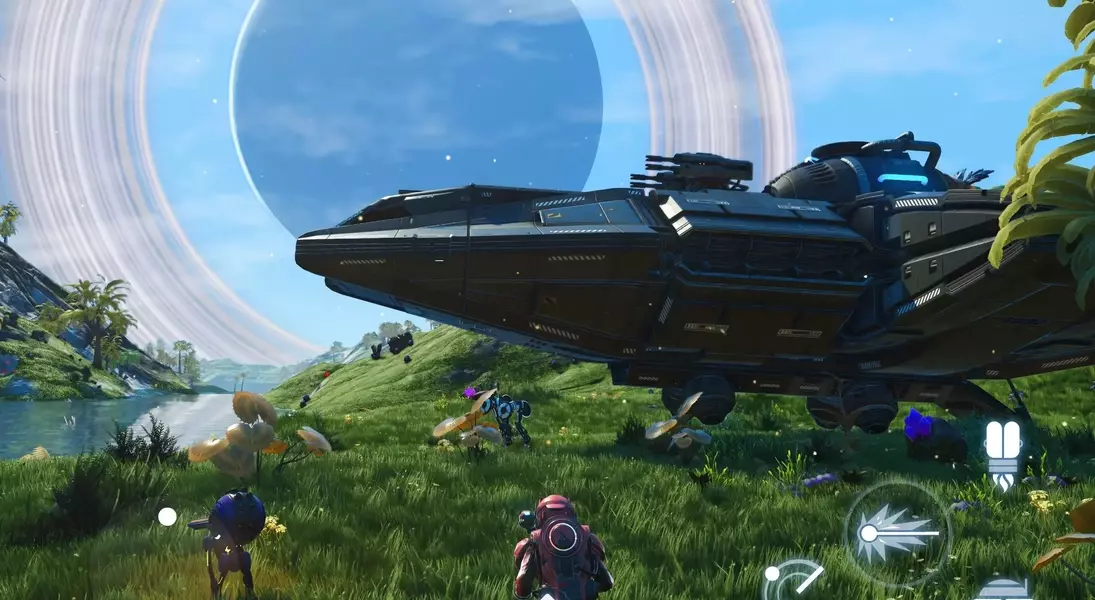
This past week, Apple reinforced its burgeoning commitment to gaming through its inaugural “Indie Games Week” on the App Store. The event spotlighted a diverse array of independent titles, including the iOS debut of Vampire Crawlers and the highly anticipated mobile rendition of No Man's Sky. At the helm of this initiative is Carson Oliver, the recently appointed head of App Store Worldwide, whose leadership in this indie showcase offers a glimpse into his strategic priorities for Apple's gaming division.
In his first public interview since assuming the role, Oliver articulated Apple's long-term aspirations within the gaming sector. He emphasized that Apple's overarching goal is to transform the App Store into a primary hub for premium indie games, competing directly with established platforms such as Steam. Oliver asserted that the App Store was fundamentally designed to democratize discoverability and distribution, enabling independent games to stand alongside major entertainment franchises.
Apple's gaming trajectory, though sometimes elusive, has been remarkably consistent. Since the experimental launch of Apple Arcade, the company has continuously explored various avenues within gaming. Oliver reiterated that gaming has always been integral to the App Store’s mission, with Apple’s strategy adapting to evolving player habits and demands for greater choice. He attributed the current acceleration of Apple’s gaming pursuits to rapid technological advancements.
Oliver detailed Apple's robust investment in gaming infrastructure, including cutting-edge hardware technologies that deliver sustained high performance. He specifically mentioned hardware-accelerated ray tracing, the A20 Pro chip, and next-generation vapor chamber cooling in the iPhone 18 Pro. Complementing these hardware enhancements are sophisticated developer tools such as Game Porting Toolkit 4, Metal, and open-source Unity plug-ins, all designed to facilitate game development and porting to Apple devices.
The efficacy of these technological strides is exemplified by Hello Games’ announcement of No Man’s Sky for iPhone and iPad, a remarkable achievement that compresses ten years of updates into a mere 5GB game compatible with devices as far back as the iPhone 11. Sean Murray, founder of Hello Games, credited the impressive capabilities of Apple’s hardware for enabling this feat.
Beyond technological prowess, Apple is actively working to cultivate a vibrant developer ecosystem. Recognizing the challenges developers face with discoverability in crowded marketplaces like Steam and the Nintendo Switch eShop, Apple employs a global editorial team for human curation, dedicated to identifying and promoting new games. Additionally, Apple provides indie developers with tools like Creative Assets, which allow them to enrich their game narratives through custom artwork displayed in search results and product page headers.
Indie Games Week itself served as an extension of this philosophy, celebrating seven independent titles newly released on iOS, including acclaimed games like Vampire Crawlers, Sifu, and Little Kitty, Big City.
While Apple’s efforts are yielding significant gains with developers, the actual user engagement with these premium titles remains a crucial question, given Apple’s stringent data privacy policies. Reports from GamesIndustry.biz indicated a 77% surge in premium mobile game sales in 2025, challenging the notion that mobile users exclusively favor free-to-play games burdened by microtransactions. Although Oliver did not confirm these specific figures, he affirmed substantial growth in premium game releases on the App Store, encompassing both indie titles and console/PC franchises migrating to mobile platforms.
Oliver attributes this shift to a generational change, noting that for many younger players, their first gaming device was an iPhone with a touchscreen. These users, he suggests, embrace direct touch as their primary control method, making iPhones and iPads ideal canvases for indie innovation. Apple has observed particular success with cozy games, management simulations, and roguelikes, highlighting titles such as Balatro, Stardew Valley, Slay the Spire, and Bloons TD 6 as exemplary mobile successes.
Despite Oliver's carefully articulated vision, certain aspects of Apple’s broader gaming strategy, particularly concerning mixed reality gaming and the future of Apple Arcade, still present uncertainties. Reports of reduced Vision Pro headset production due to lackluster sales cast a shadow on mixed reality endeavors. Furthermore, while Apple continues to attract publishers, the level of support from major players like Capcom and Ubisoft in 2026 has not matched the fervor seen in 2023.
Regarding Apple Arcade, Oliver dispelled notions of its decline, emphasizing that Apple views it as a distinct product catering to a different audience. He stated that Apple aims to provide developers with flexible business models, allowing titles like Balatro to thrive as premium downloads or find a home within Apple Arcade, ultimately offering developers and players alike greater choice.
Regardless of the long-term trajectory, underestimating Apple's potential influence in the gaming market would be ill-advised. With rising console hardware prices, the appeal of gaming on existing iPhones and iPads is growing. Technologies like Game Porting Toolkit 4, MetalFX, and open-source Unity plug-ins significantly reduce the time, effort, and cost for developers to bring PC and console games to Apple devices. To fully realize this potential, Apple must sustain its momentum and continuously persuade more developers to embrace its platforms. Indie Games Week serves as a powerful testament to the App Store’s viability for premium games; the ongoing challenge lies in maintaining this level of engagement and innovation consistently.