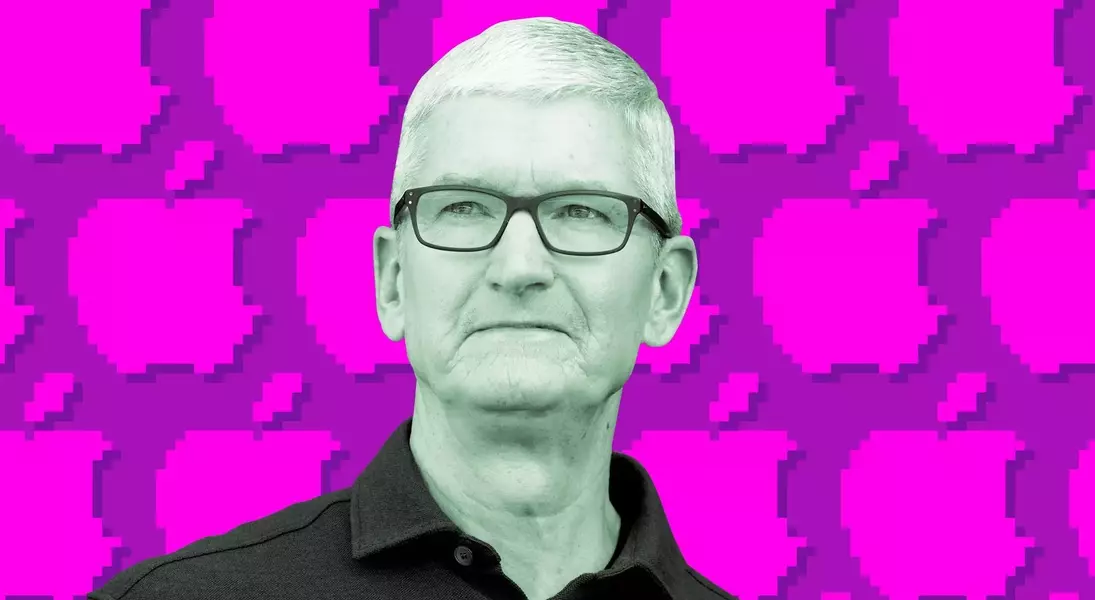
Apple's strategic direction is firmly set on artificial intelligence, as articulated by its leader. The company recognizes the profound impact AI will have across various sectors, viewing it as a pivotal technological revolution. Despite past cautious approaches, Apple is now signaling a strong commitment to pioneering in this field, ready to allocate substantial resources to research and development. This forward-looking stance aims to position Apple at the forefront of AI innovation, building upon its history of refining and perfecting established technologies rather than merely introducing them.
Apple's AI Ambition: A Comprehensive Overview from Cupertino Headquarters
On a significant Friday, amidst the vibrant technological hub of Cupertino, California, Apple CEO Tim Cook convened a rare all-staff assembly at the company's auditorium. Addressing his employees with conviction, Cook passionately declared that the ongoing revolution in artificial intelligence is of monumental importance, drawing parallels to foundational shifts such as the advent of the internet, the proliferation of smartphones, the rise of cloud computing, and the ecosystem of mobile applications. With resolute words, he impressed upon his team that Apple's engagement with AI is not merely an option but an imperative, stating, \"Apple must pursue this. Apple will seize this opportunity. It is, in essence, ours to claim.\" He further affirmed the company's unwavering resolve to dedicate the necessary financial and intellectual capital to achieve this ambitious goal. This declaration arrives at a crucial juncture, following recent reports, including one by Bloomberg, which illuminated Apple's deliberate pace in rolling out certain AI functionalities and acknowledged the unexpected postponement of a significant enhancement to its intelligent assistant, Siri, earlier this year. Elaborating on Apple's long-standing strategy, Cook highlighted the company's track record of entering established markets, such as personal computers, mobile phones, tablet devices, and portable music players, not as the initial innovator, but as the creator of superior, \"modern\" iterations that subsequently redefined their respective categories. He conveyed that this same philosophy underpins Apple's current perspective on artificial intelligence. Providing further insight into the technical nuances, software chief Craig Federighi addressed the specifics of the Siri delay. He revealed that the original blueprint for Siri involved a \"hybrid architecture,\" where the existing capabilities would coexist with a new layer powered by large language models. However, this approach was reevaluated, as it became clear it would not meet Apple's stringent quality benchmarks. Consequently, the team is now committed to a complete overhaul, migrating the entire system to a fundamentally new architecture. This internal discussion follows Cook's recent statements prior to an earnings conference call, where he indicated Apple's openness to strategic acquisitions that could accelerate its progress in AI. Concurrently, the competitive landscape for AI talent remains intense, with reports detailing how Meta has successfully recruited some of Apple's AI experts as part of its aggressive \"superintelligence\" recruitment drive.
The recent internal dialogue at Apple, spearheaded by Tim Cook's assertive vision for artificial intelligence, serves as a powerful reminder of the relentless pace of technological evolution and the critical need for established industry leaders to adapt and innovate. From a journalistic perspective, this event underscores Apple's recognition of a shifting paradigm; no longer can they afford to merely refine existing technologies. The AI landscape demands proactive engagement and substantial investment. As a reader, I find this particularly intriguing because it signals a potential pivot for Apple, moving from a position of perfecting what's already there to actively shaping the future of a nascent yet profoundly impactful technology. The challenges Apple faces, particularly with talent retention and the intricate development of sophisticated AI like the revamped Siri, highlight that even a titan of industry must navigate complex hurdles to maintain its competitive edge. It will be fascinating to observe how Apple's committed investment and strategic realignment will translate into tangible AI innovations that reshape user experience and the broader technological ecosystem in the years to come.
