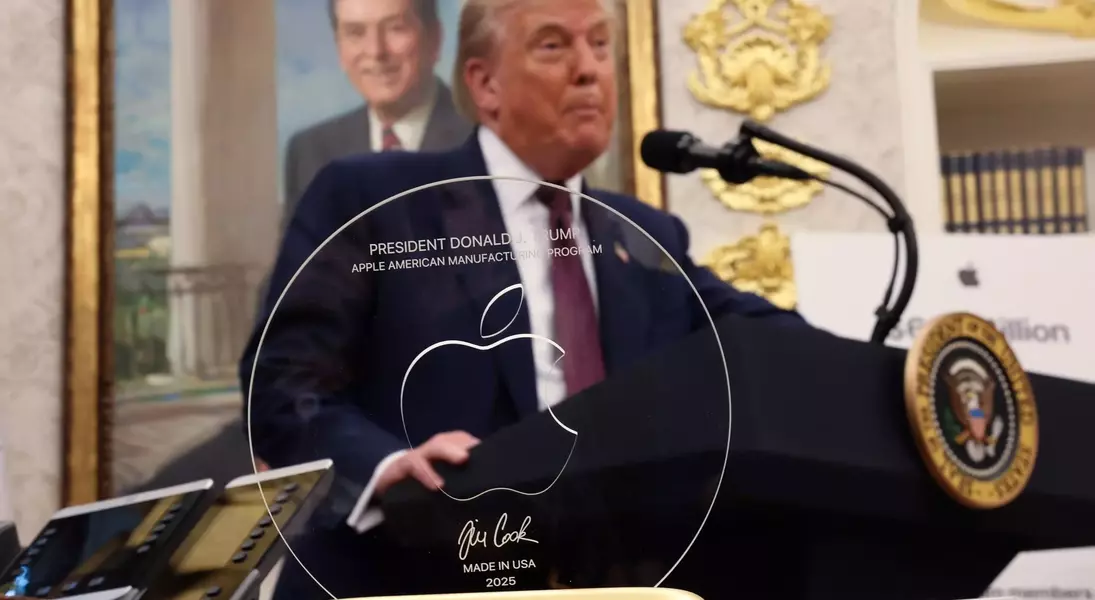
In a fascinating intersection of technology and politics, Apple's CEO, Tim Cook, presented a bespoke 24-karat gold and glass sculpture to President Donald Trump. This unique piece, crafted from Corning glass, signifies a growing relationship between the tech giant and the US administration, particularly in light of ongoing discussions about domestic manufacturing.
Details Unveiled: The Exquisite Presidential Gift from Apple's CEO
On a momentous day in August 2025, during a White House press conference primarily focused on Apple's burgeoning manufacturing endeavors within the United States, a remarkable exchange captured headlines. Apple's esteemed CEO, Tim Cook, presented an extraordinary token to the sitting President, Donald Trump. This gift was no ordinary memento but a singularly crafted piece of art: a large, striking disc of Corning glass, etched with the iconic Apple insignia and prominently displaying President Trump's name. It rested upon an opulent base forged from 24-karat gold, a material sourced with pride from Utah. Adding to its unique provenance, the glass sculpture bore the signature of Tim Cook himself, alongside a clear declaration of its origin: "Made in USA." Cook further highlighted that the creation was the work of a talented Apple team member, notably a former corporal in the US Marine Corps.
This gesture underscored the evolving dynamic between Cook and President Trump, a relationship that has become a blueprint for other corporate leaders seeking to navigate the political landscape. Following Trump's second electoral victory, many CEOs reportedly sought to emulate Cook's approach to cultivating such influential connections. This diplomatic gift arrives amidst a backdrop of previous tensions, where President Trump had signaled potential tariffs on tech manufacturers, including Apple, unless they committed to increasing production within the United States.
The presentation symbolizes more than just a cordial exchange; it represents Apple's tangible commitment to US manufacturing and an effort to align with the administration's economic priorities, potentially easing trade pressures and fostering a more collaborative environment for American innovation.
The act of gifting, especially one so symbolic and luxurious, in the public eye of the White House, certainly ignites a myriad of interpretations. From a journalistic perspective, it highlights the delicate dance between corporate interests and political influence. Is this a shrewd strategic move by Apple to ensure favorable trade policies and avert potential tariffs, or is it a genuine expression of a collaborative spirit between a leading tech company and the nation's highest office? For a reader, it might provoke thought on the perceived ethics of such overt displays of corporate-political alignment. Does it imply an undue influence of powerful corporations on government, or simply reflect a pragmatic approach to business in a globally interconnected yet increasingly nationalistic economic climate? Regardless of the underlying motivations, this event unmistakably underscores the profound impact of executive-level relationships on both domestic policy and international trade, prompting a deeper consideration of the responsibilities and ramifications inherent in these high-stakes interactions.
