
This analysis provides an in-depth look at the Defiance R2000 Weekly Distribution ETF (IWMY), examining its investment strategy, performance metrics, and comparisons with similar funds. The goal is to offer a comprehensive understanding for potential investors, highlighting the trade-offs between its attractive yield and its significant drawbacks.
Maximizing Yield, Minimizing Returns: The IWMY Conundrum
IWMY: Key Information and Operational Framework
The Defiance R2000 Weekly Distribution ETF (IWMY) is an actively managed exchange-traded fund that commenced operations on October 30, 2023. It aims to deliver a substantial 30% annual yield by employing daily call spread strategies on the Russell 2000 Index. With an expense ratio of 1.05%, this ETF distributes income on a weekly basis. Despite its relatively small asset base of $98 million, its average daily trading volume of $1 million indicates sufficient liquidity for long-term investors. Defiance ETFs, established in 2018, is the issuer, managing 80 ETFs across leveraged, income, and thematic categories.
Unpacking IWMY's Core Investment Approach
IWMY's investment methodology involves gaining exposure to the Russell 2000 Index, typically through deep in-the-money call options or a synthetic long position. Simultaneously, the fund executes daily credit call spread strategies on the index. This entails selling call options and purchasing other calls with higher strike prices and the same expiration. While this approach generates premium income and offers some protection during market surges, it inherently caps potential gains during strong rallies. The fund's objective is to achieve net premiums of 2.5% monthly, translating to an annual cash distribution of approximately 30%. However, these distributions are not guaranteed and can include a substantial portion of return of capital (ROC), which erodes the Net Asset Value (NAV) and can have tax implications. For performance benchmarking, the iShares Russell 2000 ETF (IWM) serves as a suitable comparison.
Portfolio Composition and Dynamic Adjustments
As of a representative date like July 17, 2026, IWMY's portfolio allocates approximately 95.9% to Russell 2000 exposure via long-dated, deep in-the-money call options. The remaining 4.3% is held in cash equivalents and a Treasury fund. The fund also actively manages short and long call options on the Russell 2000 Index with very short-term (daily) expirations, constantly rolling these positions to maintain its strategy. This dynamic options management is central to its income generation.
Performance Evaluation: Lagging Behind and High Costs
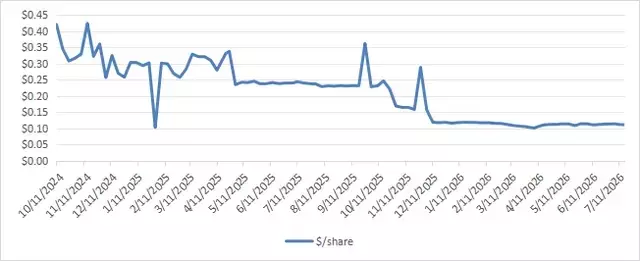
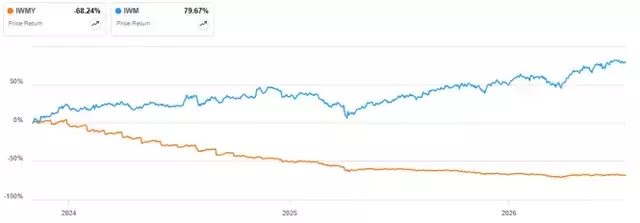
From November 6, 2023, to July 17, 2026, IWMY significantly underperformed the iShares Russell 2000 ETF (IWM), with an annualized underperformance of 9%. Despite lower volatility and maximum drawdown, its risk-adjusted performance, as measured by the Sharpe ratio, also trailed the benchmark. Since its inception, IWMY's share price has depreciated by 68% (excluding distributions), while IWM saw an almost 80% gain. Distributions, initially monthly, became weekly in October 2024 but have since declined by 74%, mirroring the fund's share price trend. The variable and often high percentage of ROC in distributions can negatively impact shareholder tax liabilities.
Comparative Analysis with Peers in the Income ETF Landscape
A comparison with other options-income ETFs tracking the Russell 2000 reveals IWMY's competitive disadvantages. Funds like Global X Russell 2000 Covered Call ETF (RYLD), NEOS Russell 2000 High-Income ETF (IWMI), Roundhill Russell 2000 0DTE Covered Call Strategy ETF (RDTE), iShares Russell 2000 BuyWrite ETF (IWMW), and YieldMax Russell 2000 0DTE Covered Call Strategy ETF (RDTY) offer varied profiles. IWMY ranked last in Sharpe ratio and second to last in total return since March 2025. IWMI, for instance, delivered superior price returns and had lower fees despite a lower yield. RDTE, another weekly distribution ETF, outperformed IWMY across all key metrics including yield, total return, Sharpe ratio, and trading volume.
Strategic Implications for Diverse Investor Profiles
IWMY's value proposition is primarily for investors who prioritize a high and consistent weekly income stream, even if it means accepting substantial Net Asset Value erosion and lower overall returns. Its high fees and underperformance relative to both the underlying index and competitors make it less attractive for those focused on capital appreciation or superior risk-adjusted returns. For investors whose primary goal is regular cash flow, and who are aware of the trade-offs, IWMY might fit a specific niche in their portfolio strategy, provided they understand the implications of high ROC distributions and potential capital loss.
