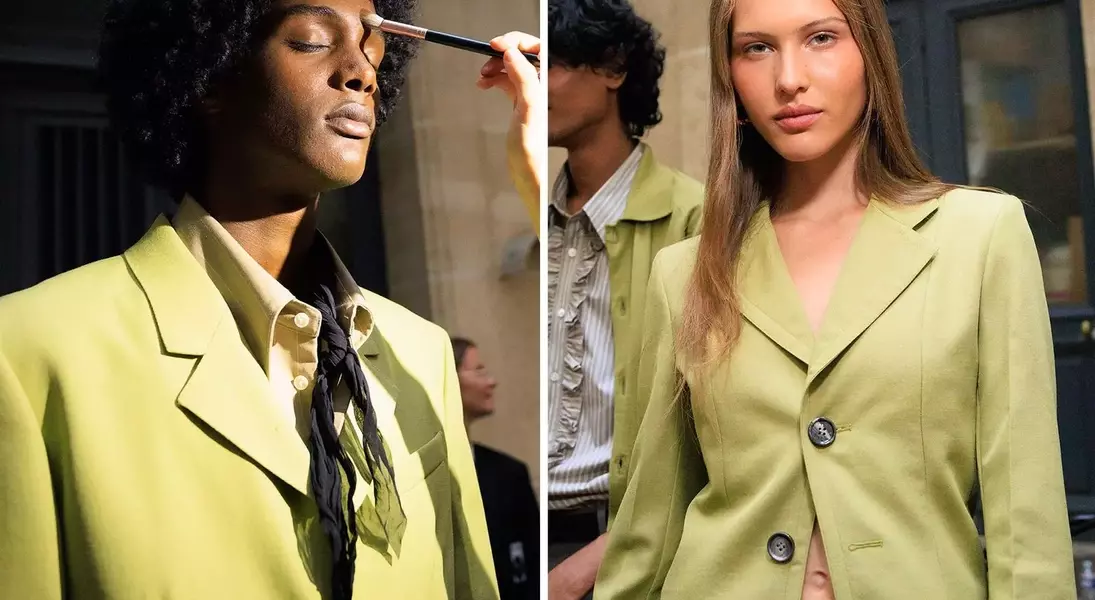
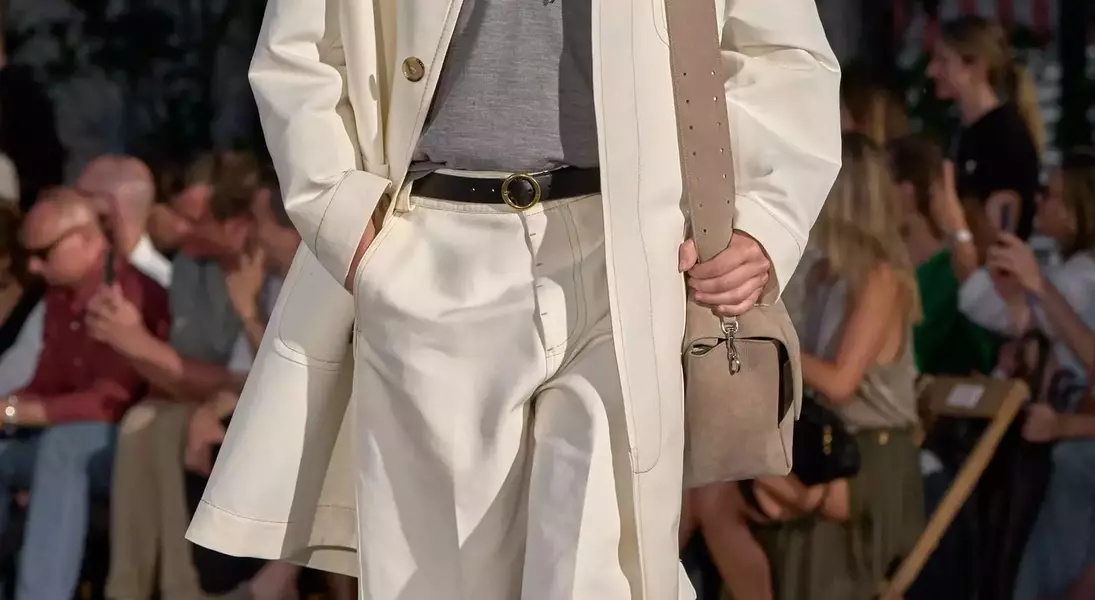

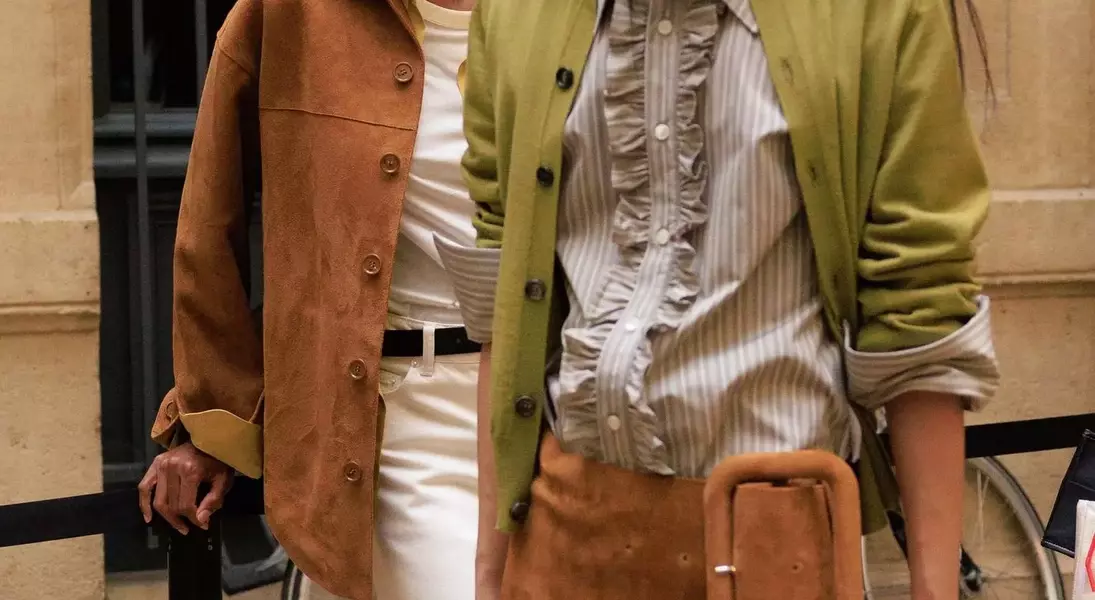
Ami, a brand that has carved a unique niche in the luxury fashion landscape, is celebrating its 15th anniversary. Under the steadfast vision of founder Alexandre Mattiussi and the strategic leadership of CEO Nicolas Santi-Weil, the company has consistently championed a philosophy of accessible yet high-quality fashion. Their journey is a testament to the power of a clear brand identity, strategic financial partnerships, and a deep-seated commitment to making fashion enjoyable for a wider audience, all while navigating the complexities of the global market.
Ami's Enduring Vision: Simplicity, Growth, and Creative Autonomy
Founded in 2011 by Alexandre Mattiussi, Ami was born from a desire to create clothing that was both dependable and relatable, a stark contrast to the often overly complicated and anxiety-inducing world of high fashion he had previously experienced at prestigious houses like Dior Homme and Givenchy. Mattiussi, who hails from Normandy and boasts a rich Franco-Italian heritage, has consistently maintained that his goal is to design for 'real people' – a sentiment that has resonated deeply with consumers. Ami, meaning 'friend' in French, perfectly encapsulates this ethos, further reinforced by the inclusion of 'Paris' in its official name, signifying an effortless Parisian chic.
This steadfast commitment to its core values has propelled Ami's remarkable expansion. In 2013, Nicolas Santi-Weil joined as CEO, forming a dynamic partnership with Mattiussi that has been instrumental in the brand's success. Their 13-year collaboration, described by Mattiussi as one of his longest and most fulfilling relationships, is built on mutual trust and a shared vision. Santi-Weil, with his extensive background in fashion business, including his time at Liste Rouge and co-founding The Kooples, brought invaluable expertise in craftsmanship, materials, and bold market strategies. He emphasizes the importance of a strong product foundation and the courage to pursue innovative ideas even in challenging times.
Ami's financial trajectory reflects its rapid ascent. From revenues of 35 million euros in 2019, the brand surged to over 300 million euros by 2023, with current trading showing double-digit growth. This expansion was strategically supported by early investments from Bpifrance’s Mode et Finance fund in 2012, followed by Neo, and subsequently by Sequoia Capital China (now Hongshan) in 2021, and Felix Capital in late 2022. Despite the dilution of ownership that comes with successive funding rounds, Mattiussi and Santi-Weil meticulously structured shareholder agreements, or 'ManPacks,' to safeguard their operational and creative control. Santi-Weil firmly believes that true control stems from these agreements, ensuring Mattiussi's complete creative freedom. The brand's relationship with Centerview Partners, their investment banking advisor for nearly a decade, has also been pivotal in their sustained growth.
The influx of capital facilitated a period of significant scaling for Ami. They expanded their retail network, brought e-commerce operations in-house, and strategically increased their presence in key markets such like Asia and the US. Santi-Weil explains that Hongshan's investment provided crucial strategic backing during this acceleration phase, recognizing the potential in the entrepreneurial duo rather than just the brand itself. As Ami matured, Santi-Weil's focus shifted from aggressive expansion to consolidation, prioritizing the strengthening of internal structures, investing in technology, and enhancing team capabilities. This involved working with external consultants to address the challenges that arise from hypergrowth.
A cornerstone of Ami's strategy is its emphasis on 'friendly luxury.' This involves sourcing high-quality Italian fabrics, similar to those used by top fashion houses, while maintaining more accessible price points by manufacturing in regions like Portugal and Eastern Europe. This approach allows them to offer superior quality without the exorbitant price tags often associated with traditional luxury brands. Mattiussi and Santi-Weil are vocal about their commitment to 'fair pricing,' consciously positioning themselves to offer better value than many of their high-end competitors, whose prices have seen significant increases in recent seasons. The brand's internal mantra, ECCO (engagement, creativity, confidence, and optimism), encapsulates the positive and grounded spirit that defines Ami.
Looking ahead, Santi-Weil is resolute about maintaining Ami's independence, stating that while a sale to a luxury conglomerate is not entirely out of the question, it is not their primary objective. The core aim is to preserve the brand's freedom and identity, a principle that extends to its 830 employees worldwide. With 650 wholesale accounts, 70 retail points, and a thriving digital storefront that now accounts for approximately two-thirds of sales, Ami's growth is carefully managed. The emphasis remains on growth that respects and upholds the brand's intrinsic nature, rather than growth at any cost. Mattiussi, seemingly immune to the 'operational paranoia' often found in Parisian luxury circles, finds joy in his brand's popularity and remains unburdened by the snobbery of some fashion industry segments. He asserts that his path is a good one, fulfilling in itself, and that his focus is on genuine connection and accessible style.
The narrative of Ami offers a compelling insight into how a luxury brand can achieve significant commercial success while steadfastly adhering to its founding principles of simplicity, accessibility, and genuine connection. In an industry often perceived as exclusive and intimidating, Ami has demonstrated that there is a considerable appetite for 'friendly luxury' – a blend of high-quality craftsmanship, considered design, and approachable pricing. Their journey highlights the critical balance between creative vision and astute business strategy, showing that founders can retain control and integrity even with external investments. Furthermore, Ami's success underscores the importance of a strong, unified leadership team, where mutual trust and a shared commitment to core values can overcome inevitable challenges. Their story serves as an inspiring example for other entrepreneurs striving to build a successful brand that remains true to its identity and its audience.
