



In 2025, leaders of major American automotive manufacturers experienced unparalleled financial rewards, with their compensation packages reaching staggering figures. This trend highlights a significant aspect of corporate finance within the industry, where executive earnings, often heavily weighted by stock-based incentives, can escalate dramatically, even amidst fluctuating market conditions and company performance. The analysis of these compensation structures reveals a landscape where a select few accumulate immense wealth, drawing considerable attention to the mechanisms and implications of such lucrative arrangements.
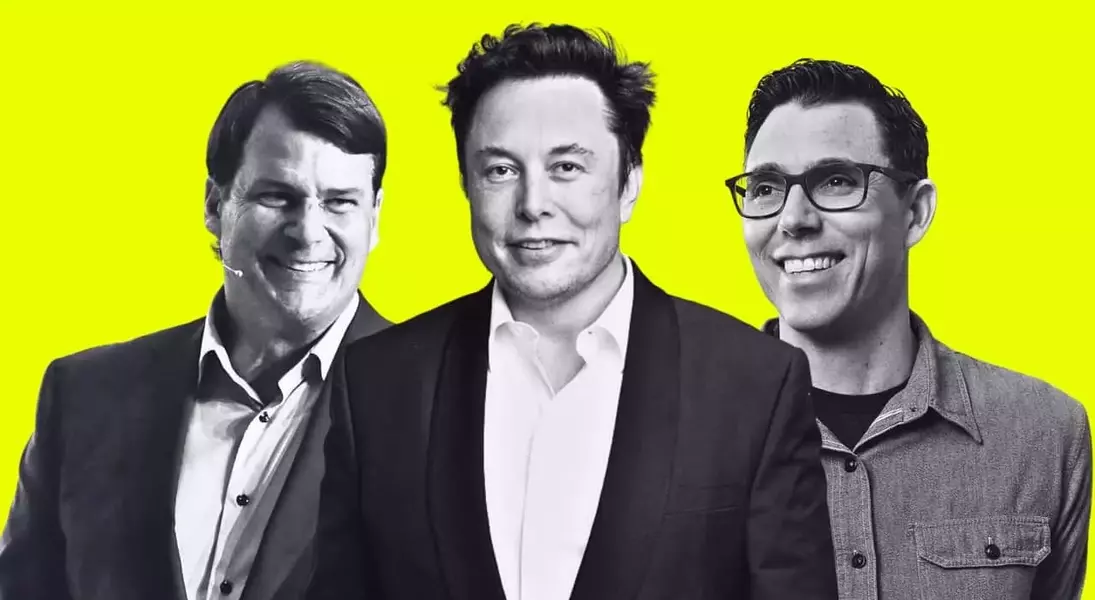
Tesla's CEO, Elon Musk, emerged as the top earner, with an estimated $8.8 billion in compensation. This extraordinary sum is primarily attributed to a shareholder-approved, long-term stock incentive plan, rather than a traditional salary. His earnings, while substantial, are contingent upon Tesla's stock performance. This financial milestone occurred during a challenging year for Tesla, which saw an estimated 8.6% decline in global sales and a reported drop in profits, yet Musk maintained his status as the world's wealthiest individual.
Following Musk, Rivian CEO RJ Scaringe secured the second-highest compensation among American auto executives, totaling $402.6 million. Although his base salary was modest at $1.1 million, the majority of his income stemmed from stock options, amounting to over $373 million, and $26.6 million in stock awards, complemented by a $1 million bonus. Rivian, however, faced an 18% decrease in sales year-over-year, delivering just over 42,000 vehicles. The company is anticipating a turnaround with the forthcoming launch of its R2 model.
General Motors' CEO, Mary Barra, received $29.9 million, marking a modest 1.3% increase from the previous year. Her compensation package included a $2.1 million base salary, $21.6 million in stock awards, and approximately $5 million in incentive-based pay. Despite some challenges in the electric vehicle sector, GM achieved a 6% increase in sales and generated $185.0 billion in revenue, justifying Barra's earnings in the eyes of many stakeholders.
Ford CEO Jim Farley's compensation reached a career-high of $27.5 million in 2025, representing an 11% increase from the prior year. His earnings comprised a $1.7 million base salary, $18.8 million in stock awards, $5.7 million in incentive payments, and $1.2 million in other benefits. Similar to GM, Ford demonstrated robust performance, with sales growing by 6% to over 2.2 million vehicles and revenue reaching $187.3 billion.
Antonio Filosa, who assumed the role of Stellantis CEO in June 2025, earned $6.3 million, reflecting his six months of service. In contrast, the outgoing CEO, Carlos Tavares, received $14 million upon his departure, having earned over $42.0 million in 2023, his most profitable year. This variation underscores the impact of tenure and company performance on executive compensation within the automotive sector.
The compensation packages awarded to top automotive CEOs in 2025 demonstrate a significant reliance on stock-based incentives, often resulting in multi-million and even multi-billion dollar payouts. These figures underscore the dynamic financial landscape within the automotive industry, where leadership can reap substantial rewards, even as their companies navigate varying market conditions and performance metrics.
