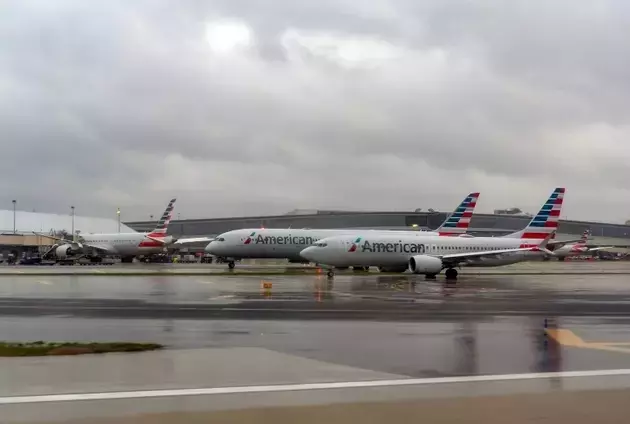
American Airlines, a prominent U.S. carrier, confronts significant challenges in its quest for stability and profitability. The company has grappled with underperformance, substantial debt, and restricted strategic agility, particularly in the wake of major industry shifts like 9/11 and the COVID-19 pandemic.
American Airlines: Charting a Course Through Turbulent Skies
A Legacy of Struggle: The Post-9/11 and COVID-19 Eras
Since the traumatic events of 9/11 and the disruptive impact of the COVID-19 pandemic, American Airlines Group Inc. (AAL) has found itself in a continuous battle to establish a firm strategic and financial foundation. The airline, one of the nation's largest and oldest, initially attempted an out-of-court restructuring following 9/11, highlighting its ongoing difficulties in adapting to profound industry changes.
Financial Pressures Mount: A Look at 2025 Projections and 2026 Outlook
The financial landscape for American Airlines remains challenging. In 2025, the company's net income is projected to be a mere $111 million on revenues of $55 billion. This slim profit margin is largely attributed to increasing labor costs stemming from new settlements and the anticipated surge in fuel prices, which are expected to further squeeze margins in 2026. These factors underscore the severe financial pressures the airline faces.
Competitive Disadvantage: Trailing Industry Leaders
Despite possessing valuable hub airports and a vast operational scale, American Airlines continues to fall short when compared to its key rivals, Delta and United. The airline lags in crucial areas such as premium revenue generation, operational efficiency, and overall network profitability. This competitive gap leaves American Airlines in a vulnerable position within the fiercely contested airline industry.
The Inevitability of Consolidation: AAL's Precarious Position
The airline industry is ripe for further consolidation, a trend that could significantly impact American Airlines. Given its existing financial constraints and comparative weaknesses against stronger, more financially robust competitors, AAL is particularly susceptible in a consolidating market. Its ability to withstand or participate favorably in such a scenario remains a critical concern for investors and industry observers alike.
