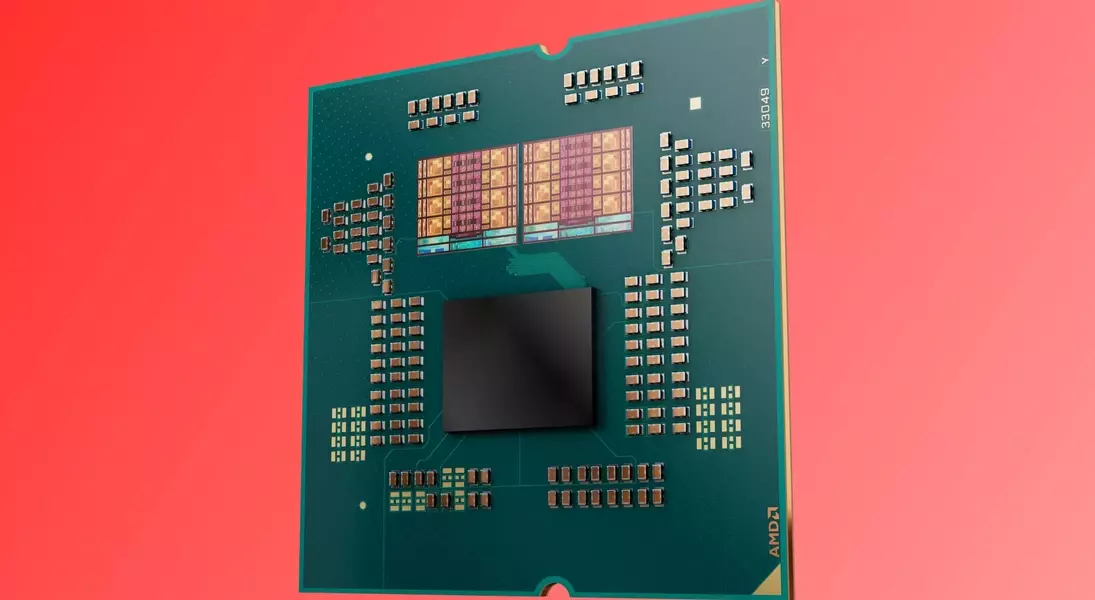
AMD is on the cusp of introducing an innovative Ryzen processor, the Ryzen 9 9950X3D2, which integrates two chiplets, each equipped with a substantial amount of 3D V-Cache. While this development promises enhanced capabilities, particularly in compute-intensive tasks, expert analysis suggests that its impact on gaming performance may be less transformative than anticipated. This article explores the technical specifications of this upcoming CPU, its intended applications, and the reasons behind the projected modest gains for the gaming community.
AMD's intention to launch a CPU with dual 3D V-Cache chiplets was subtly hinted at during discussions with journalists, who were advised to 'stay tuned.' Further corroboration emerged from Alienware China, which unveiled a new Area-51 gaming PC featuring the Ryzen 9 9950X3D2. Additionally, system builder Systronix listed a workstation incorporating this chip, signaling an imminent release. This new processor is expected to boast 16 cores, 32 threads, and a remarkable 192 MB of total L3 cache. The absence of an official announcement at CES 2026 was notable, especially given AMD's reliance on the Ryzen 7 9850X3D and new Ryzen AI Max chips to captivate the gaming audience.
Despite the significant cache, the Ryzen 9 9950X3D2 may not offer substantial advantages for gamers. The core issue lies in the design of existing dual-chiplet X3D processors, where only one chiplet typically utilizes 3D V-Cache technology. AMD employs software to direct game threads to a single chiplet (CCD) to mitigate latency arising from data transfer between CCDs via Infinity Fabric. Consequently, a 9950X3D, while possessing 16 cores, effectively utilizes only eight for gaming—the cores residing in the CCD with 3D V-Cache.
AMD has previously acknowledged that while technically feasible to implement 3D V-Cache on both chiplets, the benefit for gamers would be marginal. Such a configuration would escalate production costs without delivering a proportional increase in gaming performance. The performance-to-cost ratio for gamers would be unfavorable, particularly given the already premium price of the current Ryzen 9 9950X3D, which hovers around $700. Gamers might find greater value in future designs such as a 12-core CCD, rumored for Zen 6, though this remains speculative.
However, the dual 3D V-Cache architecture could prove highly advantageous for other applications. Workstations, for instance, could leverage the increased core count and expanded L3 cache for demanding professional tasks, offering a more cost-effective alternative to high-end server-grade chips like the AMD Epyc 9684X, which can cost upwards of $14,000. Therefore, while some enthusiasts might still opt for the Ryzen 9 9950X3D2 for its top-tier specifications, its primary market may lie outside mainstream gaming, catering instead to users requiring robust processing power for specialized workloads.
The impending launch of AMD's Ryzen 9 9950X3D2 marks a significant technological advancement in CPU design, particularly with its dual 3D V-Cache chiplets. While offering impressive specifications and potential benefits for professional applications and workstations, its actual impact on gaming performance is expected to be limited. This strategic design choice reflects AMD's understanding that maximizing cache on both chiplets for gaming purposes does not yield a proportional return on investment, suggesting a targeted approach for this high-performance processor.
