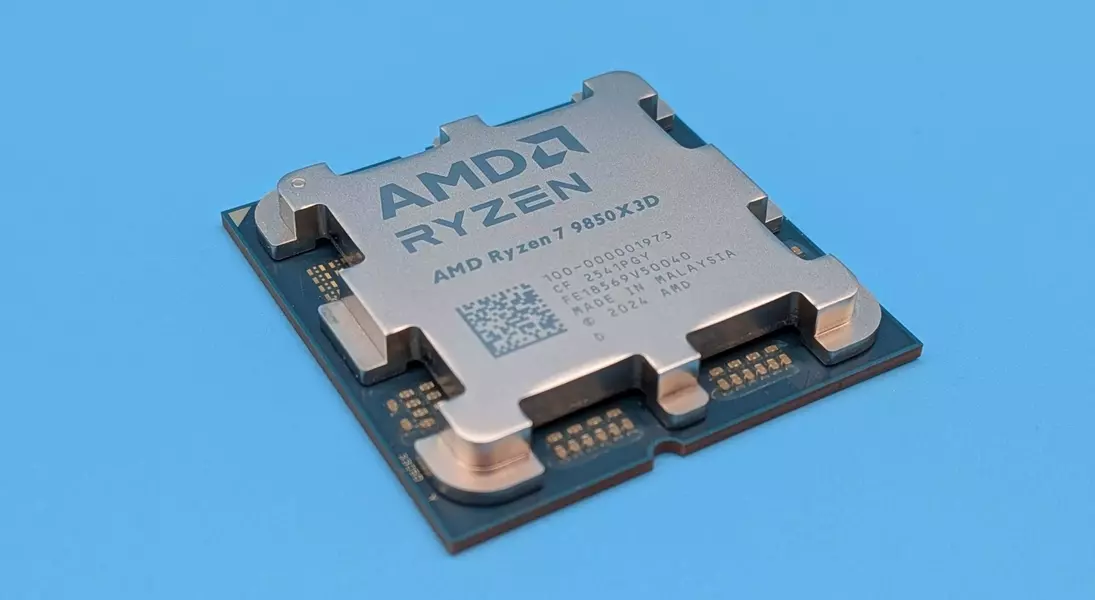
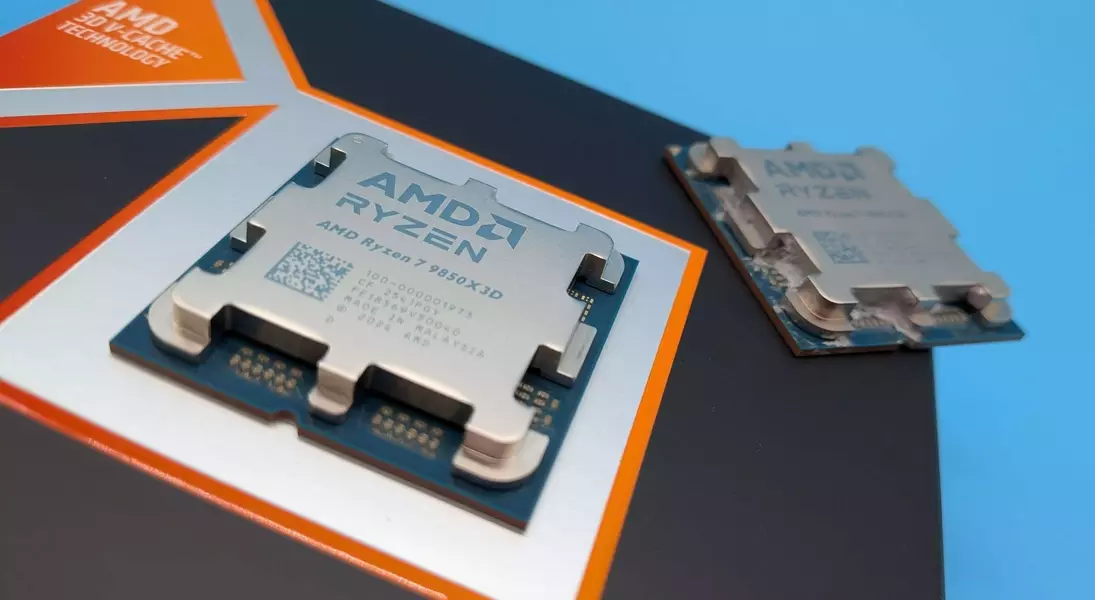
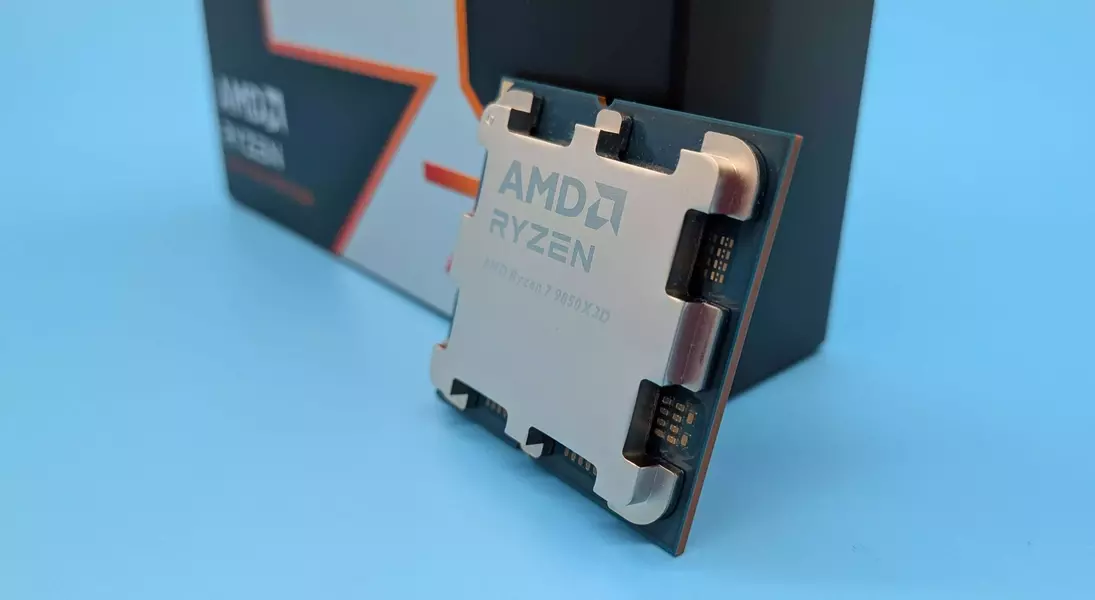
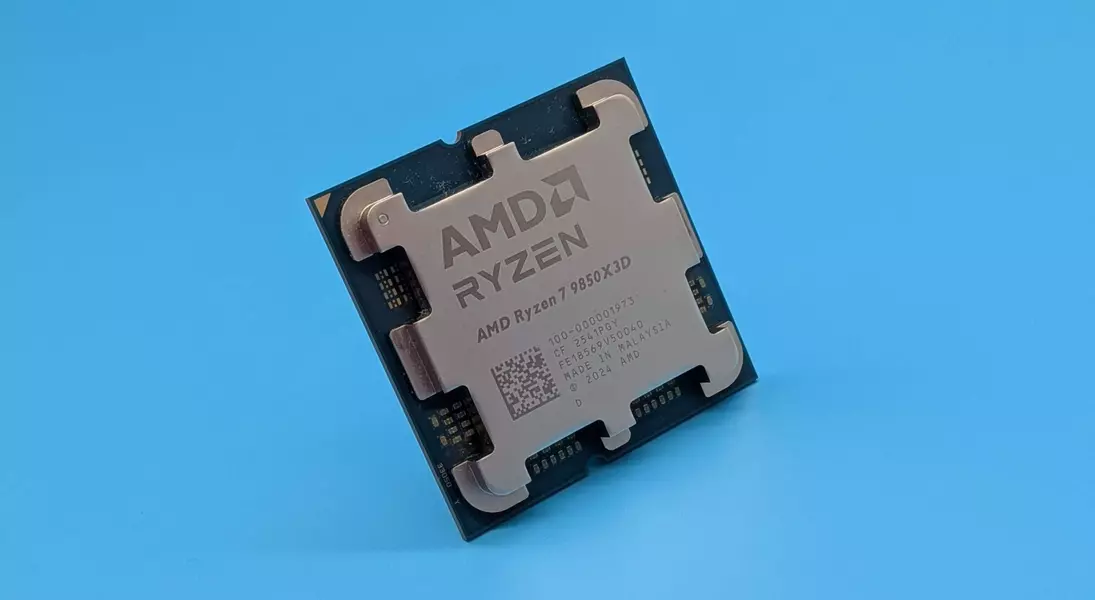
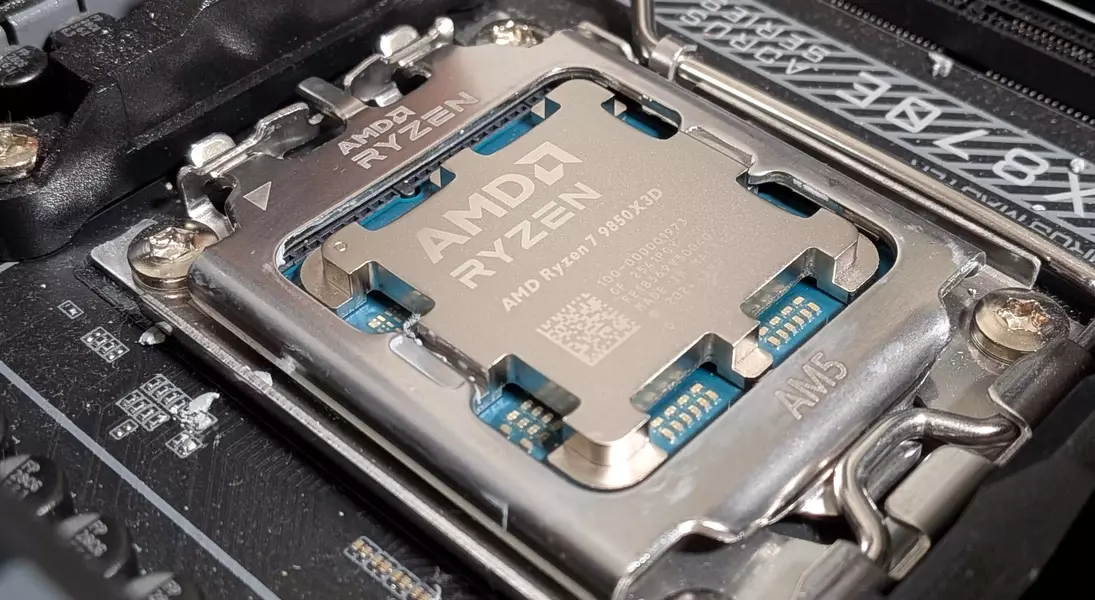
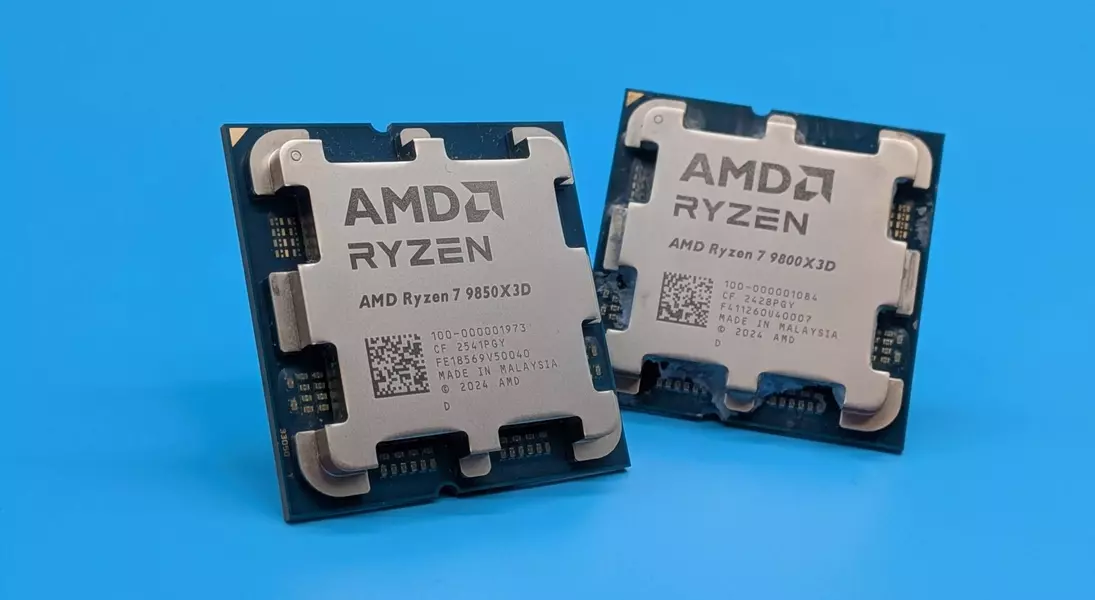
This review delves into the capabilities of the AMD Ryzen 7 9850X3D processor, evaluating its performance against its predecessor and other competitors in the gaming and productivity sectors. It examines the impact of its enhanced clock speed and 3D V-Cache technology on gaming experiences, power efficiency, and thermal management, offering insights for potential buyers.
The AMD Ryzen 7 9850X3D: A Familiar Tune with a Slightly Higher Pitch
Unpacking the Latest Ryzen 7 Iteration
In the current technological landscape, a sense of nostalgia often influences consumer choices. AMD appears to tap into this sentiment with its new Ryzen 7 9850X3D, a processor that, while new, evokes a bygone era when a single chip manufacturer held significant market dominance. This new offering, priced just slightly above its predecessor, the Ryzen 7 9800X3D, primarily features a higher clock speed, suggesting a strategy reminiscent of past industry leaders who released minimally updated versions of their flagship products due to a lack of genuine competition.
Evaluating the Gaming Prowess
The Ryzen 7 9850X3D continues to uphold AMD's reputation for producing top-tier gaming processors. It incorporates the Zen 5 architecture, is fabricated using a 4nm TSMC process, and crucially, utilizes the second generation of AMD's innovative 3D V-Cache technology. This advanced cache layering system allows for significantly higher clock speeds compared to earlier 3D V-Cache designs, where the cache was stacked directly atop the core complex die, imposing thermal limitations. The improved design, with the L3 cache positioned beneath the CCD, ensures better heat dissipation and potential for overclocking.
The Impact of 3D V-Cache on Gaming Performance
The substantial increase in L3 cache, a core feature of 3D V-Cache CPUs, proves particularly advantageous in gaming. By minimizing the CPU's reliance on slower system memory, this technology boosts performance in games that heavily depend on processor capabilities. A comparison of the 9850X3D's performance in titles like Baldur's Gate 3 and Homeworld 3 against the 9700X and Intel's Core Ultra 9 285K clearly demonstrates the benefits of 3D V-Cache, a technology also adopted in server-grade EPYC chips for its utility in data-intensive simulations.
Marginal Gains: Clock Speed vs. Real-World Gaming Experience
Despite the higher clock speed of the 9850X3D, the actual increase in gaming performance compared to its predecessor is quite modest. Tests conducted with a high-end graphics card like the RTX 5090 revealed only about a 2.5% frame rate improvement. Furthermore, in setups with more common GPUs, such as the RTX 4070, the performance difference becomes even less consistent, with some titles showing no significant advantage or even a slight decrease in performance for the newer chip. This suggests that while technically faster, the practical benefits of the increased clock speed are negligible for the average gamer.
Productivity and Processing Performance Metrics
Beyond gaming, the performance of the Ryzen 7 9850X3D in productivity tasks is also analyzed. While it shows slight improvements in single-core and multi-core index scores in benchmarks like Cinebench 2024 and Blender 4.2.0 compared to the 9800X3D, these gains are often outmatched by higher-tier processors like the Ryzen 9 9950X3D and Intel Core Ultra 9 285K, especially in multi-core intensive applications. This indicates that the 9850X3D primarily targets gaming enhancements rather than significant boosts in workstation-level tasks.
The Trade-offs: Power, Heat, and Reliability
A notable aspect of the 9850X3D is its increased power consumption and thermal output during gaming. To achieve a minimal performance gain, the CPU demands over 40% more power and runs 24% hotter than the 9800X3D. This raises questions about the overall efficiency and long-term reliability, particularly given past reports of 9800X3D chip failures. While the 9850X3D is marketed as a potentially more stable, "bin-sorted" version, the higher power draw could negate some of these perceived reliability benefits.
Is the Upgrade Justified? A Concluding Thought
Considering the minimal performance uplift, increased power consumption, and thermal characteristics, the justification for choosing the Ryzen 7 9850X3D over the 9800X3D becomes debatable. While it offers a theoretically more reliable chip due to its selection process, the practical gaming advantages are marginal. For most users, the existing 9800X3D, often available at a more attractive price point, still represents a more compelling choice for gaming, offering comparable performance without the higher power and heat overheads.
