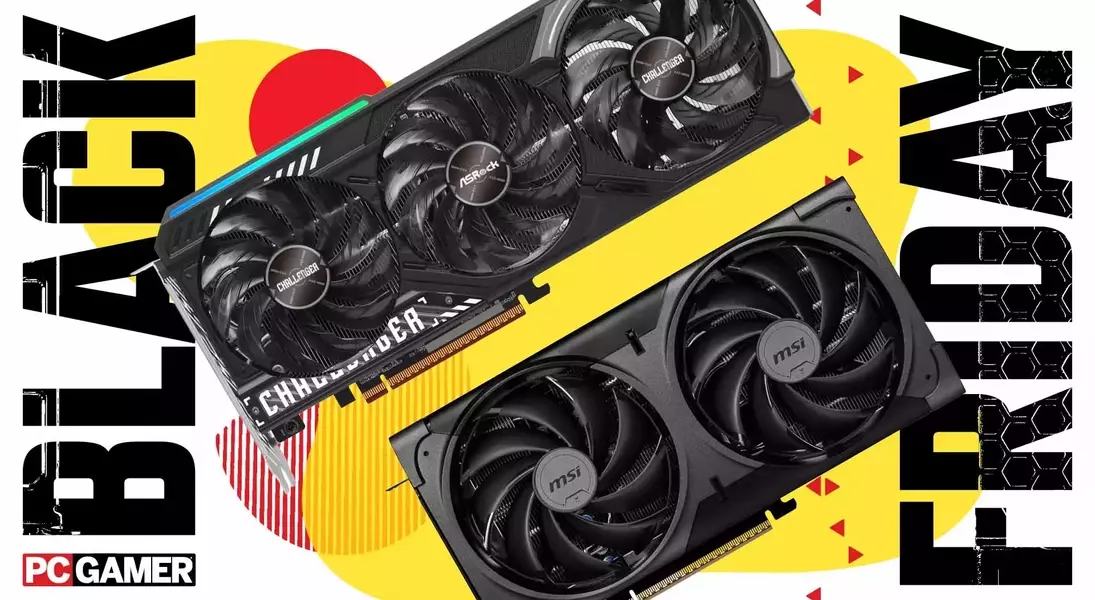
When selecting a graphics card upgrade, consumers often face a complex decision given the myriad models, price points, and technical specifications available. This challenge was particularly evident during sales events like Black Friday, despite some price reductions. The discussion of GPU pricing is especially relevant as memory costs are expected to climb, impacting the overall market. For those operating within a budget of approximately $500 for a new GPU, the choice narrows considerably to two primary contenders: the AMD Radeon RX 9070 and the Nvidia GeForce RTX 5070. Both offer distinct advantages and disadvantages, making a detailed comparison essential for informed purchasing decisions.
A direct comparison of these two cards reveals that while the Nvidia GeForce RTX 5070 might appear superior on paper due to its higher shader count and boost clock, real-world gaming performance often tells a different story. The AMD Radeon RX 9070 frequently outperforms its Nvidia counterpart in various gaming scenarios, including traditional rasterization, hybrid rendering, and even ray tracing, where Nvidia traditionally held an edge. This performance disparity is attributed to differences in memory architecture, with the RX 9070 utilizing a wider memory bus and more cache, allowing it to achieve better results despite having fewer shaders. Overclocking efforts on either card do not significantly alter this performance hierarchy, with the RX 9070 generally maintaining its lead in gaming benchmarks.
AMD Radeon RX 9070: Superior Gaming Performance
The AMD Radeon RX 9070 generally offers a more robust gaming experience compared to the Nvidia RTX 5070. This card consistently delivers higher frame rates in most gaming environments, including those that demand intensive ray tracing. While Nvidia has historically led in ray tracing capabilities, AMD's advancements with its RDNA 4 architecture have significantly closed this gap, allowing the RX 9070 to stand its ground. The RX 9070's architectural design, featuring a wider 256-bit memory bus and a larger cache, plays a crucial role in its superior in-game performance, making it a powerful option for gamers prioritizing raw frame rates across diverse titles, even at higher resolutions like 4K.
Detailed benchmarks across numerous games demonstrate the RX 9070's lead over the RTX 5070. This performance advantage stems not from raw specifications like shader counts alone, but from a more efficient memory subsystem. Despite the RTX 5070's use of faster GDDR7 VRAM, its narrower 192-bit memory bus results in a lower aggregated memory bandwidth compared to the RX 9070's 645 MB/s. Furthermore, the RDNA 4 GPU's substantially larger cache enables it to process game data more effectively, contributing to its strong performance even against a chip with more shaders. While both cards allow for overclocking, the RX 9070's fundamental design advantages ensure it generally remains the faster option for gaming, cementing its position as a compelling choice for dedicated gamers.
Nvidia RTX 5070: Feature-Rich and Versatile
Despite the AMD RX 9070's gaming prowess, the Nvidia RTX 5070 distinguishes itself with its advanced feature set, particularly DLSS 4. This AI-powered technology offers superior upscaling, frame generation, and ray tracing denoising, providing a visually enhanced experience that AMD's FSR 4, while improving, has yet to fully match. When games support Nvidia's Multi Frame Generation (MFG), the RTX 5070 can achieve remarkably high frame rates, surpassing its AMD rival. This makes the RTX 5070 a more rounded option for users who value cutting-edge visual technologies and robust performance in a wider array of applications beyond just gaming, including content creation tasks.
The integration of DLSS 4 gives the RTX 5070 a significant edge in games that leverage its capabilities. For instance, in graphically demanding titles like Cyberpunk 2077, with ray tracing set to Ultra quality at 1440p, the RTX 5070 can deliver an average of 228 frames per second and a 1% low of 162 fps, coupled with minimal system latency, far exceeding what the RX 9070 can achieve. Although AMD is continuously working on FSR 4, with updates like Project Redstone planned, the visual quality and performance gains from DLSS 4, especially with MFG, currently remain superior. Moreover, for professionals involved in photo and video editing, 3D rendering, and other media-intensive workloads, Nvidia's cards, including the RTX 5070, consistently offer stronger performance, making it a more versatile and attractive option for a broader range of uses despite its slightly higher price point or marginally lower raw gaming performance in some scenarios without DLSS.
