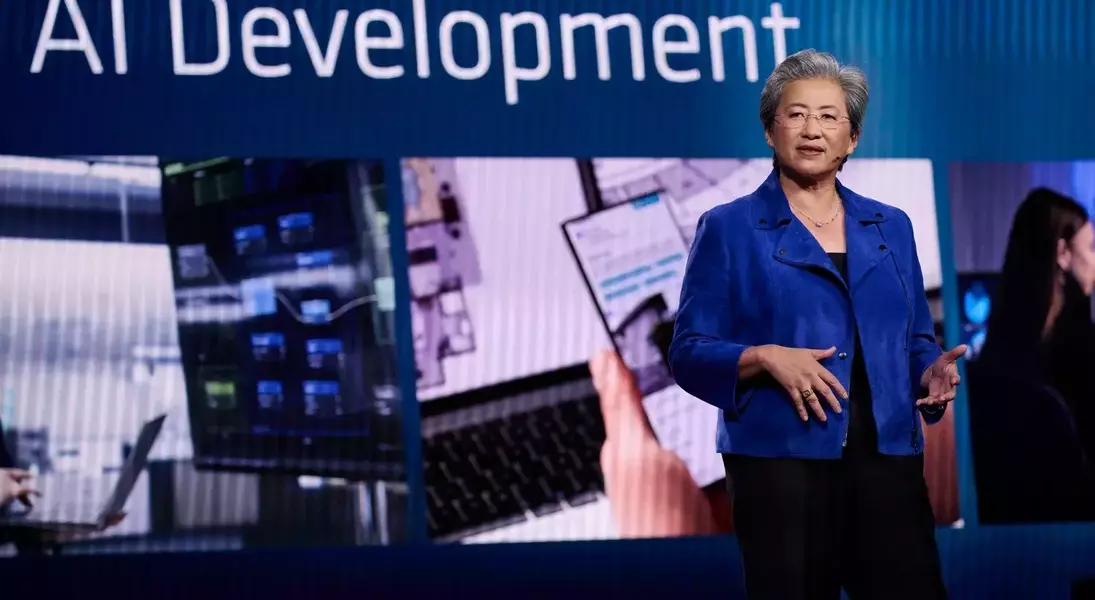
Amidst escalating concerns regarding artificial intelligence's transformative influence on global industries and the labor market, Advanced Micro Devices (AMD) CEO Lisa Su offers a calming perspective. She contends that AI is poised to augment human potential and refine business efficiencies, rather than precipitating widespread job displacement. Her assertions arrive as markets exhibit volatility, partly fueled by a recent report from Citrini Research that cast a shadow of doubt over AI's economic repercussions.
AMD's CEO Champions AI as an Enhancer, Not an Eraser of Jobs
On a recent Tuesday, Lisa Su, the dynamic Chief Executive Officer of Advanced Micro Devices, publicly assuaged fears surrounding the pervasive integration of artificial intelligence. In a candid interview with CNBC, Su dismissed the notion of AI entirely supplanting human labor, instead advocating for its role as a powerful tool for improvement. She articulated, "AI is going to make each of us better and each of our businesses better."
These comments follow a period of market apprehension, exacerbated by reports suggesting AI's potential to disrupt established industries and displace vast numbers of workers. However, AMD's recent performance painted a brighter picture. The company's stock experienced a nearly 9% surge, pushing its market capitalization close to an impressive $350 billion. This uptick was largely attributed to AMD's successful securing of a substantial AI chip contract with Meta Platforms. Su lauded Meta as a prospective leader in AI innovation.
Su elaborated on AMD's internal philosophy, highlighting that AI is already being utilized to expedite work processes. She underscored that the technology remains "nowhere close" to rendering human involvement obsolete. Instead, she emphasized the critical human role in conception and invention, stating, "We have to create and invent it, and then AI can help us make it faster, more efficient, more productive."
Addressing the workforce, Su acknowledged the necessity for individuals to potentially retrain and adapt their skills to leverage the emerging opportunities presented by AI. Just a month prior, she revealed that while AI hasn't curbed AMD's hiring, it has indeed reshaped the hiring criteria, favoring candidates who demonstrate an "AI forward" mindset.
Ultimately, Su's message is one of empowerment and adaptation. She urged both individuals and businesses to proactively engage with AI, to "harness the power of the technology, instead of being afraid of the technology."
The discourse initiated by AMD's CEO, Lisa Su, provides a crucial counter-narrative to the prevailing anxiety surrounding artificial intelligence. Her vision of AI as a catalyst for human and business enhancement, rather than a harbinger of job destruction, prompts a reconsideration of our collective approach to technological advancement. It underscores the imperative for continuous learning, skill adaptation, and strategic integration of AI to unlock its full, positive potential, fostering innovation and productivity across all sectors. This perspective is vital for investors, employees, and policymakers alike, guiding a more optimistic and proactive engagement with the AI era.
