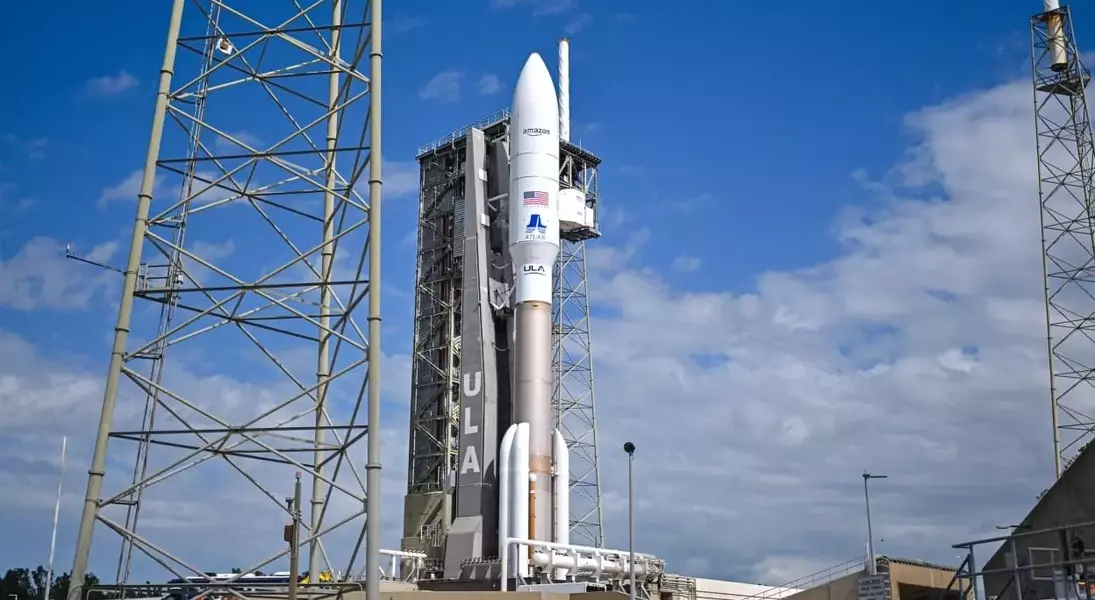
Amazon is making significant strides in its ambitious Project Kuiper, poised to become a major contender in the global satellite internet arena. This development comes as the company inaugurates a state-of-the-art satellite processing facility, signaling a robust commitment to its orbital internet aspirations.
Amazon Accelerates Project Kuiper with New Kennedy Space Center Facility
In a momentous announcement, Amazon recently unveiled its new $140 million satellite processing facility located at the prestigious Kennedy Space Center in Florida. This strategic investment marks a pivotal step in Project Kuiper's journey, empowering Amazon to manage the intricate payload processing for its satellite launches internally. This operational shift is anticipated to significantly streamline the deployment process, facilitating the efficient transfer of satellites into low Earth orbit.
Following a successful initial launch of 27 satellites in April, Amazon has meticulously planned over 80 additional launches to bolster its burgeoning network. These deployments will leverage partnerships with prominent aerospace entities, including Arianespace, Blue Origin, United Launch Alliance (ULA), and even SpaceX, the operator of the rival Starlink constellation. The majority of these critical launches are slated to originate from Cape Canaveral, Florida, in close proximity to the newly established Kennedy Space Center facility. Prior to their journey to the launch site, the advanced satellites undergo rigorous manufacturing and testing at a separate, dedicated facility in Washington state.
The overarching objective of Project Kuiper is to extend accessible and economical satellite internet services to underserved populations, particularly those residing in rural or geographically isolated regions. Amazon projects that commercial service will commence in late 2025, with anticipated download speeds ranging from a solid 100Mbps to an impressive 1Gbps, catering to diverse customer needs and service tiers. While Amazon has established terrestrial dominance in e-commerce, its foray into satellite internet presents a formidable challenge to existing players like Starlink, which currently boasts the world's largest satellite constellation with over 6,700 orbiting units.
The burgeoning competition in the satellite internet sector, characterized by the involvement of tech giants and innovative aerospace companies, underscores a fascinating new chapter in global connectivity. As Amazon's Project Kuiper progresses towards its ambitious launch schedule, it not only promises to bridge the digital divide for countless individuals but also intensifies the race for orbital supremacy. This dynamic landscape will undoubtedly spur further technological advancements and potentially reshape how communities worldwide access the internet, pushing the boundaries of what is possible in space-based communication.
