
Alphabet, the parent company of Google, has demonstrated remarkable resilience in the face of various challenges, experiencing a significant surge in its stock value to unprecedented levels. This upturn follows a period marked by investor anxieties stemming from tariff disputes, ongoing antitrust litigations in both the United States and Europe, and the burgeoning competition posed by artificial intelligence (AI) startups vying for market share in online search. A pivotal moment arrived with a recent court ruling concerning its Google Search subsidiary, which outlined remedies far less restrictive than many analysts had predicted. This outcome, allowing Alphabet to maintain its critical Chrome and Android ecosystems, has fundamentally shifted the narrative, empowering the company to dedicate more resources towards its ambitious AI development and capitalize on its strong position in cloud computing.
The past year presented a complex landscape for Alphabet, with its stock price previously dipping due to a confluence of factors including trade tensions, regulatory scrutiny, and the emergence of new players in the AI search arena. However, the company has skillfully navigated these headwinds. The favorable resolution of the U.S. antitrust case, which opted against forcing the divestiture of valuable assets like the Chrome browser and Android operating system, was a major relief for shareholders. Instead, the court mandated data sharing with competitors and prohibited exclusive search distribution agreements, while importantly preserving Google's integrated product ecosystem. This decision implicitly acknowledged the growing competitive influence of AI services on the traditional search market, suggesting that these innovations naturally mitigate monopolistic tendencies.
With the antitrust pressures largely alleviated, Alphabet is now redirecting its formidable resources and strategic focus toward the rapidly evolving field of artificial intelligence. The company's Gemini chatbot is quickly closing the gap with rivals like ChatGPT, and Alphabet continues to integrate a multitude of new AI tools across its diverse service offerings, including Google Search and YouTube. A significant competitive advantage lies in Alphabet's extensive internal data center infrastructure, which allows for the in-house training and deployment of AI models, bypassing the need for external cloud providers that many competitors rely on. This vertical integration not only enhances efficiency but also strengthens its position as a key infrastructure player, benefiting from the broader growth in AI. Google Cloud, in particular, has emerged as a powerhouse, showcasing impressive revenue growth and profitability, further solidifying Alphabet's strategic diversification.
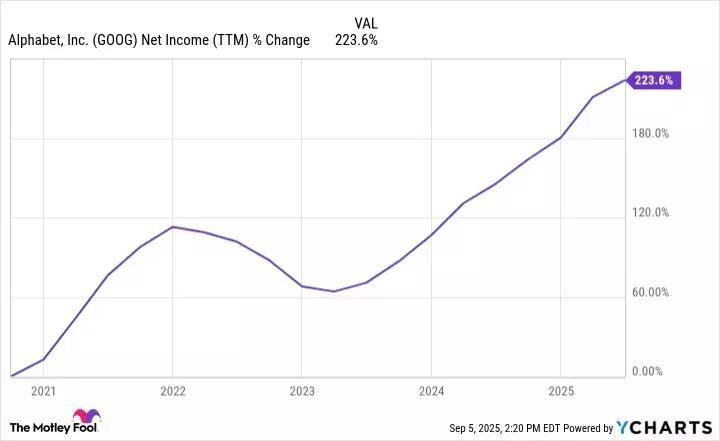
Despite its stock reaching all-time highs, Alphabet's valuation remains attractive, primarily due to its accelerated earnings growth. The company's net income has seen a dramatic increase over the past five years, contributing to a reasonable price-to-earnings ratio. Even amidst intensified AI competition, Google Search continues to expand, and the Google Services division maintains robust operating margins. Beyond its core businesses, Alphabet is also investing in innovative "moonshot" ventures, such as Waymo, which are demonstrating significant progress. For investors considering long-term opportunities, Alphabet represents a compelling buy-and-hold investment, especially given its continued business momentum and the recent landmark antitrust decision, which has cleared the path for sustained growth and innovation.
