Amazon's latest iteration of its intelligent voice assistant, Alexa Plus, ushers in a revolutionary AI agent functionality. This cutting-edge feature aims to transform how users manage their daily lives by delegating various tasks, from concert ticket purchases to service appointments. While Alexa Plus demonstrates a notable improvement in understanding natural language, allowing for more fluid interactions, the agentic AI capabilities are still in their nascent stages. Practical trials reveal that the system, though promising, is constrained by its limited integration with external services and a tendency towards imprecise execution, rendering it an ambitious but not yet fully realized personal assistant.
Alexa Plus's AI Agent: Detailed Assessment of Current Capabilities
On a bright July day in 2025, Jennifer Pattison Tuohy, a seasoned reviewer specializing in smart home technology, embarked on a hands-on exploration of Amazon's new Alexa Plus and its much-touted AI agent features. Operating from her home, Tuohy sought to leverage the AI to manage her personal to-do list, which included securing concert tickets, reserving a dinner table, and even locating an electrician for a persistent home repair.
A notable enhancement in this upgraded Alexa is its newfound ability to comprehend conversational language, liberating users from rigid command structures. This improved understanding forms the bedrock for its agentic AI, which theoretically enables Alexa to interact with online services on a user's behalf. However, current implementations of this agentic AI are limited to pre-established partnerships with platforms such as Ticketmaster, OpenTable, Uber, and Thumbtack.
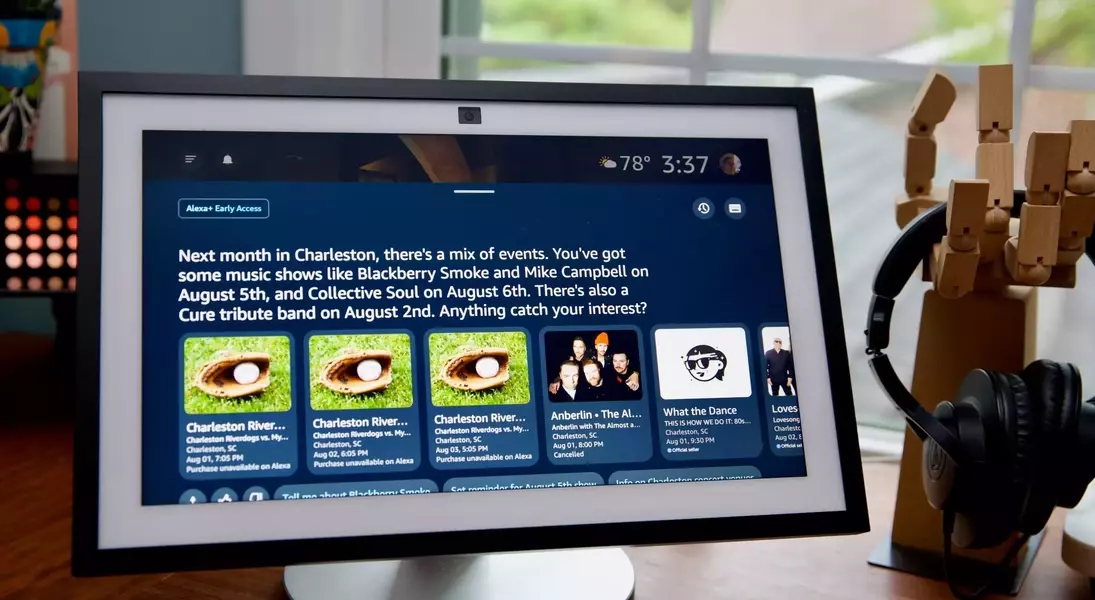
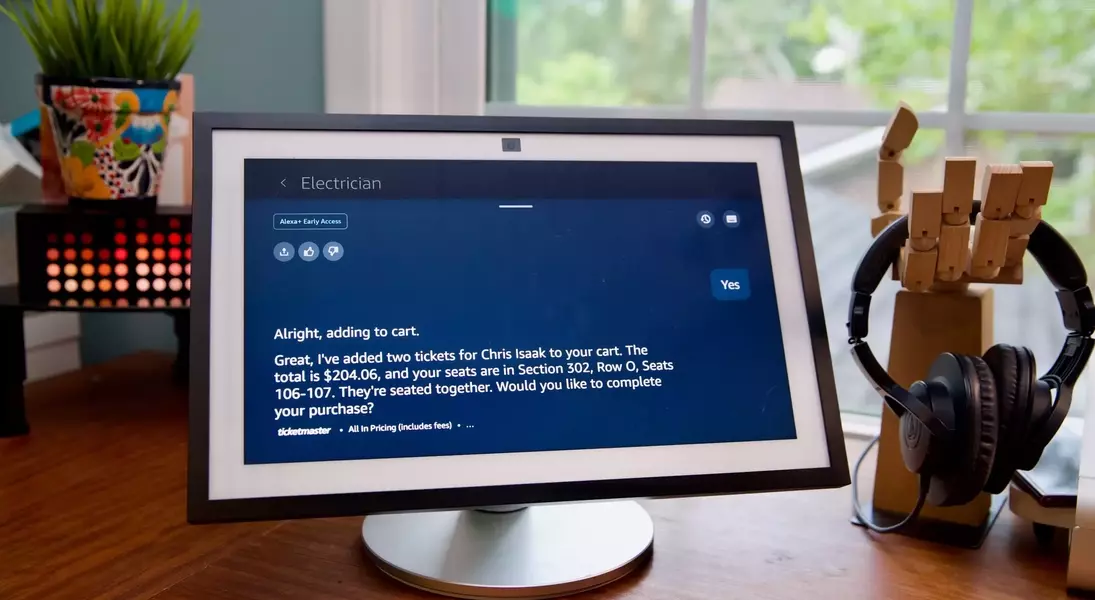
Tuohy's initial attempt to book a Chris Isaak concert ticket through Ticketmaster via an Echo Show 15 proved largely successful. After a minor hiccup with an irrelevant sports event suggestion, Alexa provided a curated list of local events in Charleston for the upcoming month of August. Upon selecting the desired concert, the AI adeptly guided Tuohy through the ticket selection and checkout process, even pre-populating payment details from her linked Ticketmaster account. This streamlined experience showcased the AI's potential in direct booking scenarios, though Tuohy wisely opted out of the purchase, noting a critical security oversight: the absence of a PIN requirement for transactions, raising concerns about unauthorized purchases.
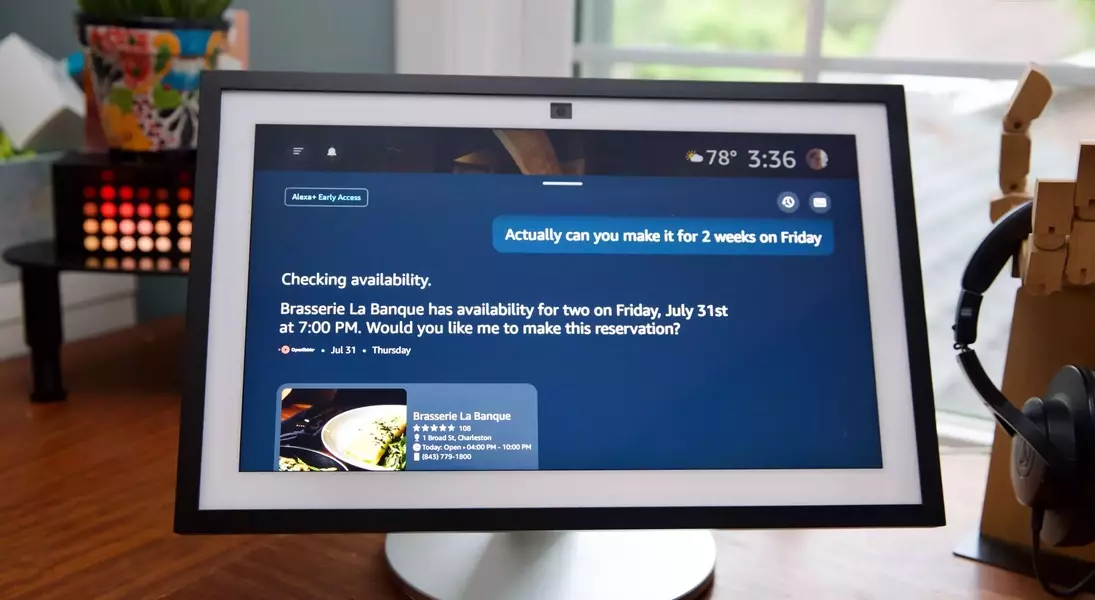
Next, Tuohy challenged Alexa to book a dinner reservation for two in downtown Charleston. While Alexa promptly offered several dining options, the selection was surprisingly limited for a city known for its vibrant culinary scene. When asked to reschedule the reservation for "two weeks on Friday," Alexa smoothly adapted and confirmed a booking for Friday, July 31st, subsequently adding it to Tuohy's Gmail calendar. Yet, a subsequent text confirmation from OpenTable revealed an error: the reservation was mistakenly set for Thursday, July 31st. Though Alexa was able to correct the date upon further instruction, this incident highlighted a critical flaw in precision, making the process more cumbersome than manual booking.
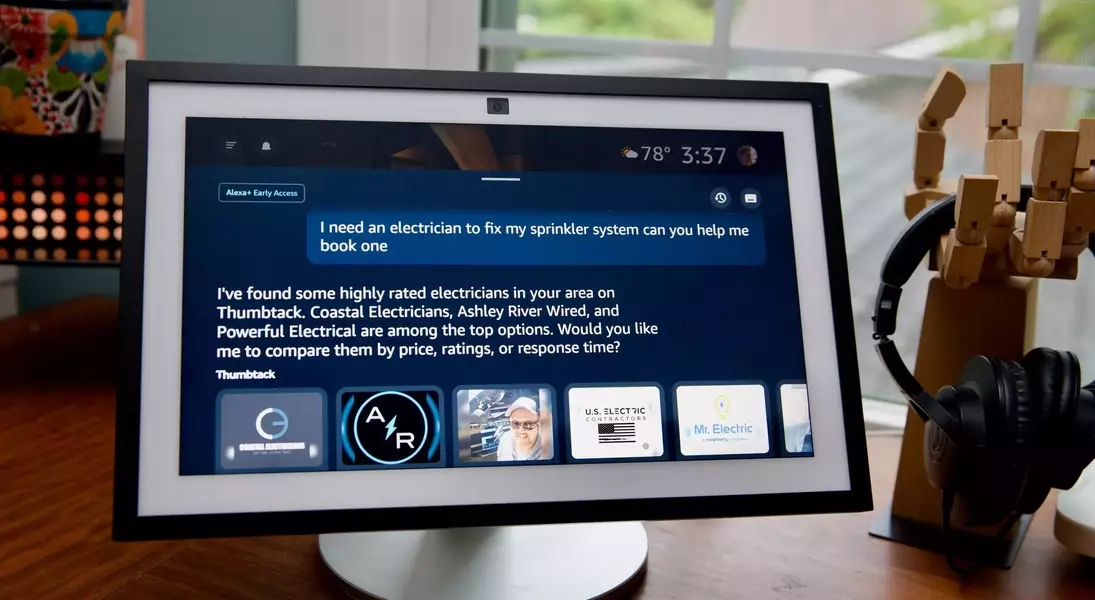
The most challenging task for the AI agent was finding an electrician to repair a faulty sprinkler pump, a chore Tuohy had postponed for two years. Utilizing Thumbtack, Alexa presented a list of highly-rated electricians. After selecting a service provider, Alexa initiated a series of detailed questions, mimicking an online form-filling process. However, the anticipated seamless booking did not materialize. Instead, Tuohy received an email from Thumbtack and a direct text from the electrician, requiring further manual interaction to finalize the appointment. This fragmented experience underscored the AI's current inability to fully automate complex, multi-step tasks.
Despite these shortcomings, a significant advantage of Alexa's agentic AI is its hands-free operation. This feature holds immense appeal for busy individuals, like working mothers, who can initiate and manage tasks while simultaneously engaging in other activities. However, the prevailing limitations in integration breadth and transactional accuracy suggest that while the technology is innovative, it is not yet robust enough to genuinely streamline and simplify complex daily responsibilities.
From a journalist's vantage point, the emergence of AI agents like Alexa Plus represents a pivotal moment in human-computer interaction. The promise of an intelligent assistant that can autonomously navigate our digital lives is tantalizing, offering a glimpse into a future of unparalleled convenience. However, this hands-on encounter with Alexa Plus underscores the critical chasm between aspirational capabilities and current technological realities. While the natural language processing is commendably intuitive, the "agentic" aspect remains rudimentary, relying heavily on pre-defined integrations rather than genuine web navigation and problem-solving. This highlights a fundamental challenge in AI development: transitioning from sophisticated data processing to nuanced, real-world task execution. For users, the lesson is clear: embrace the early conveniences, but temper expectations, as the path to a truly autonomous digital assistant is still unfolding. For developers, the imperative is to deepen the AI's understanding of context and expand its practical reach beyond pre-approved ecosystems, ensuring that innovation translates into reliable, seamless utility in our increasingly complex lives.
