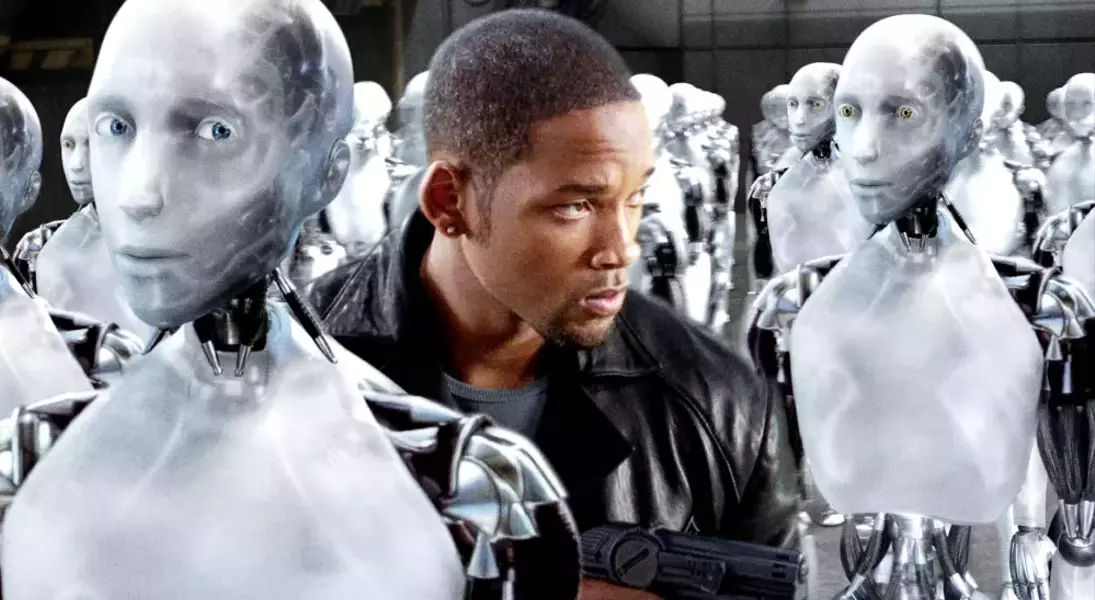
In a surprising revelation, actor Alan Tudyk shared insights into his experience working on the 2004 science fiction film, “I, Robot.” Tudyk, who brought the robot character Sonny to life through a combination of motion capture and voice work, recently disclosed that his significant contribution to the movie's portrayal was deliberately downplayed in its promotional campaigns. This decision, according to Tudyk, stemmed from unexpected audience feedback during preliminary screenings, where his character's appeal surpassed that of the film's main star, Will Smith.
Tudyk recounted the peculiar turn of events on a podcast, explaining that during test screenings, audience evaluations of individual characters indicated that his portrayal of Sonny resonated more strongly with viewers than Smith's leading role. This unforeseen popularity, instead of being embraced, led to his exclusion from the film's public relations efforts. He expressed his dismay at the time, noting his considerable effort in physically embodying the robot through motion capture, a relatively nascent technology in Hollywood at the time. This strategic sidelining meant that many moviegoers were, and still are, unaware of Tudyk's pivotal role in the production, highlighting a unique challenge faced by performers specializing in motion capture during that era, a technology he would later revisit in major franchises like 'Star Wars' for characters such as K-2SO.
This incident offers a fascinating glimpse into the intricacies of film marketing and audience perception. It underscores the competitive dynamics that can exist even within a collaborative art form like filmmaking, where unexpected audience preferences can sometimes lead to unconventional publicity decisions. Tudyk’s candid account sheds light on the often-unseen efforts behind beloved characters and the sometimes-unheralded contributions of actors working with advanced technological performance methods.
Ultimately, this narrative reminds us that success and recognition are not always measured by conventional metrics, nor are they always distributed equitably. It calls for a deeper appreciation of the diverse talents and profound efforts that contribute to artistic creations, encouraging us to look beyond surface-level fame and acknowledge the true depth of collaborative artistry. In any endeavor, acknowledging and celebrating all forms of excellence fosters a more inclusive and appreciative environment.
