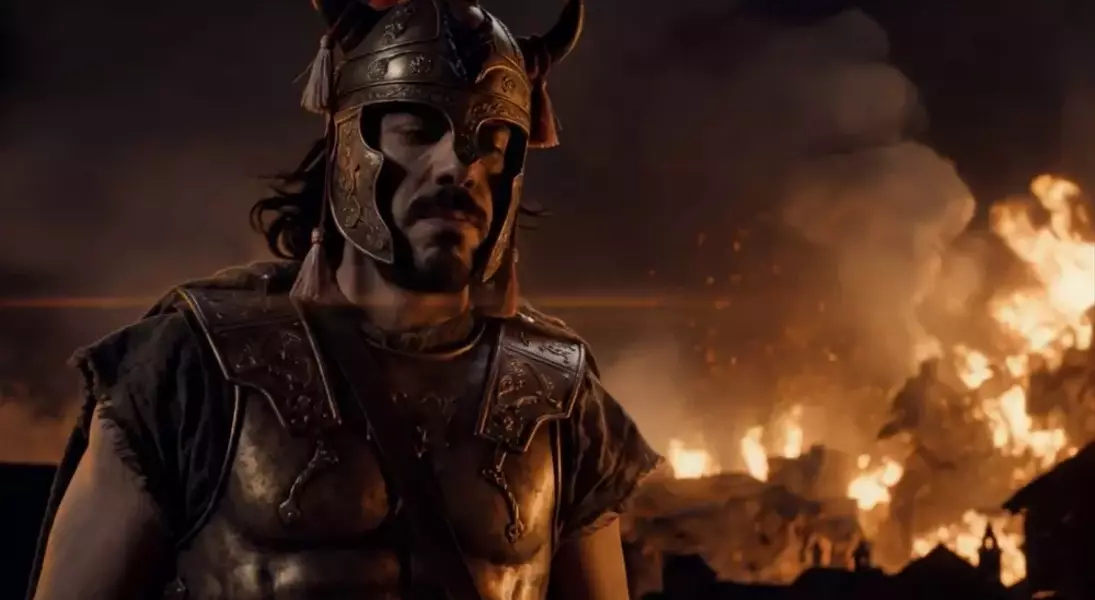
A groundbreaking AI-generated cinematic adaptation of the timeless Greek epic, "Odysseus," is set to debut, marking a significant stride in the realm of artificial intelligence in filmmaking. This 135-minute feature, titled "Odysseus: The Fall," emerges from the innovative studio Fountain 0, under the directorial vision of Ash Koosha. Koosha, known for his previous AI-driven docu-drama "Dreams of Violets," has dedicated three months to bringing his childhood fascination with the Greek hero to life through this advanced technological medium. The project showcases a new paradigm for movie creation, emphasizing speed, cost-effectiveness, and creative freedom. Through the integration of the AI video generator Kling and a diverse ensemble of human likenesses, including Koosha's own portrayal of Odysseus, "Odysseus: The Fall" aims to redefine contemporary storytelling, making it accessible to a broader audience and demonstrating AI's capacity to engage with cultural narratives.
This venture not only capitalizes on the current public discourse surrounding AI but also positions itself as a distinct commentary on the evolving landscape of cinematic production. Unlike traditional filmmaking, this AI-powered approach allows for continuous refinement and an absence of conventional production risks, empowering creators like Koosha to pursue their artistic visions without the typical constraints. The film's unique production methodology, which involves a mix of professional actors, models, and individuals without entertainment industry backgrounds whose likenesses are licensed for the project, also introduces novel compensation structures tied to the film's financial performance. This model highlights a potential shift in how talent is engaged and compensated within the AI filmmaking ecosystem.
The Emergence of AI in Cinematic Storytelling
The cinematic landscape is witnessing a transformative shift with the advent of AI-generated films, exemplified by the upcoming release of "Odysseus: The Fall." This 135-minute feature, spearheaded by AI film studio Fountain 0 and directed by Ash Koosha, represents a novel approach to adapting classic narratives. Koosha, whose previous work includes the AI-generated docu-drama "Dreams of Violets," has channeled his long-standing admiration for the Greek epic into a project that underscores the potential for artificial intelligence to reshape the filmmaking process. By leveraging AI video generation tools like Kling, the production has embraced an iterative and flexible creative methodology, allowing for ongoing adjustments and an unprecedented level of creative control. This process minimizes traditional production risks and offers filmmakers a platform to translate their visions into reality with remarkable speed and efficiency, thereby contributing to the broader conversation about the future of cinema.
"Odysseus: The Fall" stands as a testament to the capabilities of AI in modern filmmaking, offering a faster and more cost-effective alternative to conventional production methods. The film’s creation involved a unique casting process where 12 individuals, including professional actors, models, and non-industry participants—even director Koosha himself as Odysseus—provided their likenesses for AI generation. These likenesses were licensed specifically for this project, with provisions for future use in a broader catalog should the individuals opt-in. This innovative approach extends to the compensation model, where the participants receive a share of the film's backend grosses, aligning their success directly with the project's commercial performance. This method not only democratizes access to filmmaking but also presents a compelling case for how AI can empower storytellers to respond to cultural moments and bring their unique interpretations of beloved tales to life without the logistical and financial hurdles of traditional film production.
Transforming Vision into Reality Through AI
Director Ash Koosha's lifelong fascination with the epic tale of Odysseus has culminated in "Odysseus: The Fall," an AI-generated film that embodies a new frontier in cinematic creation. This project, developed by Fountain 0, illustrates how artificial intelligence can empower filmmakers to actualize their unique interpretations of classic literature with unprecedented agility. Koosha's vision for Odysseus, shaped by years of engaging with various translations and perspectives, found its ideal medium in AI, which allowed him to maintain an open-ended script and continuously refine the narrative throughout production. This flexibility, combined with a relatively modest budget hovering in the mid-five figures, demonstrates AI's capacity to facilitate the creation of high-quality, epic-scale productions that can rival traditional summer blockbusters in appearance and scope, albeit through fundamentally different means. The project aims to serve as a pivotal reference point, showcasing AI's potential to produce compelling narratives that resonate with contemporary audiences.
The collaborative process behind "Odysseus: The Fall" involved a diverse group of individuals whose likenesses were used to generate the film's characters. This innovative casting method allowed Koosha to direct AI-generated personas with a degree of precision and ease that he believes surpasses working with live actors, especially those without extensive acting experience. For individuals like executive producer Tom Rogers, who had no prior acting background, AI offered an accessible pathway to participate in a major cinematic production, transforming what would typically be a challenging endeavor into a streamlined creative process. While acknowledging that "Odysseus: The Fall" might not surpass the achievements of traditional filmmaking masters, the creators envision it as a crucial benchmark for AI filmmaking. Their goal is to illustrate that AI is not merely a technical tool but a viable and increasingly accepted method for crafting diverse narratives, from arthouse dramas to grand heroic sagas, ultimately integrating AI into the mainstream of cinematic artistry and storytelling.
